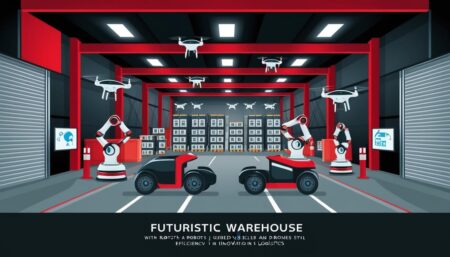
The integration of artificial intelligence is reshaping business operations, highlighting both opportunities and challenges in workforce dynamics and skills development.
The impact of artificial intelligence (AI) automation on various industries is becoming increasingly apparent, particularly in how businesses are reshaping their operations to drive efficiency and growth. Recent reports and analyses illuminate significant trends and practical applications of AI across various sectors, underlining the transformative potential of this technology.
According to the World Economic Forum (WEF), the ongoing integration of AI into the workforce is expected to result in considerable job disruption by 2030, with an estimated 22% of current jobs being affected. The WEF’s ‘Future of Jobs Report 2025’, released recently, projects the creation of 170 million new jobs, although this comes with the displacement of 92 million existing roles, resulting in a net growth of 78 million jobs overall.
The report highlights a pressing need for a skilled workforce, pinpointing significant skill gaps as a primary obstacle to business transformation. It noted that approximately 40% of current job skills will require adjustments to meet future demands. Alarmingly, 63% of employers identified inadequate skill sets as a critical challenge, with a staggering 59 out of every 100 global workers potentially needing reskilling or upskilling. This places over 120 million workers at medium-term risk of redundancy.
The increasing demand for technology skills, particularly in AI, big data, and cybersecurity, stands out in the report. However, it also emphasizes the enduring importance of human skills such as creativity and adaptability. Till Leopold, Head of Work, Wages and Job Creation at WEF, remarked that trends like generative AI are simultaneously creating opportunities and risks in labour markets, highlighting the necessity for collaboration between businesses and governments to invest in skills development for a resilient global workforce.
In addition to the shifting landscape of skills, the report anticipates a notable demand for frontline roles in sectors like care and education, primarily due to demographic changes. Nonetheless, certain roles such as cashiers and administrative assistants are set to decline as the workforce adapts to these technological advancements. Notably, 77% of employers are planning to invest in upskilling their workforce, while 41% foresee workforce reductions due to automation.
Meanwhile, the construction industry is also experiencing a technological evolution driven by AI. The sector sees advancements in machine learning and computer vision being integrated across various processes, aiming to enhance planning, safety, quality control, and overall productivity. Despite these advancements, the industry faces a significant workforce gap, with the Construction Industry Training Board (CITB) stating that an additional 250,000 workers will be required over the next four years to meet output demand in the UK.
The issue of an ageing workforce, with an average age of around 50 years among construction workers, is compounded by a lack of interest from younger individuals. The recent census noted only 9% of construction workers were aged 16–24. Industry bodies have repeatedly advocated for attracting young talent into construction, emphasising diverse pathways such as apprenticeships, which remain critically low.
As the industry seeks to reshape its image and appeal to a younger demographic, the integration of AI is viewed as a crucial factor. Research indicates that over 30% of students believe AI has influenced their chosen field of study, and 63% feel that it has improved their career prospects. The changing perception of construction careers is expected to increase interest, with AI transforming job roles from traditional hands-on labour to more supervisory positions focused on managing AI-driven processes.
The expansion of AI within construction is set to not only alter how tasks are executed but also to make the industry more attractive to tech-savvy individuals. The WEF report anticipates that roles in construction will increasingly require digital skills, paving the way for a future workforce equipped to handle advanced technologies and innovations.
Both the business environment and the construction sector are undergoing significant transformations, with AI playing a pivotal role in driving these changes. The emphasis on reskilling, adapting to technological advancements, and addressing workforce challenges underscores the importance of a proactive approach to embracing the future of work.
Source: Noah Wire Services
- https://dig.watch/updates/ai-will-replace-2-4-million-jobs-in-us-by-2030-forresters-report – This article supports the claim that AI is expected to displace a significant number of jobs, particularly in white-collar professions, and highlights the impact of generative AI on the workforce by 2030.
- https://litslink.com/blog/how-many-jobs-will-ai-take-over-the-statistics – This source corroborates the global job displacement estimates, noting that AI could displace around 300 million full-time equivalent jobs globally by 2030 and highlights the percentage of routine tasks already robotized by AI.
- https://www.techtarget.com/whatis/feature/10-ways-to-spot-disinformation-on-social-media – Although not directly related to AI job displacement, this article is relevant for evaluating the credibility of sources discussing AI impacts, emphasizing the importance of verifying information through reputable sources.
- https://dev.to/td_inc/automation-trends-that-will-impact-your-business-in-2025-1jnb – This article supports the trend of AI automation reshaping business operations, driving innovation, and enhancing productivity across various industries, including the adoption of Intelligent Process Automation (IPA) and Robotic Process Automation (RPA).
- https://www.weforum.org/reports/the-future-of-jobs-report-2023 – This World Economic Forum report provides detailed insights into the future of jobs, including the creation of new jobs, displacement of existing roles, and the need for reskilling and upskilling to meet future demands.
- https://www.weforum.org/agenda/2023/10/future-of-jobs-report-2023-key-findings/ – This article from the World Economic Forum outlines key findings from the ‘Future of Jobs Report 2023’, including the impact of AI on job markets and the necessity for skills development.
- https://www.constructionnews.co.uk/workforce/citb-warns-of-250-000-worker-shortage-23-11-2023/ – This source supports the information about the construction industry’s workforce gap, highlighting the need for an additional 250,000 workers in the UK and the challenges posed by an ageing workforce.
- https://www.citb.co.uk/about-citb/news-and-press-releases/2023/11/citb-warns-of-250-000-worker-shortage/ – This article from the Construction Industry Training Board (CITB) discusses the workforce gap in the construction industry and the need to attract younger talent through diverse pathways like apprenticeships.
- https://www.mckinsey.com/featured-insights/future-of-work/jobs-lost-jobs-gained-what-the-future-of-work-will-mean-for-jobs-skills-and-wages – This McKinsey report provides insights into the future of work, including the automation of tasks and the impact on job markets, aligning with the article’s discussion on job displacement and new job creation.
- https://www.goldmansachs.com/insights/pages/disrupting-the-workforce.html – This Goldman Sachs report supports the global job displacement estimates and the reshaping of job markets due to AI, highlighting the potential for both job losses and new job opportunities.
- https://www.statista.com/statistics/1267423/global-jobs-affected-by-automation/ – This Statista report provides statistics on the percentage of current jobs expected to change by 2027 and the impact of automation on various job roles, supporting the article’s claims on job market transformations.
- https://news.google.com/rss/articles/CBMiuAFBVV95cUxQQmRrakowMnF1dnQ3Yi1fdFRvYXpFcm9HenFIUTFJOC1jNHdKS0tLWG1FRU8xMkZJRWg4TGRZMnphNEJVWl85SnZRMzNCOVJLN3Fnd1RxYWN5djRoM1FaQXk0eVF5V3hlT3E3SG9MblVOakVqb0dnZHlOcVVfT2lUZVRhLXBwYlRtUHBaelU5TXRzUWd1YnBDVy1DdThVakxNZHZVNklHV1ZOOE5BZk1vUWk3Yk5mV3Nn0gG-AUFVX3lxTE5YNzBDNGJCOVpkdGJrZVMzZTZja01CYjdTZDN3NTBMdmVxZWxHTTBRRU00MVNOakdrRUoxTmt1cHNEYnBaZTE4UnBZSHI4aTlBZS11czNjS3pSdWN5T2dVYVJTMXh2THN3Z3VPZWwycFZWOTJNb1RHSzY1SXdyZTF1X0dXQlFKUGxxLWhuSmtTRkpJRElQdk5XQzFybzVtVDVYRHdRdEFKUjJ1eTRSYTBiT04xNmhWVUtERXBIM0E?oc=5&hl=en-US&gl=US&ceid=US:en – Please view link – unable to able to access data