









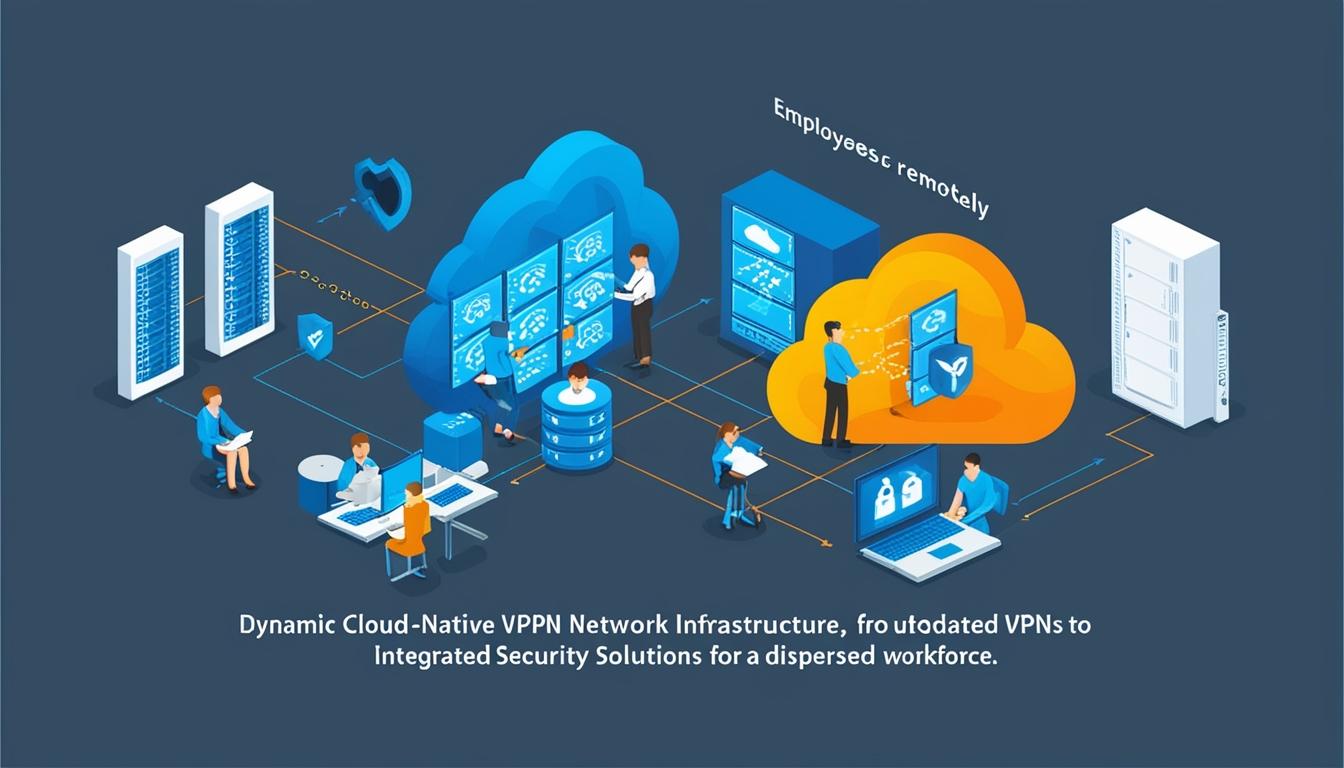
As organisations face the limitations of outdated VPNs and data silos, IT leaders must embrace cloud-native solutions to enhance security and operational efficiency.
In the dynamic landscape of modern technology, IT leaders across the globe are navigating the challenges posed by cloud migration and the increased demand for flexible, remote work options. Faced with these demands, maintaining a robust, secure, and scalable network infrastructure has become imperative, as companies seek to deliver consistent user experiences while safeguarding their data. Yet, many organizations remain entangled in the complexities of outdated Virtual Private Networks (VPNs), a legacy from past remote access solutions, raising critical concerns among IT decision-makers.
The traditional role of VPNs as the mainstay for secure remote access is rapidly becoming obsolete. Historically, these networks facilitated safe connections for employees accessing corporate data from external locations. This model was feasible when most business applications resided within a centralised data centre. However, the pivot to cloud-based applications and services has exposed significant limitations in legacy VPN designs. The requirement for all data to transit through centralised VPNs complicates infrastructure, resulting in bottlenecks that slow down network performance and user frustration.
Gerry Plaza, Vice President of Solutions Engineering at Netskope, highlights that the proliferation of cloud services demands a departure from the legacy VPN model. The modern enterprise no longer operates within the confines of a single location or data center, but rather across diverse geographic locales with employees using multiple devices to access corporate resources. IT leaders are often cornered into maintaining costly, point-specific solutions to address these evolving needs, which further complicates the network infrastructure and heightens security risks.
The push for progression calls for a move from a patchwork of disparate security tools to a consolidated cloud-native platform approach. These platforms integrate network and security functions, streamlining infrastructure and supporting the demands of a dispersed workforce. Cloud-native solutions offer flexible features such as dynamic routing, traffic optimization, and load balancing, enhancing performance and facilitating business scalability without repeated hardware investment. This agility is crucial for businesses to remain competitive in a rapidly accelerating market environment.
Additionally, the shift towards cloud-native platforms enhances IT leaders’ capacity for visibility and control over data, supporting a zero-trust security framework. This model eschews the notion of default trust within the network, requiring confirmation of user identity based on numerous contextual factors. Enhanced visibility ensures comprehensive monitoring and better threat detection capabilities, reducing unauthorised access and potential security breaches.
Concurrently, the importance of effective data management comes to the forefront. As organisations continue to see an exponential rise in data, managing this influx efficiently becomes essential for strategic decision-making and operational improvements. Many firms suffer from data silos, where crucial information is segmented across disparate systems, impairing productivity and delaying security responsiveness. Robert Grazioli, Chief Information Officer for Ivanti, underscores the necessity for robust data governance, streamlined integration, and a unified data view to combat the challenges posed by data sprawl.
Effective data management can unlock significant advantages, from improving security posture through enhanced visibility to empowering IT teams to make informed strategic decisions. The goal is to transition from an environment of overwhelming data to one where data drives decisions, enhancing operational efficiency and fostering innovation.
In conclusion, as organisations grapple with the limitations of legacy VPNs and isolated data systems, the imperative is clear for IT leaders. Embracing cloud-native networking platforms and comprehensive data integration strategies paves the way for enhanced security, operational efficiency, and organisational growth. The transition promises not only to address immediate challenges but also to set the stage for future technological innovations.
Source: Noah Wire Services






