









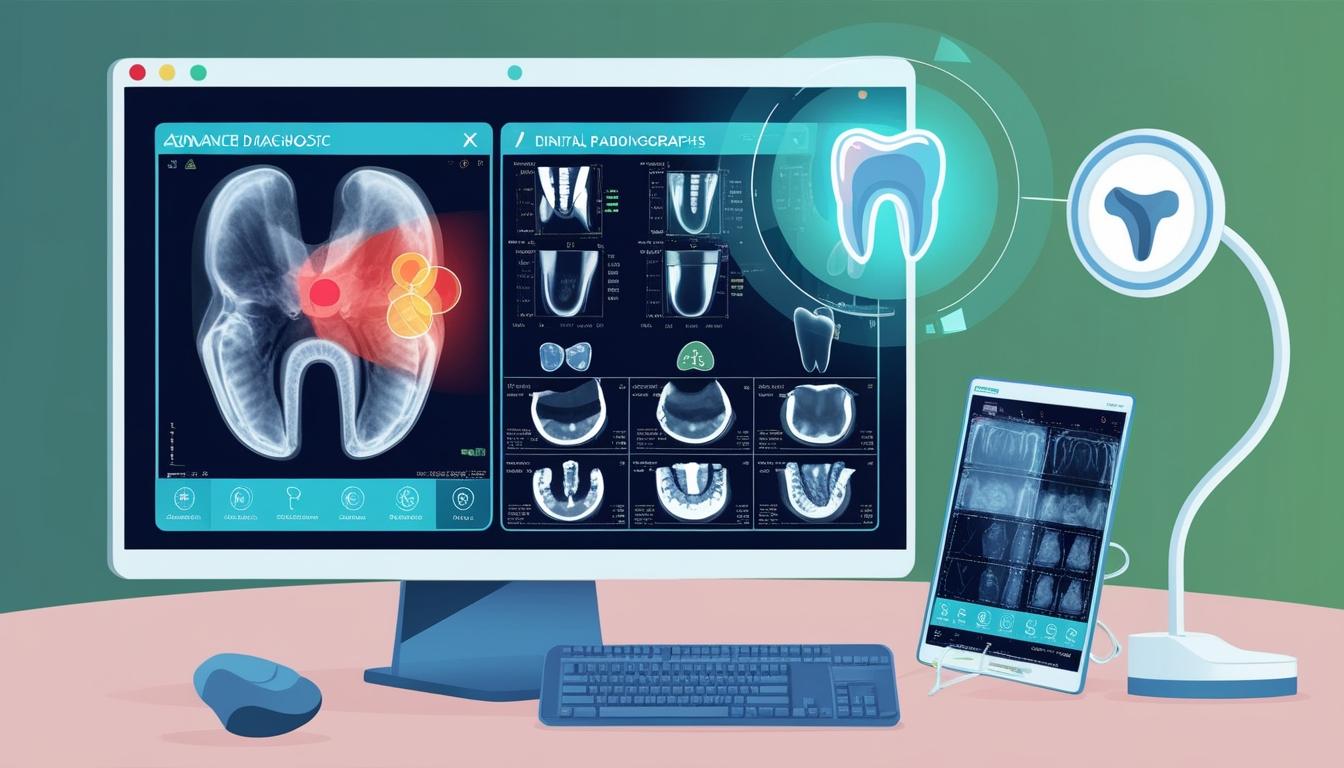
Artificial intelligence is transforming dental healthcare, enhancing diagnostics, treatment planning and patient education, and presenting new opportunities for improved patient outcomes.
The Role of AI in Revolutionising Dental Healthcare
The realm of dental healthcare is on the cusp of transformative change as artificial intelligence (AI) increasingly integrates itself into various aspects of the field. This technological advancement promises significant benefits in diagnostics, treatment planning, and patient education, presenting dental practitioners with innovative tools to enhance patient care.
AI technology, notably, is emerging as a valuable asset in the detection and management of dental pathologies. In the fast-paced environment of a dental clinic, where time is often constrained, AI offers dental hygienists the ability to swiftly and accurately review patient radiographs for signs of periodontal issues, caries progression, and other oral pathologies. By employing advanced algorithms, AI can identify and highlight calculus, measure periodontal bone levels, and detect anomalies such as widened periodontal ligaments. This automation significantly reduces the likelihood of diagnostic errors due to fatigue or time constraints, thereby providing patients with timely and accurate interventions.
In the field of endodontics, AI systems have demonstrated an accuracy rate of 96% in treatment processes, outperforming traditional methods conducted by professional endodontists. Additionally, AI aids in diagnosing vertical root fractures with a precision of 96.6%, utilising CBCT scans and panoramic radiographs to provide endodontists with reliable assessments.
For oral surgeons, AI presents a futuristic capability of predicting postoperative outcomes, such as facial swelling following teeth extraction, thereby enhancing treatment planning and patient prognosis. Meanwhile, in combating oral cancer, AI tools offer early detection of lesions that were previously challenging to identify, thereby improving patient outcomes through early intervention.
Beyond diagnostics, AI plays a pivotal role in patient education. It can swiftly generate personalised educational content, facilitating better patient comprehension of their dental health status. This includes creating videos, articles, and interactive presentations tailored to individual patient needs. Additionally, AI-powered chatbots are emerging as a resourceful tool, offering real-time engagement and assistance for patients, which can relieve some of the burdens on clinic staff while ensuring availability and guidance, even outside regular office hours.
The ability of AI to individualize and streamline patient education not only enhances the communication between healthcare providers and patients but also encourages greater compliance with treatment recommendations. In this way, AI contributes significantly to a more efficient and effective patient care journey.
While the integration of AI into dental practices may seem daunting to some due to its rapid advancements and the profound changes it brings, its potential to augment the skillset of dental professionals and improve patient outcomes is undeniable. As AI technology continues to evolve, staying informed on these developments will be crucial for dental professionals aiming to leverage the benefits of AI in enhancing patient care.
As AI continues to embed itself further into the fabric of healthcare, dental professionals are encouraged to consider the technology’s vast potential to complement their expertise, thus paving the way for a new era in dental healthcare.
Source: Noah Wire Services






