









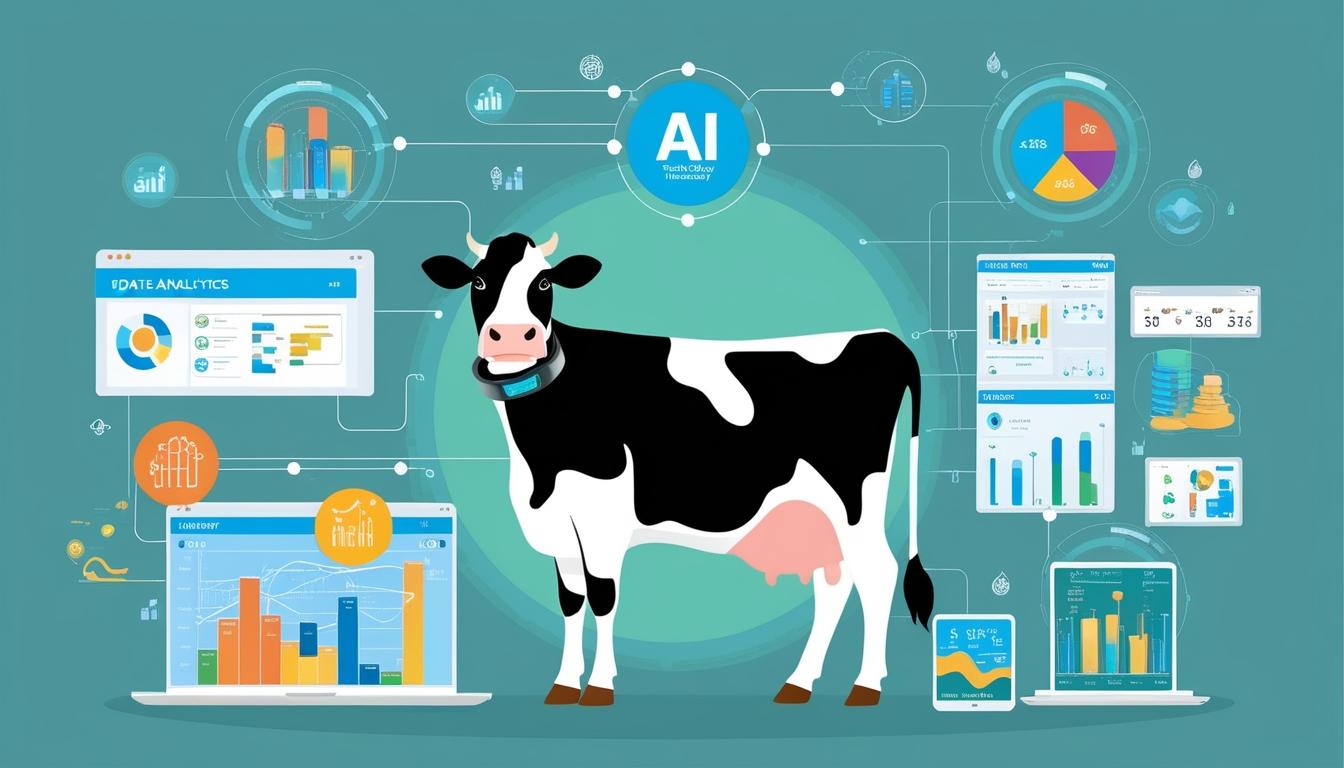
Experts discuss the transformative potential of AI in dairy farms, highlighting innovations and the challenges in data management that need to be addressed for its effective implementation.
In the rapidly evolving landscape of dairy farming, artificial intelligence (AI) is emerging as a pioneering force, bridging the traditional methods of milk production with modern technological advancements. This intersection of heritage and innovation offers both challenges and promising opportunities for the industry, which is increasingly influenced by the rapid advancement of AI technologies.
Prominent experts Chad Jenkins, Ph.D., a senior nutritionist at Standard Dairy, and John Goeser, Ph.D., director of nutritional research and innovation at Rock River Laboratory and adjunct assistant professor at the University of Wisconsin – Madison, recently shared their insights into the current state and future prospects of AI in dairy farming.
Currently, AI technologies in dairies are manifesting through various innovative applications. As Jenkins pointed out, many dairy companies are aggregating data collected from behavioural monitors like eartags or collars worn by cattle. This data is integral to predictive software, which forecasts health events in animals and prompts farm managers to act accordingly. Such systems become more accurate over time as they process increasing amounts of data, enhancing predictive capabilities to foresee health issues before clinical symptoms emerge.
Furthermore, computer vision technology is gaining traction, where cameras installed on farms assess cow behaviour and physical condition. These intelligent systems are designed to recognise individual cows through unique colour patterns, tracking changes in behaviour that may indicate health concerns or important metrics like rumination time. Jenkins noted that such technology is already being implemented in maternity areas to predict calving, reducing the need for continuous physical checks by staff.
AI is also being utilised through language learning models, which interpret herd management records and identify prevalent trends. This provides a comprehensive overview of the language applied to specific events, streamlining decision-making processes.
Despite these advancements, the implementation of AI in dairy farming is not without its hurdles. Goeser highlighted a significant challenge: the disparity between the potential of AI and the current data structure within the dairy industry. For AI to deliver its full potential, standardized and well-structured data is essential. Currently, inconsistencies in data labelling and collection methods can create obstacles in data cleanliness and utility, thereby hindering the effectiveness of AI solutions.
Both experts agree that data management is crucial for unleashing AI’s potential. The advice is for dairy farmers to engage with knowledgeable partners or consultants who understand both the technical and practical applications of AI in agriculture. As Goeser suggested, starting small and focusing on aggregating manageable sets of data from herd management and production software can be a viable strategy for many farms.
Regarding the future impact of AI on dairy nutrition, Jenkins foresees significant improvements in herd performance and diet efficiency. While AI may automate some aspects of nutrition management, human expertise remains essential, particularly for physical assessments and data interpretation.
Goeser and Jenkins predict that as AI continues to evolve, it will not replace nutritionists but instead redefine their roles, shifting focus from ration balancing to data science and interpretation. The future will see consultants and nutritionists adapting to integrate AI insights into their practices, which could uncover new efficiencies and profitability metrics in dairy production.
In conclusion, the integration of AI in dairy farming is seen as an inevitable step forward, with the potential to revolutionise herd management and nutritional strategies. These changes, while promising, depend heavily on overcoming current data challenges and adapting to new workflows. The experts predict that the coming years will witness more widespread adoption of AI technologies, which will undoubtedly transform the dairy industry into a more efficient and technologically advanced sector.
Source: Noah Wire Services






