









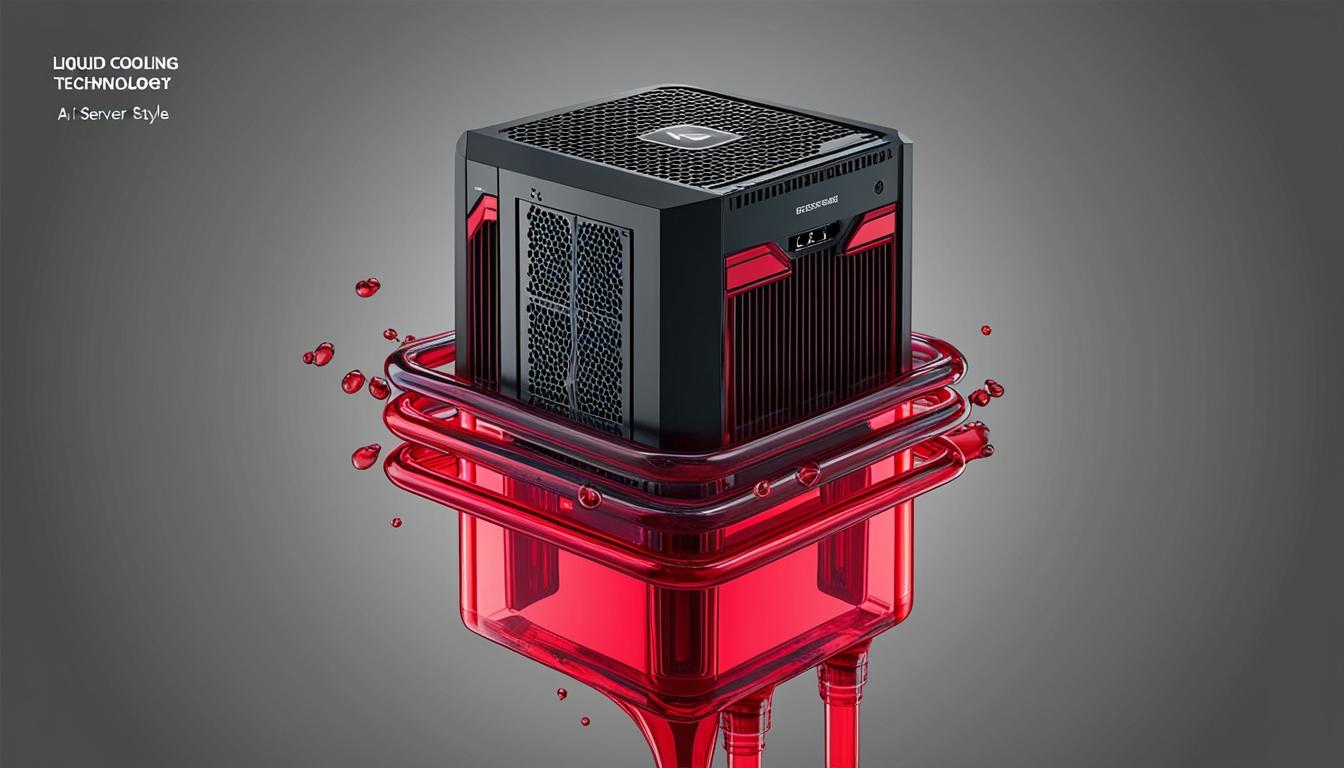
As traditional air-cooling methods fall short, industries are embracing liquid cooling technologies to meet the demands of advanced computing and electric vehicle charging.
In recent discussions surrounding the future of AI automation, significant attention has turned towards advancements in cooling technologies, particularly liquid cooling solutions, which are becoming integral in high-power applications such as AI servers, electric vehicle (EV) chargers, and next-generation EV batteries. As traditional air-cooling methods prove insufficient for modern thermal dissipation demands, industries are transitioning to liquid cooling as a viable alternative.
The growth in data center revenues is anticipated to follow a robust trajectory, with double-digit increases expected in the coming years. An accompanying surge in liquid cooling system revenues is projected, with a remarkable 17% growth anticipated for 2024, alongside further acceleration of over 30% annually after 2027. This trend reflects the increasing reliance on advanced technologies like cloud computing, machine learning, and AI, which necessitate more efficient thermal management solutions.
Currently, single-phase cold plates dominate the market, commanding a 3:1 share over immersion cooling systems. However, as central processing units (CPUs) and graphics processing units (GPUs) become more sophisticated, there will be a pressing demand for enhanced thermal management techniques and improved Power Usage Effectiveness (PUE). Experts predict that immersion cooling will emerge as a critical solution to these evolving requirements.
Innovative manufacturers such as Perstorp are spearheading the development of synthetic esters for liquid coolants. This advanced molecular design aims to achieve a harmonised balance among low viscosity, high flash point, elevated fire point, and superior breakdown voltage, while also being environmentally friendly. The incorporation of these characteristics into cooling liquids is essential for supporting both efficient operation and safety in high-power systems.
Immersion cooling technology fully submerges computer hardware in a dielectric fluid designed for optimal heat dissipation. This method not only facilitates effective thermal management but also supports the necessary signal integrity for high-frequency data transmission, which all immersion cooling suppliers must rigorously validate. Notably, AI servers have demonstrated successful operation while submerged in cooling fluid for several years, showcasing the effectiveness of this technology.
Intel’s recently launched SuperFluid technology, enhanced by Perstorp’s innovative coolant, has reportedly improved cooling capacity significantly. Traditional immersion cooling systems typically handle approximately 500 watts per chip, whereas with this new technology, the capacity can escalate up to 1,500 watts per chip. Such advancements make it particularly suitable for next-generation high-performance AI chips, aligning with the increasing power requirements in the sector.
With the escalating demand for potent AI servers and higher capacity for EV batteries and charging infrastructure, the importance of sustainable and efficient cooling solutions is expected to grow significantly. Liquid cooling technologies are thus well-positioned to address these emerging challenges, further contributing to advancements in sectors reliant on high-power luminaires and computing.
The developments in liquid cooling are being closely monitored as industry stakeholders look to adapt their operations to the rapidly evolving technological landscape. Furthermore, innovations in this domain may well reshape aspects of business practices, enhancing performance, sustainability, and operational efficiency.
Source: Noah Wire Services
- https://brainboxai.com/en/articles/ai-for-climate-action-how-tech-advances-global-cooling-pledge-goals – Discusses how AI enhances the efficiency and sustainability of cooling systems, including predicting refrigerant leaks and optimizing cooling systems, which is relevant to the need for advanced cooling technologies in AI servers.
- https://www.mordorintelligence.com/industry-reports/united-states-data-center-market – Provides insights into the growth of the data center market, which is driven by increasing demands for data-driven technologies like AI and machine learning, necessitating more efficient cooling solutions.
- https://www.motivaircorp.com/news/ai-workloads-and-liquid-cooling-the-future-of-hpc/ – Explains the importance of liquid cooling in managing the high thermal loads generated by AI and HPC environments, highlighting its superiority over traditional air-cooling methods.
- https://www.consultancy-me.com/news/8963/surge-in-data-use-to-drive-strong-growth-of-global-data-center-market – Details the projected growth of the global data center market, driven by the increasing demand for data-driven technologies, which aligns with the need for advanced cooling solutions.
- https://www.motivaircorp.com/news/ai-workloads-and-liquid-cooling-the-future-of-hpc/ – Discusses the limitations of traditional air-cooling methods and the advantages of liquid cooling in managing high thermal loads, particularly in AI and HPC environments.
- https://brainboxai.com/en/articles/ai-for-climate-action-how-tech-advances-global-cooling-pledge-goals – Highlights the scalability and adaptability of AI in enhancing cooling systems, which is crucial for addressing the growing cooling demands in various industries.
- https://www.mordorintelligence.com/industry-reports/united-states-data-center-market – Provides data on the expected growth in IT load capacity and the increasing demand for data centers, which correlates with the anticipated surge in liquid cooling system revenues.
- https://www.motivaircorp.com/news/ai-workloads-and-liquid-cooling-the-future-of-hpc/ – Explains the critical role of liquid cooling in ensuring the optimal performance and reliability of AI processors and other high-power components.
- https://www.consultancy-me.com/news/8963/surge-in-data-use-to-drive-strong-growth-of-global-data-center-market – Mentions the rapid growth of hyperscalers and their impact on the data center market, which is closely tied to the increasing need for efficient cooling solutions.
- https://www.motivaircorp.com/news/ai-workloads-and-liquid-cooling-the-future-of-hpc/ – Describes the benefits of immersion cooling, including its ability to handle high thermal loads and ensure signal integrity for high-frequency data transmission, which is essential for AI servers.






