









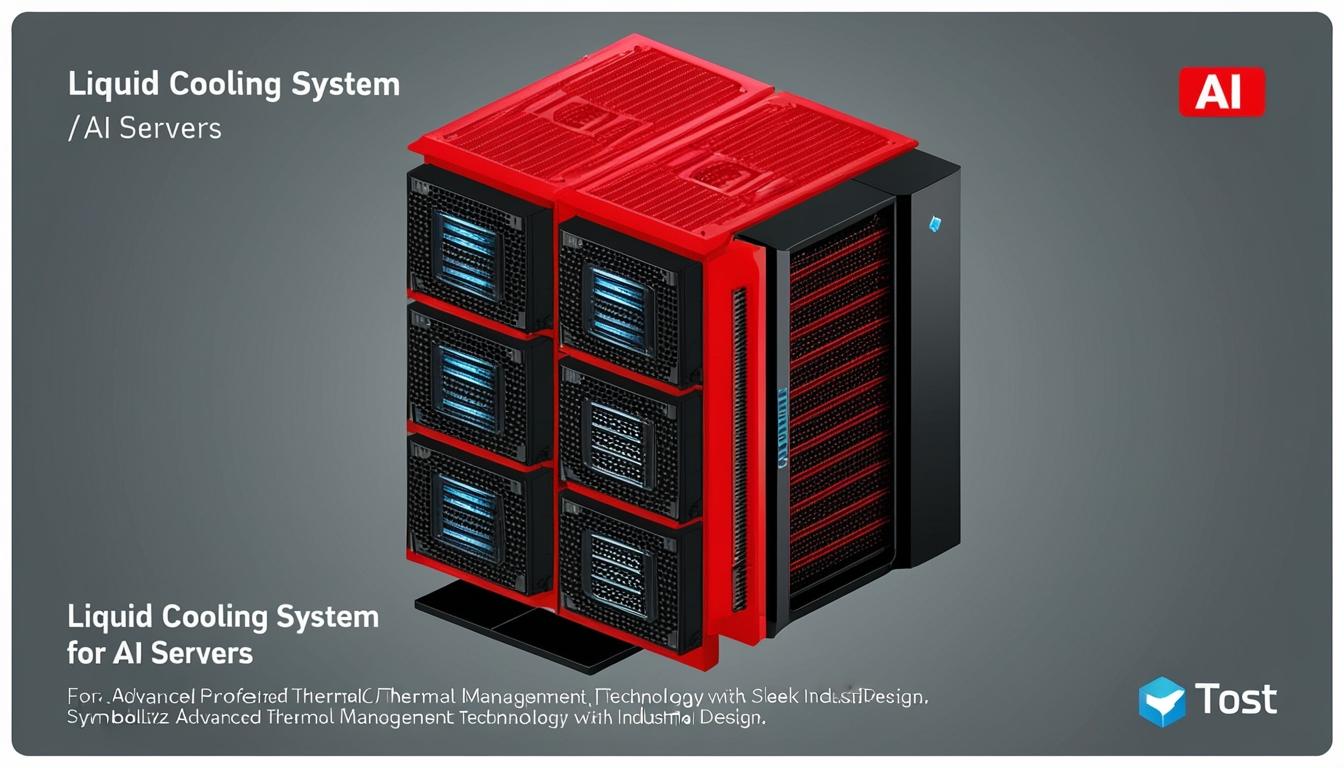
As AI drives demand for data centres and advanced lighting solutions, liquid cooling emerges as a key player in enhancing thermal management and energy efficiency.
The AI-driven landscape continues to evolve rapidly, resulting in a significant shift towards advanced thermal management technologies, particularly in data centres. Among these technologies, liquid cooling has emerged as a pivotal solution for mitigating the heat generated by AI servers, thus enabling more efficient operation. This approach is particularly essential given the increasing power and complexity of AI-driven applications that demand substantial computing resources.
Liquid cooling systems stand out for their ability to protect sensitive equipment from overheating while achieving a marked reduction in energy consumption associated with traditional cooling methods. As the AI data centre industry expands, the implementation of such innovative thermal management technologies is becoming commonplace, allowing businesses to maintain optimal operations even amid rising temperatures within their facilities.
Turning to the lighting sector, there is a renewed interest in applying liquid cooling to LED luminaires. Historically, the early LED technologies suffered from inefficiencies, leading some manufacturers, such as Switch and Ledzworld, to explore liquid cooling solutions. However, as LEDs evolved and became significantly more efficient, simpler thermal management solutions, like aluminium heat sinks, gained traction and largely replaced liquid cooling methods.
Presently, the landscape is again shifting as LED technology is being pushed to new heights with higher wattages and output intensities. Companies are undertaking fresh efforts to incorporate liquid cooling systems into their luminaires. One example is Oreon, which produces water-cooled LED grow lights tailored for commercial horticulture. This system not only enhances temperature regulation but also allows for more compact fixture designs, making it suitable for diverse growing environments.
In the industrial domain, GEW UV has successfully developed water-cooled UV LED systems aimed predominantly at the printing and packaging sectors. These innovations underline how liquid cooling technology is being adapted to meet the specific needs of various specialised applications within the industry.
As this trend toward higher performance in LED technologies continues, it raises pertinent questions regarding the possible evolution of liquid cooling applications across general lighting luminaires. This emergence and reinvigoration of liquid cooling signify its potential importance in tackling both thermal management challenges and energy efficiency requirements across various sectors. The current developments underscore an ongoing commitment within the industry to innovate and adapt by leveraging the intersection of AI capabilities and advanced thermal management solutions.
Source: Noah Wire Services
- https://www.powersystemsdesign.com/articles/axiados-ai-driven-dynamic-thermal-management-solution-cuts-cooling-costs-in-half-and-boosts-security-in-ai-data-centers/140/22142 – Corroborates the use of AI-driven dynamic thermal management solutions in data centers to reduce cooling costs and energy consumption.
- https://datacenterresources.com/articles/data-center-ai-liquid-cooling/ – Supports the importance of liquid cooling in managing thermal demands and enhancing efficiency in AI-driven data centers.
- https://www.motivaircorp.com/news/the-future-of-ai-factories-and-liquid-cooling/ – Highlights the role of liquid cooling in addressing the thermal challenges posed by high-power density chips in AI data centers.
- https://www.datacenterfrontier.com/sponsored/article/55040910/iceotope-cooling-the-ai-revolution-in-data-centers – Discusses the critical need for efficient cooling systems, such as liquid cooling, to manage the heat generated by AI workloads.
- https://spectra.mhi.com/data-center-cooling-the-unexpected-challenge-to-ai – Emphasizes the challenges of cooling in AI-driven data centers and the potential of liquid cooling and immersion techniques to address these issues.
- https://www.datacenterfrontier.com/sponsored/article/55040910/iceotope-cooling-the-ai-revolution-in-data-centers – Details the benefits of liquid cooling, including reduced energy consumption and enhanced sustainability in AI data centers.
- https://spectra.mhi.com/data-center-cooling-the-unexpected-challenge-to-ai – Mentions the increasing rack density and the need for innovative cooling solutions like liquid cooling to support AI workloads.
- https://www.motivaircorp.com/news/the-future-of-ai-factories-and-liquid-cooling/ – Explains how liquid cooling excels in heat dissipation, making it ideal for modern data centers with high-wattage processors.
- https://datacenterresources.com/articles/data-center-ai-liquid-cooling/ – Describes the use of sensors and AI in liquid cooling systems to adaptively manage cooling demands in real-time.
- https://www.datacenterfrontier.com/sponsored/article/55040910/iceotope-cooling-the-ai-revolution-in-data-centers – Discusses the various types of liquid cooling technologies, such as cold plate and immersion cooling, and their advantages in AI data centers.






