






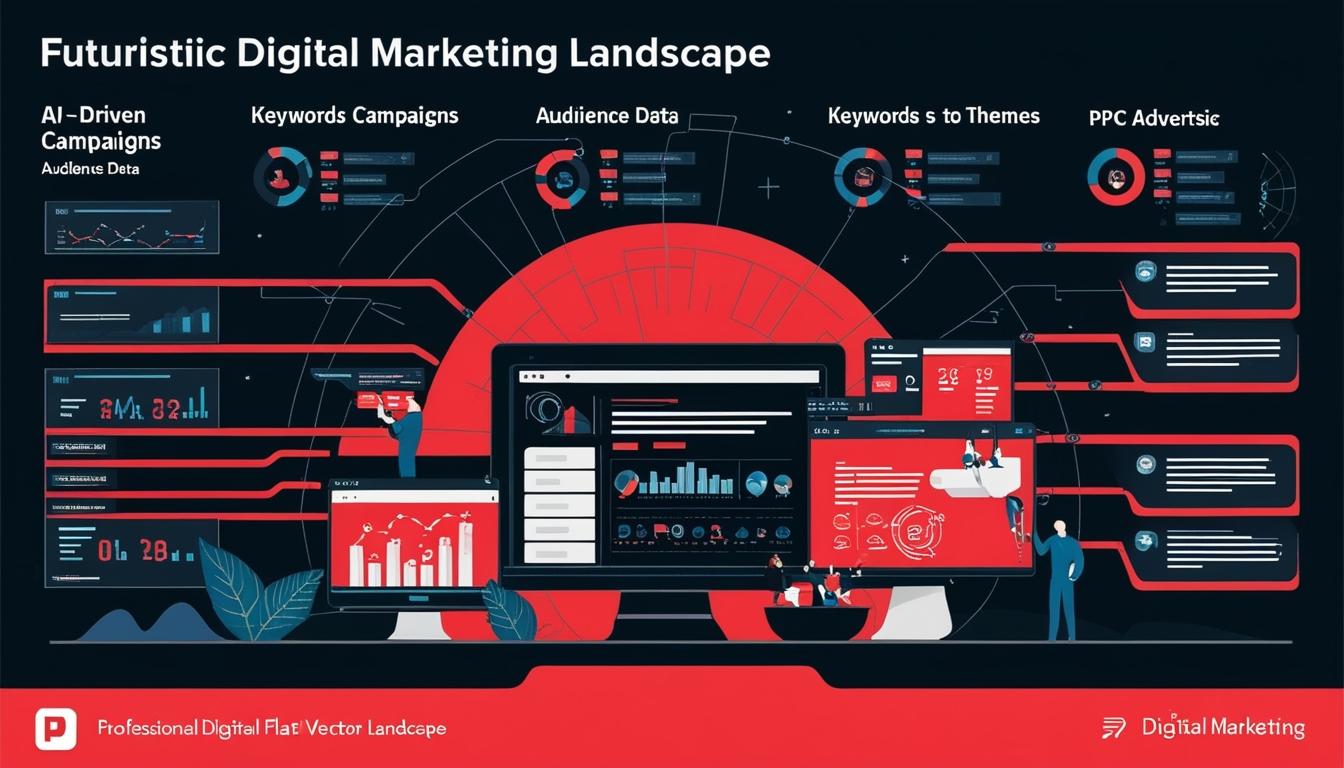
Recent innovations in AI are reshaping PPC advertising strategies, as businesses shift towards keywordless search campaigns, changing the dynamics of digital marketing.
Recent developments in artificial intelligence (AI) and automation are radically transforming the landscape of pay-per-click (PPC) advertising, particularly in relation to keyword usage. As businesses adapt to these changes, experts anticipate a significant shift towards what has been termed “keywordless search campaigns,” a concept that has been gaining traction in industry discussions.
This evolution is underscored by current practices where keywordless search tactics are already making their mark. Dynamic Search Ads and Performance Max campaigns are at the forefront of this trend, matching user queries to website content without traditional keywords. This approach allows advertisers to observe particular user queries, yet, intriguingly, they do not participate in conventional keyword bidding. The reasoning behind this substantial move from keyword reliance hints at a broader transformation within digital marketing practices.
As highlighted in a recent analysis from Practical eCommerce, Google’s approach to keywords is also undergoing change. The company has redefined the mechanics of broad match functionality. Now, ad queries can be triggered based on a variety of factors, including users’ previous search activities and geographical location, rather than solely on selected keywords. For instance, an advertiser focusing on “office desk accessories” might find their ads displayed to users searching for “coffee mugs” if those users have shown an interest in desk-related items through their search history.
This prompts a reconsideration of the idea of match types entirely. With this shift, Google has indicated that broad match—leveraging extensive audience signals—may offer more effective targeting for advertisers. Although sentiments differ, many professionals in the field have noted that performance may still be superior with traditional phrase and exact match tactics. However, the emerging consensus suggests that keywords are becoming a supplementary element rather than the primary focus of search campaigns.
The introduction of “search themes” in the beta phase of Performance Max campaigns illustrates this directional trend. Instead of requiring advertisers to submit specific keywords, the new system invites them to enter general themes pertinent to their products or services. For example, an advertiser dealing in recliners could input several related themes, such as “recliners,” “recliner chairs,” and “sofa recliners.” This enables a broader search strategy, permitting Google to leverage enhanced data analytics and machine learning to make appropriate ad placements.
Despite this trend towards a keyword-less structure, experts assert that the fundamental organisation of search campaigns will remain unchanged. Campaigns are likely to continue being structured around specific topics, supported by ad groups that delve into sub-topics. Advertisers will still create tailored ad copy relevant to their audience, employing a combination of audience signals and first-party data to facilitate targeted marketing.
The shifting environment raises a pertinent question: What remains of traditional search campaigns in light of Performance Max’s capabilities? According to the analysis, there are compelling reasons for advertisers to persist with conventional search campaigns. Notably, Performance Max offers a fixed setting that displays ads across all Google properties, which may not suit those who prefer to concentrate solely on the Search network.
Additionally, given Google’s longstanding history in the search domain—having established it as a core focus of their services for nearly 25 years—discontinuing the traditional search campaign could foster significant disruption for advertisers. While Google may promote the adoption of keywordless campaigns, it is expected that the company will allow continuity for those utilising standard Search campaigns, recognising the importance of choice in targeting options that advertisers have grown accustomed to.
As 2025 approaches, the landscape of PPC advertising is poised for evolution, with a clear movement towards AI-driven strategies that prioritise audience data over traditional keywords. This transition represents a pivotal moment for businesses navigating the complexities of digital marketing in an increasingly automated future.
Source: Noah Wire Services
- https://premierecreative.com/blog/ai-ppc-advertising/ – This article explains how AI is transforming PPC advertising, including bid optimization and automation, which are key aspects of the shift away from traditional keyword-based campaigns.
- https://www.lunio.ai/blog/ppc-automation-trends – This source discusses the emerging trend of keywordless search campaigns, how Google is moving away from the keyword model, and the importance of landing page content in determining ad visibility.
- https://www.lunio.ai/blog/ppc-automation-trends – It further elaborates on how paid search will work without keywords, focusing on content-based targeting and the role of landing pages in aligning with campaign goals.
- https://support.google.com/google-ads/answer/7018712?hl=en – This Google support page explains Dynamic Search Ads and Performance Max campaigns, which are at the forefront of the keywordless search trend, matching user queries to website content without traditional keywords.
- https://support.google.com/google-ads/answer/7018712?hl=en – It also highlights the benefits of upgrading Dynamic Search Ad campaigns to Performance Max, such as increased conversions and additional inventory.
- https://www.lunio.ai/blog/ppc-automation-trends – This article discusses the future of paid search without keywords, emphasizing the role of landing pages and campaign goals in determining ad placements.
- https://dataslayer.ai/es/blog/the-future-of-digital-advertising-how-ai-is-transforming-targeting-and-personalization – This source explains how AI is transforming targeting in digital advertising by considering user intent, context, and emotions, which aligns with the broader shift away from keyword reliance.
- https://premierecreative.com/blog/ai-ppc-advertising/ – It highlights the role of AI in optimizing bids and automating various aspects of PPC campaigns, making them more efficient and effective.
- https://www.designrush.com/agency/paid-media-pay-per-click/trends/ad-groups – This guide explains how ad groups work in PPC campaigns, which is relevant to the ongoing structure of search campaigns even as they evolve towards keywordless strategies.
- https://dataslayer.ai/es/blog/the-future-of-digital-advertising-how-ai-is-transforming-targeting-and-personalization – It discusses the future of digital advertising and how AI continues to play a crucial role in personalization and targeting, reflecting the evolving landscape of PPC advertising.
- https://www.lunio.ai/blog/ppc-automation-trends – This article provides insights from industry experts on preparing for a keywordless future, including the shift towards SEO-like strategies and the continued importance of landing pages.







