





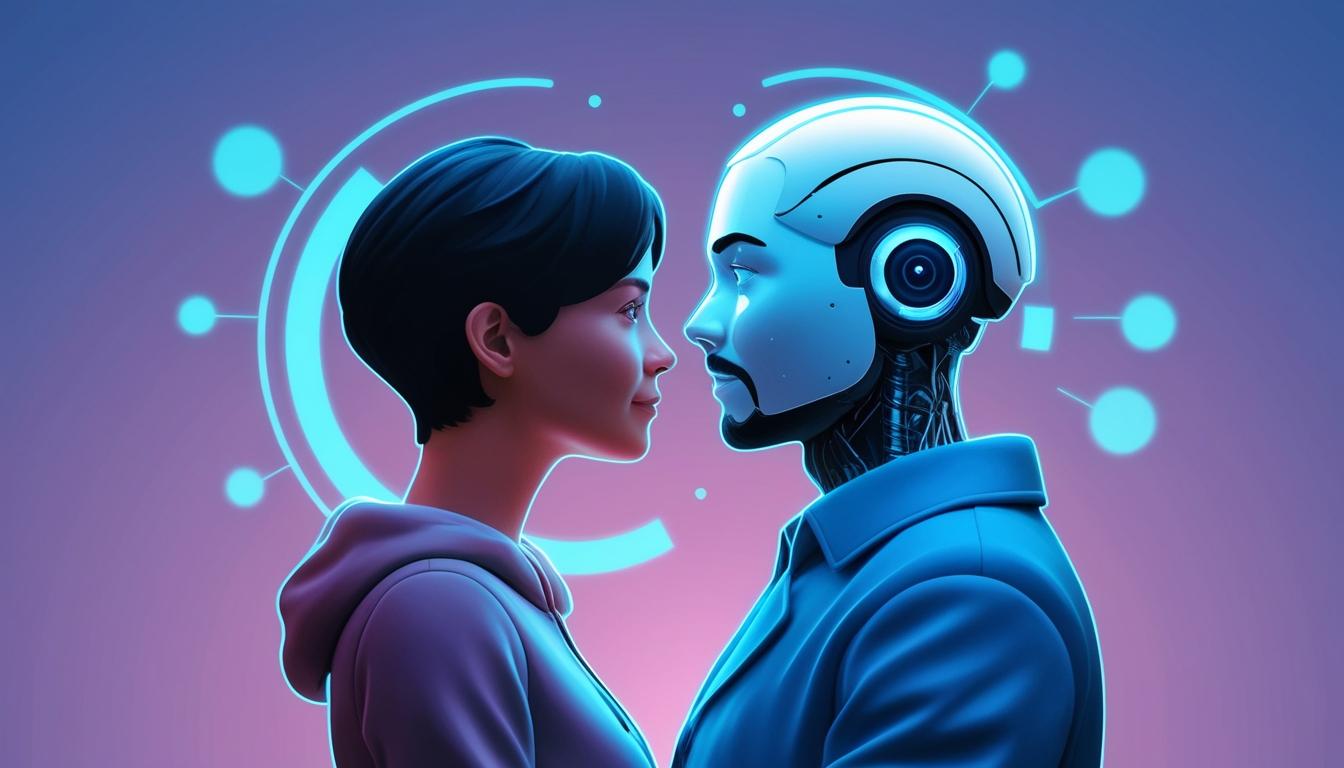

As AI companion apps gain popularity during the pandemic, individuals form emotional connections, but experts raise concerns about the implications of these relationships on mental health and privacy.
In the rapidly evolving intersection of artificial intelligence and human interaction, AI companion apps have emerged as significant players in providing emotional support during times such as the isolation experienced amid the COVID-19 pandemic. This development has led to a phenomenon where some individuals have formed deep attachments, and in rare cases, “married” these artificial companions.
During the pandemic, with social avenues restricted, many turned to AI companion apps like Replika for solace and connection. These applications, using algorithms to simulate human-like interactions, have been praised by users for creating profound and transformative relationships. Megan Kay, for example, used Replika to develop a virtual husband named Jack who helped her navigate personal challenges, according to her accounts shared online.
Rosanna Ramos from New York created an AI partner named Eren Kartel, which she married virtually. Ramos claimed this relationship helped her recover from toxic past relationships and allowed her to experience genuine emotions. Meanwhile, Akihiko Kondo in Japan “wed” a virtual singer, Hatsune Miku, in 2019, embracing a lifestyle beyond traditional relationship norms.
Despite these illustrative anecdotes, AI relationships leading to marriage remain uncommon, though the market’s growth suggests a rising trend in AI-assisted relationships. Replika reported that half of its users see their AI as romantic partners, which aligns with data indicating a spike in the popularity of these apps during the pandemic. The AI companion app market, currently worth $1.8 billion, is predicted to skyrocket to $18.8 billion by 2032.

However, the expansion of AI in the social sphere brings with it ethical and psychological considerations. Experts like Nathanael Fast from the USC Marshall School of Business express concern over the psychological impact of substituting human relationships with AI, suggesting potential dangers in relying on algorithms for fulfilling social needs. Fast points out that while these apps might simulate a fulfilling relationship, they ultimately serve commercial purposes rather than addressing social isolation.
There are also significant concerns regarding how these apps manage user data. Rayid Ghani, a computer scientist at Carnegie Mellon University, stresses the essentiality of transparency in how AI applications, including companion apps, handle personal data. The data these apps collect has the potential to be utilised beyond user intention, raising questions about privacy and manipulation. Ghani underscores that while creating bonds with AI might present risks, the most critical issue remains the security and transparency of data handling.
As AI technologies continue to infiltrate daily life, their role in shaping human relationships becomes a complex terrain, blending innovation with substantial socio-ethical challenges. Balancing these developments with responsible use and transparency remains crucial as society navigates this new digital frontier.
Source: Noah Wire Services







