









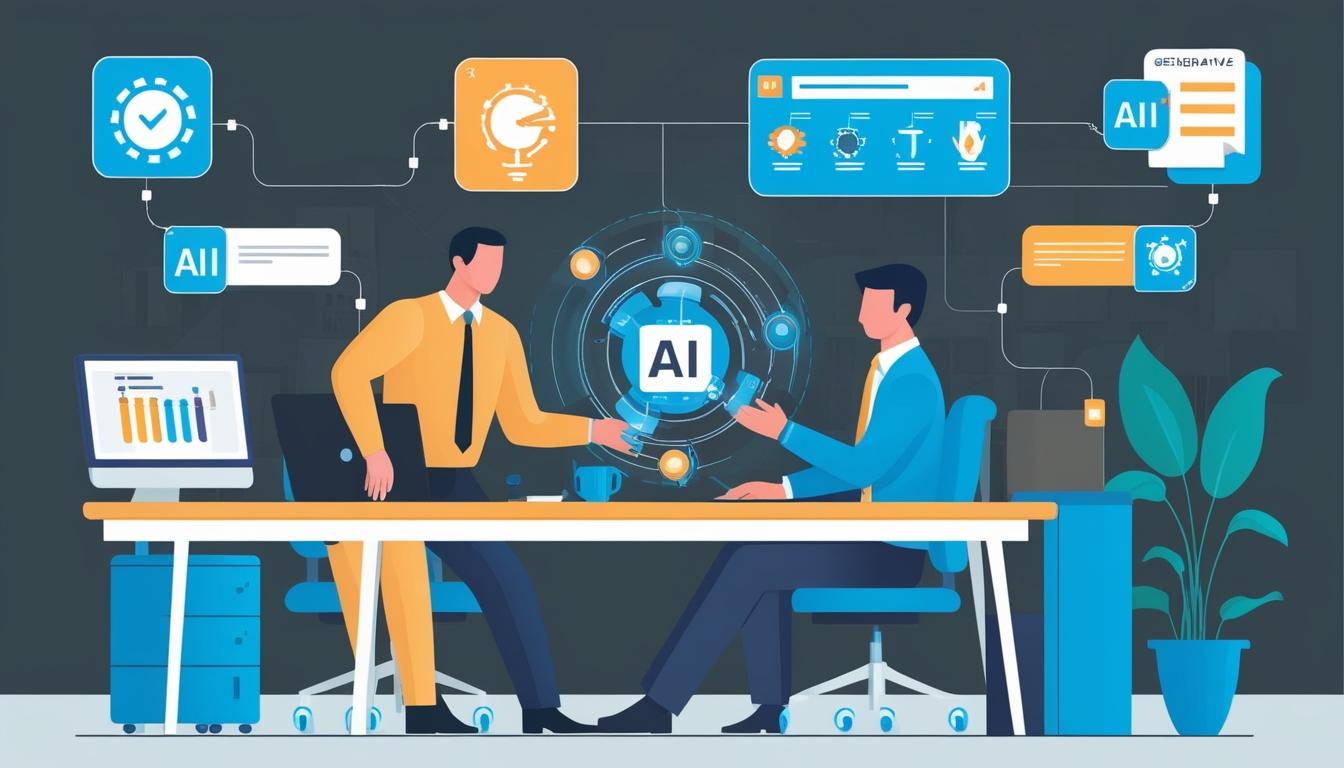
Advancements in generative artificial intelligence are reshaping the landscape of white-collar employment, suggesting a future of enhanced productivity and potential job growth rather than losses.
The Impact of Generative AI on White-Collar Employment: More Jobs, Not Less
In recent years, significant advancements in generative artificial intelligence (GenAI) have sparked both enthusiasm and concern regarding their implications for white-collar jobs. These roles, characterised primarily by information processing tasks, encompass various professions from programming and design to call centre operations and middle management. With the capabilities of GenAI expanding rapidly, many tasks traditionally performed by humans are either being automated or are seen as potential candidates for automation in the near future.
Concerns surrounding potential job losses are particularly pronounced for roles with predictable, rule-based components. For instance, call centre jobs that rely heavily on scripted interactions are seen as highly susceptible to being replaced by GenAI, which can perform these tasks more efficiently and at a lower cost. Nevertheless, the situation for many other white-collar jobs appears different due to the inherent need for human judgment and understanding, elements which AI is currently incapable of replicating fully.
The role of AI in this evolving landscape is increasingly seen as that of an assistant rather than a wholesale replacement. While GenAI can support tasks such as coding snippets, generating images, or drafting reports, the overarching responsibility for deciding which tasks are necessary and valuable remains with humans. This judgment, informed by a broader understanding and experience, remains a critical component in professions like programming, design, and management.
Examining the transformative effects of AI on knowledge work reveals a pattern synonymous with other industries historically impacted by technological advances. The comparison to the automobile industry illustrates this point effectively. When automobiles first became popular, they required regular maintenance, necessitating the services of a full-time mechanic for each vehicle. Advances in technology led to more self-sufficient vehicles demanding less frequent professional maintenance. However, this did not result in fewer mechanics; instead, the reduced cost and increased accessibility of cars made them widespread, boosting the overall demand for mechanics.
A similar pattern could emerge with the proliferation of GenAI. As these tools enhance the productivity of knowledge workers, they may lead to a surge in demand for these roles rather than a decrease. The economy adapts by expanding the scope and scale of opportunities available, potentially leading to job growth rather than contraction.
In conclusion, while certain aspects of white-collar roles may be automated with GenAI, the nuanced nature of many tasks combined with the technology’s current limitations suggests that AI will serve primarily as an enhancement to human capabilities. This enhancement, akin to a productivity boost, carries the potential to create more employment opportunities as industries and economic activities expand in response to new efficiencies and capacities.
Source: Noah Wire Services






