






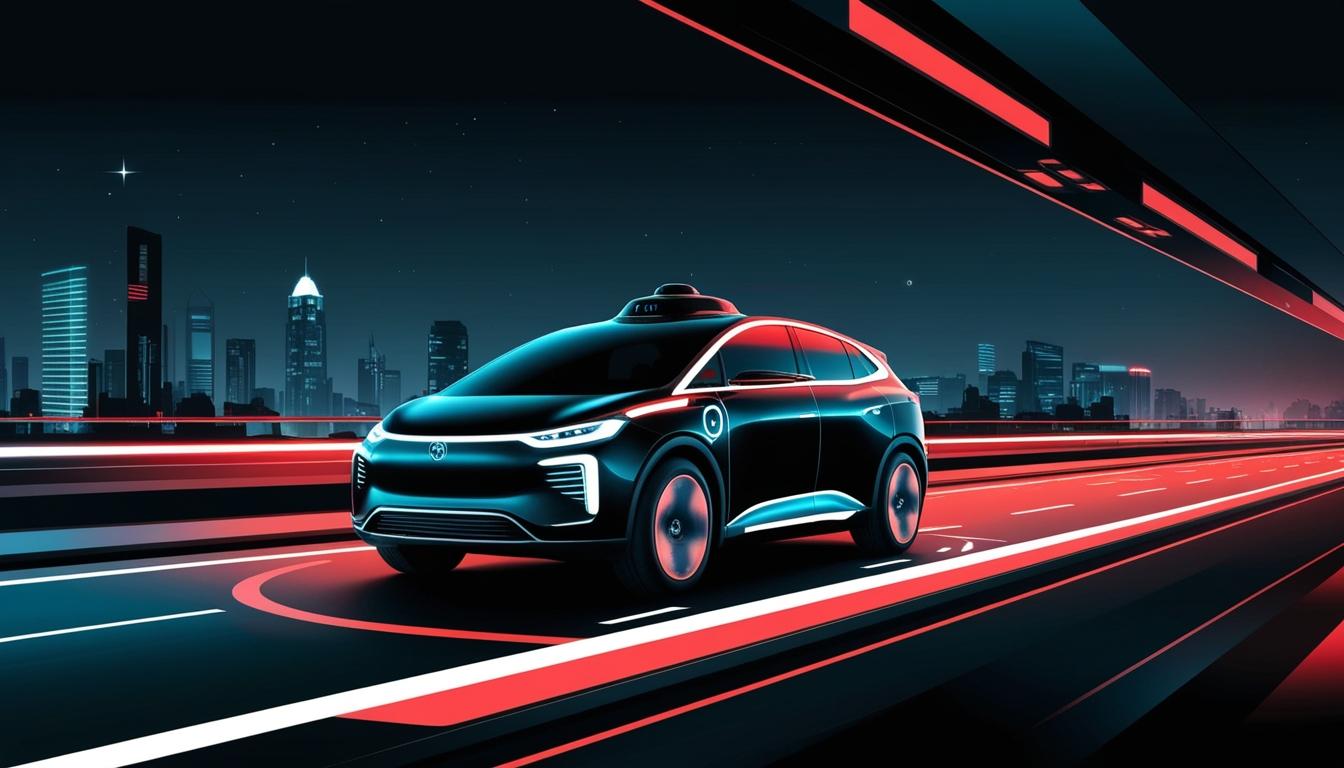

Despite scepticism, the driverless vehicle market is growing rapidly, valued at approximately GBP 121.5 billion last year, with significant advances in technology driving safety and reliability improvements.
The market for driverless vehicles, despite prevailing scepticism, is experiencing substantial growth, valued at approximately GBP 121.5 billion last year, with predictions indicating a surge of over 30 per cent leading up to 2030. Central to the discourse surrounding this emerging industry are concerns about safety and reliability, particularly regarding the navigation and decision-making systems that underpin autonomous vehicles (AVs).
A range of advanced technologies is essential for the functionality and safety of AVs. GPS systems are a cornerstone of this technology, enabling precise real-time tracking and efficient route navigation. Beyond GPS, technologies such as Light Detection and Ranging (LiDAR) play a critical role, providing detailed three-dimensional mapping of the vehicle’s environment. LiDAR sensors employ lasers to calculate distances and sizes of objects, allowing the vehicle to identify and react to pedestrians, cyclists, and other potential obstacles.
Radar systems enhance the vehicle’s capabilities in conditions where visibility is compromised, such as rain or fog, while cameras offer a visual representation crucial for recognising road signs, lane markings, and other vital features of the driving environment. The fusion of these technologies facilitates comprehensive situational awareness, a key element for safe autonomous operation.
In addition to sensing technology, communication systems such as Vehicle-to-Vehicle (V2V) and Vehicle-to-Infrastructure (V2I) protocols are essential for real-time information exchange between vehicles and surrounding infrastructure. V2V systems can share intentions and hazards with nearby vehicles, while V2I systems provide information about traffic conditions and help recognise regulatory signage.

The decision-making processes in AVs rely heavily on artificial intelligence and machine learning. Algorithms analyse the extensive data collected from sensors, enabling the vehicle to make informed decisions regarding acceleration, braking, and navigation—an essential function for ensuring passenger safety and adherence to traffic regulations. Path planning algorithms further enhance this capability by considering a multitude of factors including speed limits, road conditions, and the potential for obstructions.
However, despite the significant advancements in technology, challenges remain regarding public acceptance and the perceived safety of driverless vehicles. A recent poll indicated that approximately 30 per cent of respondents in North America, Europe, Asia, and Australia would be unlikely to purchase an AV. Among the concerns are the potential for cyberattacks, which not only jeopardise individual privacy but also pose risks to public safety.
In response to these apprehensions, companies within the AV industry are actively investing in robust cybersecurity measures and continuing efforts to establish clearer data protection policies and enhanced regulatory standards. The ongoing development in these areas remains vital as the sector pushes toward the goal of reliable, commercially viable driverless vehicles.
As the industry progresses, semi-autonomous driving technologies and advanced safety features are already being integrated into traditional vehicles, offering immediate benefits while paving the path towards a future dominated by fully autonomous driving. The current focus on improving reliability and safety is a testament to the industry’s commitment to addressing the challenges that lie ahead.
Source: Noah Wire Services
- https://www.mordorintelligence.com/industry-reports/autonomous-driverless-cars-market-potential-estimation – Corroborates the growth of the autonomous vehicle market and the role of advanced technologies like GPS, LiDAR, radar, and cameras in ensuring safety and functionality.
- https://www.precedenceresearch.com/self-driving-cars-market – Supports the market size and growth predictions for autonomous vehicles, including the importance of safety and reliability concerns.
- https://www.precedenceresearch.com/autonomous-vehicle-market – Details the technological advancements, including AI and machine learning, and the integration of various sensing technologies for autonomous vehicles.
- https://www.mordorintelligence.com/industry-reports/autonomous-driverless-cars-market-potential-estimation – Explains the role of V2V and V2I communication systems in enhancing the safety and efficiency of autonomous vehicles.
- https://www.zionmarketresearch.com/report/autonomous-vehicle-market – Discusses the fusion of technologies such as GPS, LiDAR, radar, and cameras for comprehensive situational awareness in autonomous vehicles.
- https://www.precedenceresearch.com/autonomous-vehicle-market – Highlights the decision-making processes in AVs relying on AI and machine learning, and the importance of path planning algorithms.
- https://www.mordorintelligence.com/industry-reports/autonomous-driverless-cars-market-potential-estimation – Addresses public acceptance and safety concerns, including the potential for cyberattacks and the need for robust cybersecurity measures.
- https://www.precedenceresearch.com/self-driving-cars-market – Mentions the ongoing development in cybersecurity and data protection policies to address public apprehensions about autonomous vehicles.
- https://www.zionmarketresearch.com/report/autonomous-vehicle-market – Details the integration of semi-autonomous driving technologies and advanced safety features into traditional vehicles as a step towards fully autonomous driving.
- https://www.fortunebusinessinsights.com/industry-reports/autonomous-cars-market-100141 – Supports the current focus on improving reliability and safety in the autonomous vehicle industry and its commitment to addressing future challenges.
- https://www.precedenceresearch.com/autonomous-vehicle-market – Provides insights into the market growth and regional dynamics, including the significant role of North America and the Asia-Pacific region in the autonomous vehicle market.







