









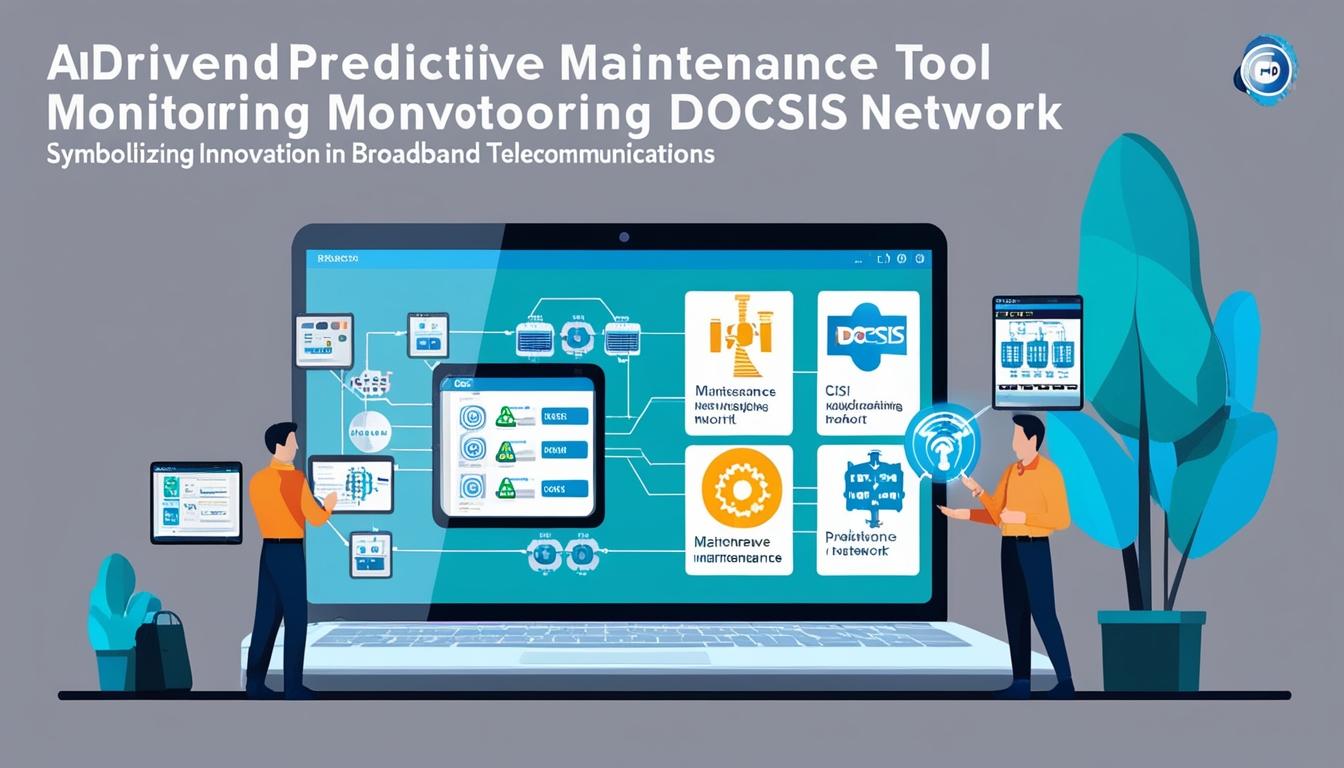
The cable industry is shifting from reactive to proactive maintenance, leveraging AI to enhance the management of DOCSIS networks and improve customer satisfaction.
The Future of DOCSIS Networks: Embracing Proactive Maintenance with AI
In the ever-evolving world of broadband cable and telecommunications, the transition from reactive to proactive maintenance is gaining momentum. At the heart of this shift is the innovative use of AI to streamline the management of Data Over Cable Service Interface Specification (DOCSIS) networks. Traditionally celebrated for their rapid response capabilities, cable operators are now looking to prevent issues before they arise, offering a more seamless experience for subscribers.
DOCSIS is the backbone of high-speed internet over cable networks, integral to maintaining connectivity in households and businesses worldwide. The ongoing transformation involves moving away from merely responding to network issues to predicting and addressing them preemptively. This proactive network maintenance (PNM), a key component in the latest DOCSIS standards, leverages the power of AI to predict and resolve network inefficiencies.
Reactive Maintenance: A Thing of the Past
Historically, the cable industry has focused on reactive maintenance, swiftly addressing problems as they occur. However, this approach is akin to continuously fighting fires without investing in robust prevention mechanisms. This method can lead to increased operational costs and, more crucially, service disruptions, impacting the customer experience adversely. As DOCSIS technologies advance, intricacy in network management grows, necessitating a shift to preemptive strategies.
Integration of PNM with DOCSIS Standards
PNM is designed to fit seamlessly within the DOCSIS framework, which includes tools for continuous monitoring and early problem detection. Through enhanced diagnostic tools and the incorporation of predictive analytics, PNM can ensure cable networks are both robust and reliable. Continuous network monitoring allows for the identification of potential impairments, thereby fostering a proactive approach to maintaining network health.
Artificial Intelligence: A Game Changer
AI has emerged as a transformative force in network maintenance. By deploying AI-powered diagnostic tools, technicians—regardless of their experience level—can resolve issues with unprecedented speed and precision. These systems are capable of identifying plant impairments autonomously, creating service tickets with detailed instructions to ensure technicians understand exactly what and where the issue lies.
AI’s capacity to analyse substantial data volumes swiftly not only speeds up problem resolution but also minimizes errors, thereby enhancing the overall subscriber experience.
Looking Ahead: Predictive Maintenance
The future of network maintenance lies in its predictive potential. AI can harness historical data and usage patterns to predict outages or network slowdowns before they occur. This ability allows for the creation of work orders based on predicted events, effectively prioritizing tasks to ensure minimal impact on subscribers. Such foresight is particularly critical as networks evolve to support essential and latency-sensitive applications like healthcare and augmented or virtual reality technologies.
Strategic Importance for DOCSIS Networks
Adopting AI-driven PNM within the DOCSIS framework isn’t merely a technological progression; it’s a strategic necessity. By anticipating and preventing network issues, the cable industry can enhance customer satisfaction and maintain its competitive edge. As networks gravitate towards high capacity and low latency, ensuring their reliability becomes a fundamental imperative.
In summary, embracing proactive network maintenance through AI is pivotal for the development of more resilient DOCSIS networks. This paradigm shift promises not only to improve service quality and customer satisfaction but also to position the industry for success in a rapidly digitalising world.
Source: Noah Wire Services






