As the landscape of automation evolves, businesses are urged to integrate new technologies to boost efficiency, sustainability, and competitiveness ahead of 2025.
The landscape of automation is set to experience transformative changes as businesses move towards 2025, driven by advancements in technology and a focus on operational efficiency. The global robotics market, projected to exceed $165 billion by 2029, highlights the urgency among companies to integrate innovative solutions into their operations, particularly in supply chains and logistics.
Key players in this dynamic sector, including Hy-Tek Intralogistics, are emphasising essential technologies such as Warehouse Execution Systems (WES), Artificial Intelligence (AI), and Automated Guided Vehicles (AGVs) as critical components in optimising logistics and operations. “Companies must identify key priorities to tackle the complexities and prospects of automation,” industry experts note from their discussions on emerging trends.
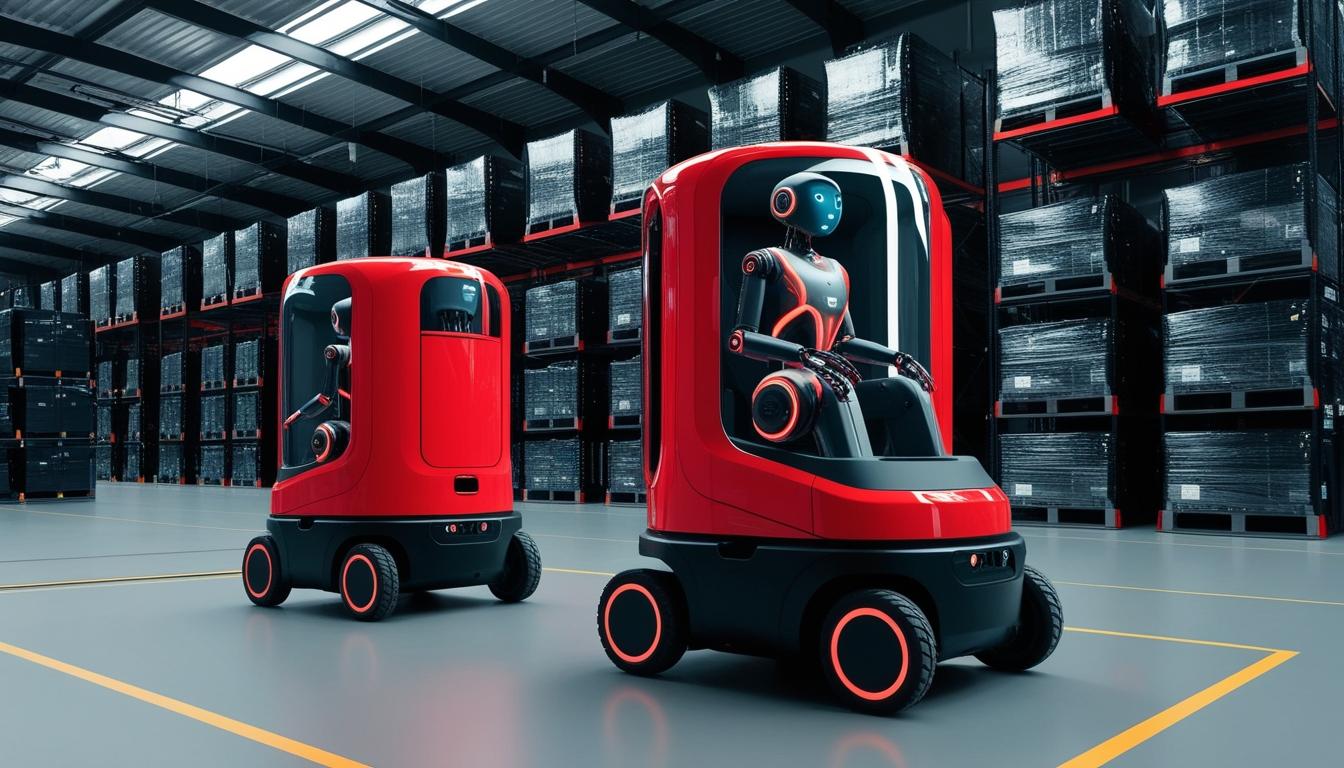
In recent discussions, Systems Development Lead Joe McGrath and Lead Product Development Engineer Jesse Lockwood from Hy-Tek Intralogistics outlined pivotal trends shaping the future of automation. They highlighted that integration is becoming increasingly essential for linking various technologies to simplify operations. McGrath and Lockwood explain that the rise of Autonomous Mobile Robots (AMRs) and AGVs is notable, as these technologies are tailored to boost efficiency and productivity in warehouse environments.
Moreover, the emphasis on sustainability is evident through innovations such as collapsible totes and AI-driven optimisation processes, which are paving the way for greener operations. Lockwood, recognised as a subject matter expert in automation technologies, has underscored the move towards sustainability within operational strategies, stating that “the focus on sustainability is becoming a core element of operational strategy.”
The transformative impact of these advancements is being felt across numerous industries. The integration of AI enhances predictive analytics and process automation, while WES streamlines warehouse operations by enabling improved real-time decision-making and resource management. The deployment of AMRs promises to revolutionise logistics, offering flexible solutions that improve material handling and overall warehouse efficiency.
While these advancements present numerous benefits, they also introduce challenges. The initial investment required for implementing advanced automation technologies can pose financial hurdles for smaller enterprises. Additionally, concerns regarding job displacement due to automation highlight the necessity for workforce retraining.
As businesses prepare for these shifts, a focus on cybersecurity will become increasingly important to safeguard automated systems against vulnerabilities. The move towards cloud-based automation solutions is also anticipated to grow, noted for their scalability and adaptability, forming a crucial part of future automation strategies.
As the automation revolution progresses, industry experts consistently encourage businesses to stay informed about these evolving trends and technologies. By prioritising integration, sustainability, and leveraging the potential of AI and robotics, companies can not only adapt to the changing landscape but potentially find new opportunities for growth and competitiveness in a rapidly evolving marketplace.
Source: Noah Wire Services
- https://www.marketsandmarkets.com/PressReleases/industrial-robotics.asp – Corroborates the growth of the industrial robotics market, projected to reach $29.43 billion by 2029, and the increasing adoption of collaborative robots and automation in electronics manufacturing.
- https://www.prnewswire.com/news-releases/industrial-robotics-market-worth-29-43-billion-by-2029—exclusive-report-by-marketsandmarkets-302256730.html – Supports the projection of the industrial robotics market growth from $16.89 billion in 2024 to $29.43 billion by 2029, with a CAGR of 11.7%.
- https://www.srsi.com/7-reasons-why-you-need-a-warehouse-execution-system/ – Highlights the benefits of Warehouse Execution Systems (WES), including real-time order status, optimized people and robots, and accurate order processing.
- https://www.conveyco.com/blog/qualities-of-warehouse-execution-systems/ – Details the qualities of WES, such as improving operational efficiency, boosting scalability, and ensuring integration, which are crucial for optimizing logistics and operations.
- https://www.marketsandmarkets.com/PressReleases/industrial-robotics.asp – Mentions the emergence of industry 5.0 and the rising automation in electronics manufacturing as drivers for the industrial robotics market growth.
- https://www.srsi.com/7-reasons-why-you-need-a-warehouse-execution-system/ – Explains how WES can optimize resource and labor allocation, reduce system congestion, and improve worker safety and morale.
- https://www.conveyco.com/blog/qualities-of-warehouse-execution-systems/ – Discusses how WES solutions bridge various components of warehouse automation infrastructure, ensuring seamless operation and efficient resource flow.
- https://www.marketsandmarkets.com/PressReleases/industrial-robotics.asp – Notes the shortage of skilled workforce in the manufacturing sector as a driving factor for the adoption of industrial robots.
- https://www.prnewswire.com/news-releases/industrial-robotics-market-worth-29-43-billion-by-2029—exclusive-report-by-marketsandmarkets-302256730.html – Supports the importance of integration in linking various technologies to simplify operations and enhance efficiency.
- https://www.conveyco.com/blog/qualities-of-warehouse-execution-systems/ – Highlights the role of real-time insights and data from multiple sources in WES to manage warehouse operations effectively.
- https://news.google.com/rss/articles/CBMilgFBVV95cUxPcml1c0VxQUQtcFB2TnRhWmFpcW55UVhVemtibmF0Y1BqMHYzSE1ycll3cXgtbXM4Z2JVaUNrZXJoYjk1LXJINW5uQUp1Qm5YOVBWamVRZFEtdy1jbWlaVHUxcU9WNVFwMlVld0RZWUpiWVdPXzBsZjFGLXBZVVFMbFl3YUtteHpScjFQdjlvZ2kwZ21NR2c?oc=5&hl=en-US&gl=US&ceid=US:en – Please view link – unable to able to access data