









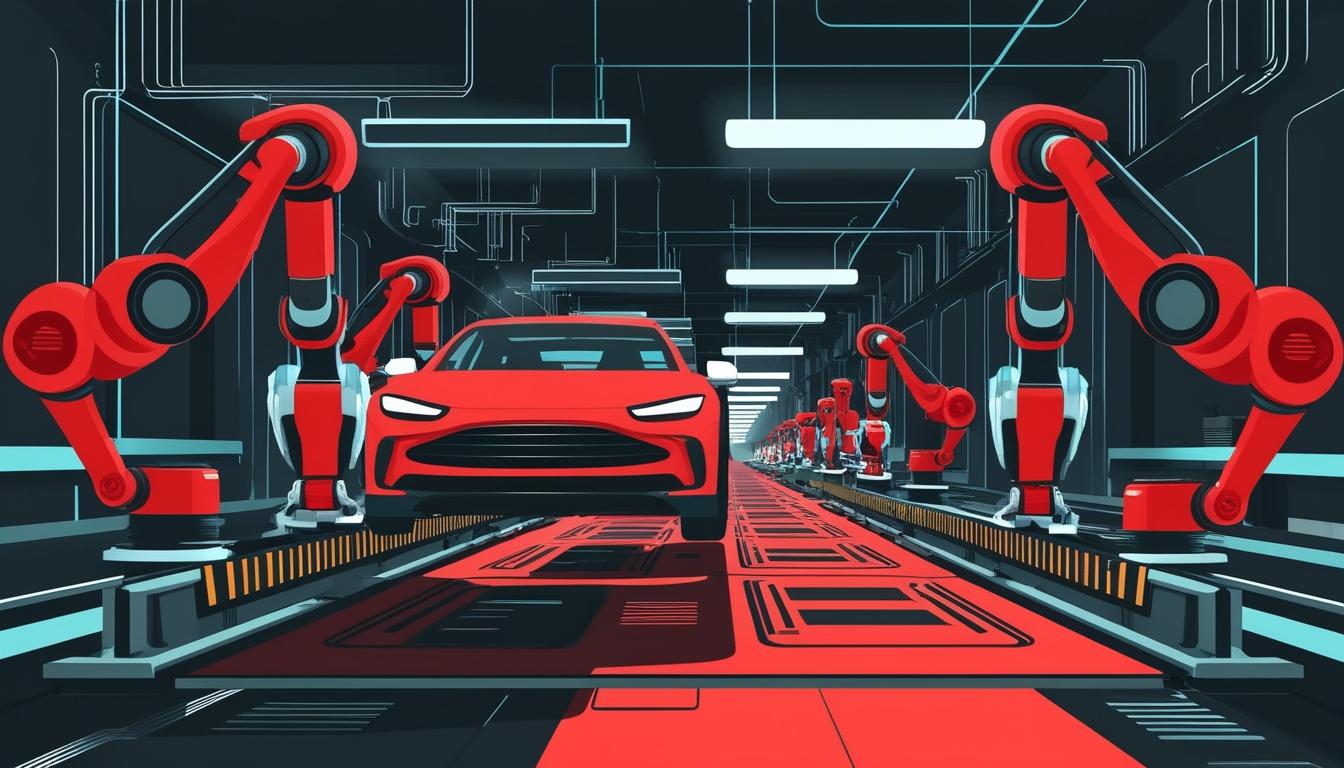
The automotive sector embraces AI and automation, enhancing production efficiency while potentially creating new job opportunities and redefining maintenance practices.
The automotive industry stands at the forefront of an evolving landscape shaped by the rising integration of artificial intelligence (AI) and automation. Current statistics reveal that approximately one-third of all industrial robots installed in the United States are employed within the automotive sector, a figure that underscores the industry’s commitment to adopting advanced technological solutions aimed at enhancing production efficiency and operational capabilities.
The journey of automation in the automotive realm dates back over a century. The first modern auto assembly line was put into action by Ransom Eli Olds in 1901, setting the stage for mass production with the Oldsmobile Curved Dash. The transformative introduction of the moving assembly line by Henry Ford in 1913 marked a seminal moment, allowing for unprecedented scale in vehicle manufacturing. This tradition of harnessing technological advancements continues, with the advent of AI signalling a new era for automobile production defined by smart factory robots.
Today, industrial robots play a crucial role in the operations of automotive manufacturers, streamlining processes essential to the production chain. Automation ensures that variables such as weld quality, engine installations, compliance with safety standards, and paint applications are executed with precision. Despite widespread perceptions that increased automation may lead to job losses, experts indicate that the evolution of robotics will likely pivot towards the creation of new career opportunities and necessitate shifts in skill sets required within the industry.
The benefits of robotics extend beyond the confines of manufacturing. In the realm of vehicle maintenance, automation facilitates tasks such as tyre replacement and diagnostic assessments. This shift enables technicians and service workers to adopt methodical, repeatable maintenance procedures while diminishing the risks associated with monotonous or hazardous tasks. AI-enhanced vehicle maintenance centres are projected to reduce wait times, elevate customer satisfaction, and enhance the overall quality of service provided by maintenance technicians. Furthermore, the systematic collection of operational data promises to illuminate areas ripe for improvement across both production and maintenance spheres.
Industry forecasts indicate a robust growth trajectory for the automotive robotics market, anticipated to expand by 12% annually through 2027, with expectations for acceleration by the decade’s close. This growth signals a significant shift in business practices, with robotics expected to impact cost structures in areas such as automotive shipping — thus influencing quotations received by consumers seeking to transport vehicles.
Auto transport services, like those provided by Nexus, exemplify the evolving dynamics within the automotive sector. Beyond mere vehicle shipping, Nexus facilitates the movement of diverse automotive equipment for both private and professional clientele, boasting a nationwide network of reputable trucking partners. The firm’s recognition as a leading car transport service provider in the United States, according to multiple media outlets, reflects its strategic alignment with industry trends, including the transportation of industrial robots to and from manufacturing sites.
As the automotive industry adapts to these technological advancements, the integration of AI and automation continues to reshape business practices, heralding a future where efficiency, safety, and customer satisfaction become increasingly intertwined. The trajectory of this transformation suggests significant implications not only for manufacturers and service providers but also for consumers and the larger economy.
Source: Noah Wire Services
- https://www.globenewswire.com/news-release/2024/10/08/2960185/32656/en/Artificial-Intelligence-AI-Market-Size-in-Automotive-Anticipated-to-Exceed-USD-13-0-Billion-by-2034-with-a-CAGR-of-15-6-Transparency-Market-Research-Inc.html – This link supports the integration of AI in automotive manufacturing and the projected growth of the AI market in the automotive sector.
- https://www.thebusinessresearchcompany.com/report/artificial-intelligence-in-automotive-global-market-report – This link provides details on the segmentation and growth of the AI market in automotive, including the impact of autonomous driving and connected car technologies.
- https://www.precedenceresearch.com/automotive-artificial-intelligence-market – This link corroborates the growth projections and technological advancements in the automotive AI market, including autonomous driving and predictive maintenance.
- https://www.global-imi.com/blog/ai-and-auto-industry-perfect-match-2024 – This link highlights the investment in AI by auto companies, the use of AI in manufacturing processes, and the benefits of AI in vehicle maintenance and autonomous driving.
- https://www.fullpath.com/blog/the-impact-and-benefits-of-ai-in-the-automotive-industry/ – This link explains the impact of AI on automotive manufacturing, including automation, quality control, and the future integration of AI in vehicle systems.
- https://www.globenewswire.com/news-release/2024/10/08/2960185/32656/en/Artificial-Intelligence-AI-Market-Size-in-Automotive-Anticipated-to-Exceed-USD-13-0-Billion-by-2034-with-a-CAGR-of-15-6-Transparency-Market-Research-Inc.html – This link supports the role of AI in enhancing vehicle safety, performance, and the integration of AI in automotive design and manufacturing processes.
- https://www.thebusinessresearchcompany.com/report/artificial-intelligence-in-automotive-global-market-report – This link provides insights into the segmentation of the AI market in automotive by technology, application, and region, supporting the growth and trends in the sector.
- https://www.precedenceresearch.com/automotive-artificial-intelligence-market – This link details the use of AI in various applications such as autonomous driving, human-machine interface, and semi-autonomous driving, and the growth projections for these segments.
- https://www.global-imi.com/blog/ai-and-auto-industry-perfect-match-2024 – This link discusses the integration of AI in vehicle maintenance, including predictive maintenance and the use of AI in enhancing customer satisfaction and service quality.
- https://www.fullpath.com/blog/the-impact-and-benefits-of-ai-in-the-automotive-industry/ – This link explains how AI is revolutionizing traditional automotive practices by optimizing manufacturing processes, reducing costs, and enhancing supply chain management.
- https://www.globenewswire.com/news-release/2024/10/08/2960185/32656/en/Artificial-Intelligence-AI-Market-Size-in-Automotive-Anticipated-to-Exceed-USD-13-0-Billion-by-2034-with-a-CAGR-of-15-6-Transparency-Market-Research-Inc.html – This link supports the regulatory initiatives and government support for AI research and development, which propel innovation and market expansion in the automotive sector.






