









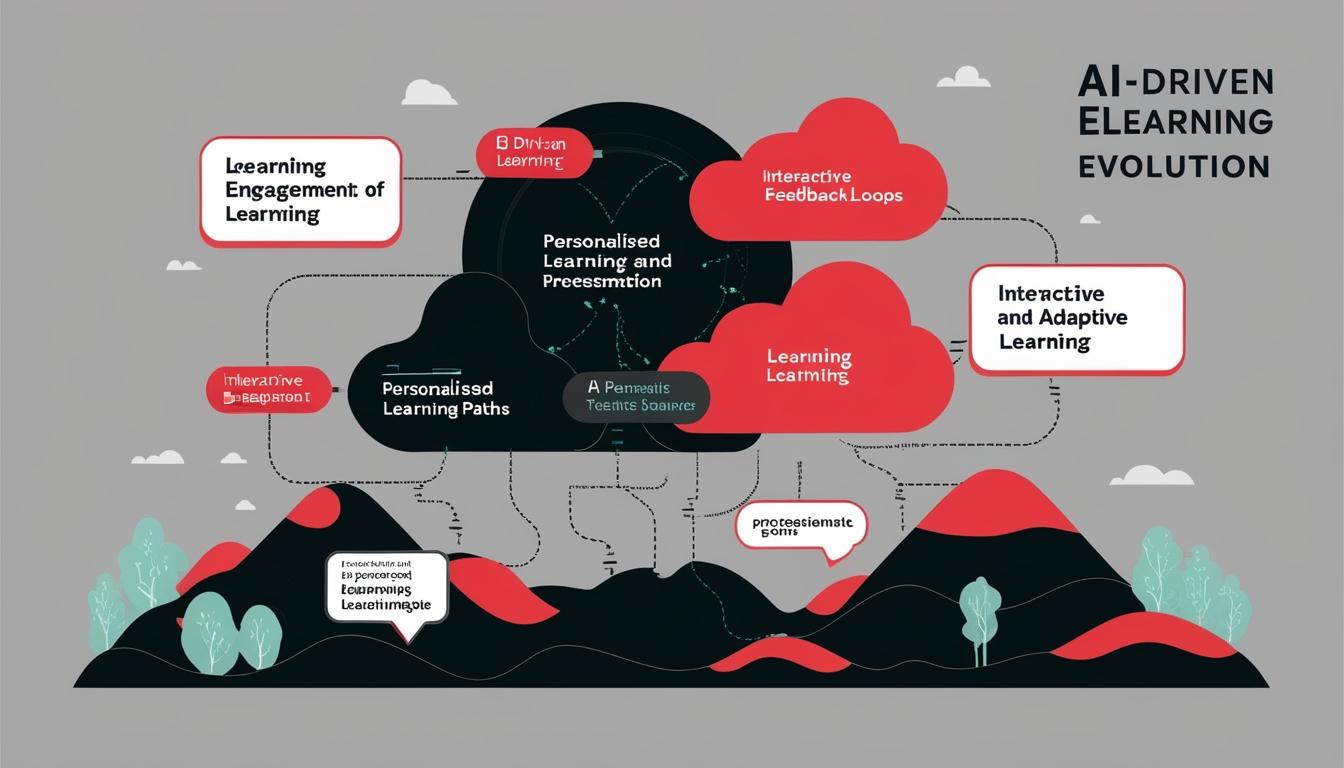
The integration of feedback-driven AI is transforming eLearning, enhancing learner engagement and personalising educational experiences.
The landscape of eLearning is undergoing a significant transformation, driven by the need for adaptive, responsive learning experiences that align closely with individual and organisational learning objectives. Recent discussions in the field highlight the increasing integration of feedback-driven Artificial Intelligence (AI) into eLearning systems, which promises to enhance learner engagement and improve educational outcomes.
Organisations are recognising that effective eLearning is not merely about content delivery but rather about creating environments that evolve according to the needs of the learner. The incorporation of AI enhances feedback mechanisms, allowing for a shift from static learning formats to dynamic systems that respond to learner inputs. This progressive approach accommodates various learning styles and acknowledges the rapid pace of technological advancements.
A critical component of this evolution is the implementation of continuous feedback integration through AI-powered tools. These tools analyse diverse learner inputs—such as survey results, quiz scores, and engagement metrics—to identify emerging trends and areas needing improvement. This data-driven approach enables design teams to refine learning materials in real-time, ensuring that content remains relevant and tailored to the specific goals of learners.
Personalised learning paths have also emerged as a focal point in eLearning, with AI tracking individual progress and preferences to provide targeted content recommendations. This customisation maximises knowledge retention and keeps students engaged, catering specifically to their unique learning journeys.
The content development process has embraced iterative methodologies such as agile frameworks, notably Kanban and design thinking. These strategies facilitate rapid prototyping and allow training teams to adjust materials based on learner feedback swiftly. The ability to visualise workflows and collect insights in real-time is essential in this adaptive environment.
Microlearning is another crucial element in the future of eLearning, consisting of condensed modules designed for quick absorption. This format is particularly well-suited for feedback-driven AI, as it enables rapid iteration based on learner reactions. Advanced AI tools can assist in the creation and deployment of microlearning content, ensuring quality and accessibility.
Collaboration within eLearning platforms enhances engagement, enabling learners to share insights and construct knowledge collectively. The integration of flipped classroom techniques further supports this collaborative spirit; foundational material can be reviewed by learners prior to participating in interactive discussions, thus facilitating deeper engagement during real-time sessions.
AI tools play an integral role in streamlining feedback collection and analysis. Affinity diagrams help organise learner feedback by grouping related ideas, while journey maps provide a visual representation of the learner experience, illustrating key touchpoints and challenges. Continuous feedback loops established in digital platforms allow for immediate content revisions based on learner input, promoting an agile design process.
In this evolving educational landscape, the equipping of trainers with the necessary skills to utilise feedback-driven AI tools is paramount. Training programmes must focus on providing educators with hands-on experience in these technologies, ensuring they can effectively curate content and respond to learner needs. A confident and informed trainer can substantially enhance the eLearning experience, making it more engaging and responsive.
As organisations continue to embrace feedback-driven AI in eLearning, the potential for creating inclusive and scalable educational frameworks is significant. The adaptive model places emphasis on continuous skill development and lifelong learning, providing a sturdy foundation for the future of workforce training. Combining this approach with microlearning strategies promises to yield a dynamic ecosystem where learner needs dictate content and delivery, shaping a more effective and relevant training landscape.
Source: Noah Wire Services
- https://elearning.adobe.com/2024/08/the-impact-of-ai-in-elearning-transforming-education-for-the-digital-age/ – Corroborates the integration of AI in eLearning for personalized learning experiences, adaptive learning, and continuous feedback.
- https://elearning.company/blog/understanding-the-role-of-ai-in-elearning-course-authoring/ – Supports the role of AI in creating personalized learning paths, real-time feedback, and adaptive content delivery.
- https://elearningindustry.com/the-transformative-impact-of-ai-on-education – Highlights AI’s ability to create personalized learning paths, automate administrative tasks, and enhance content delivery.
- https://senseilms.com/elearning-ai/ – Discusses how AI enables adaptive learning, personalized content, and the use of virtual tutors and chatbots in eLearning.
- https://elearningindustry.com/top-benefits-of-leveraging-ai-in-online-learning-platforms – Details the benefits of AI in online learning, including personalized learning, adaptive assessments, and real-time feedback.
- https://elearning.adobe.com/2024/08/the-impact-of-ai-in-elearning-transforming-education-for-the-digital-age/ – Explains the use of AI in enhancing feedback mechanisms and creating dynamic learning environments.
- https://elearning.company/blog/understanding-the-role-of-ai-in-elearning-course-authoring/ – Describes how AI tools analyze learner inputs to refine learning materials in real-time.
- https://elearningindustry.com/the-transformative-impact-of-ai-on-education – Supports the use of AI in personalizing learning paths and maximizing knowledge retention.
- https://senseilms.com/elearning-ai/ – Discusses the role of AI in microlearning and the creation of condensed, feedback-driven learning modules.
- https://elearningindustry.com/top-benefits-of-leveraging-ai-in-online-learning-platforms – Highlights the importance of AI in streamlining feedback collection and analysis, and in enhancing collaboration within eLearning platforms.
- https://elearning.adobe.com/2024/08/the-impact-of-ai-in-elearning-transforming-education-for-the-digital-age/ – Emphasizes the need for trainers to be equipped with skills to use feedback-driven AI tools effectively.






