Experts discuss how AI-driven advancements are transforming workplaces, enhancing collaboration between humans and robots.
In recent years, there has been a notable surge in the application of artificial intelligence (AI) and automation across various industries, altering traditional methods of operation and pushing forward the limits of technological innovation. This evolving landscape of AI-driven advancements was highlighted by experts discussing the transformative potential of robotics in future workplaces and sectors.
According to Pascal Brier, Chief Innovation Officer at Capgemini, the evolution of AI technology is set to redefine the functional capabilities of robots by 2025. He noted that next-generation robots will possess the ability to learn from their surroundings, which will significantly enhance their navigational skills and their collaboration with human workers. “Advancements in AI technology have accelerated the development of next-generation robots,” Brier explained. With a current industry focus on building machines that can adapt to various environments, robots are transitioning from rigid, task-specific applications to intelligent, autonomous systems capable of complex decision-making.
Industry experts also acknowledged a profound shift in the workplace dynamics due to the implementation of AI-driven automation. As reported by TechInformed, Brier highlighted that a substantial proportion of top executives and venture capitalists—24% and 43%, respectively—view these advancements as pivotal trends within the realms of data and AI for the near future. The Capgemini Research Institute’s forthcoming report reflects a growing anticipation around the roles of AI and robotics, especially as industries strive for enhanced efficiency, flexibility, and innovation.
Polyfunctional robots, described by Michel Spruijt, President of Brain Corp International, are set to impact numerous fields, including retail, manufacturing, and logistics, by 2025. These machines are designed to seamlessly transition between various tasks, such as inventory management and floor care, showcasing their versatility. Spruijt indicated that these robots would not only enhance productivity but would also evolve over time as they learn from new experiences, further driving opportunities across sectors.
The manufacturing landscape is already undergoing a significant transformation, greatly stimulated by government initiatives aimed at digitalisation. Volker Spanier, Head of Manufacturing Solutions for EMEA at Epson, acknowledged a £16 million investment from the UK government to foster the digital transformation of small and medium enterprises (SMEs) in manufacturing. “In 2025, we will see a wider adoption of smart manufacturing,” he stated, emphasising that robots will play a critical role in facilitating this transition while making the manufacturing processes more efficient and safer.
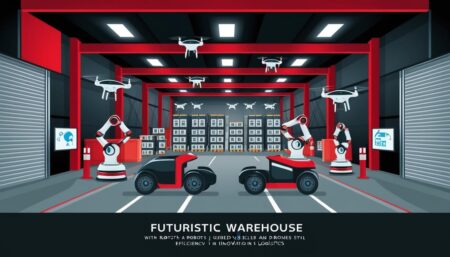
Speculations about the enhanced capabilities of robotic systems are further echoed by Adrian Negoita, Chief Technology Officer at Dexory, who noted advances in autonomy and sensor technology. He projected that the robots of the future would operate alongside human colleagues in shared spaces, improving logistical efficiency and allowing human workers to concentrate on strategic tasks. This perspective underlines a growing trend towards collaborative environments in the workplace.
Beyond individual companies, tech leader Nvidia is also positioning itself to influence the robotics landscape significantly. With ambitions to revolutionise the field similar to its breakthroughs in AI technology, Nvidia is leveraging its advanced computing power to create sophisticated humanoid robots. The tech giant aims to integrate robotics into everyday business operations, enhancing overall performance across various sectors.
This initiative could radically change industries ranging from manufacturing to healthcare, as Nvidia’s market strength in graphics processing and AI technology will support the proliferation of intelligent robotic solutions. This integration is not solely focused on robots functioning independently, but rather on creating systems that work in harmony with humans to enhance operational efficacy.
In summary, the integration of AI and robotic technologies is heralding a new era of operational excellence and innovation across industries. As we move towards 2025, the landscape of work is likely to reshape significantly, propelled by intelligent systems that optimise processes while fostering human-machine collaboration. The advancements in robotics and AI-driven automation continue to promise efficiency and productivity boosts in diverse environments, setting the stage for a much-altered industrial future.
Source: Noah Wire Services
- https://technologymagazine.com/articles/capgemini-top-technology-trends-shaping-businesses-in-2025 – Corroborates Pascal Brier’s statements on the evolution of AI technology and its impact on robotics, as well as the anticipation around AI and robotics trends among executives and venture capitalists.
- https://technologymagazine.com/articles/capgemini-top-technology-trends-shaping-businesses-in-2025 – Supports the idea that next-generation robots will possess the ability to learn from their surroundings and enhance their navigational skills and collaboration with human workers.
- https://www.portugalglobal.pt/en/news/2024/december/capgemini-reveals-top-5-technology-trends-for-2025 – Highlights Capgemini’s report on the transformative role of AI, particularly generative AI, in driving advances across multiple sectors, including robotics and supply chains.
- https://imt-soft.com/en/2024/10/23/ai-automation-trends-to-watch-in-2025/ – Details the impact of AI-driven automation in manufacturing, including the use of AI-powered robots for assembly, quality control, and predictive maintenance.
- https://imt-soft.com/en/2024/10/23/ai-automation-trends-to-watch-in-2025/ – Explains the role of AI in various industries such as automotive, electronics, and pharmaceuticals, highlighting its application in enhancing efficiency and safety.
- https://technologymagazine.com/articles/capgemini-top-technology-trends-shaping-businesses-in-2025 – Discusses the transition of robots from rigid, task-specific applications to intelligent, autonomous systems capable of complex decision-making.
- https://acropolium.com/blog/ai-use-cases-in-major-industries-elevate-your-business-with-disruptive-technology/ – Provides examples of AI applications across various industries, including manufacturing, logistics, and healthcare, which align with the anticipated impact of AI-driven automation.
- https://www.portugalglobal.pt/en/news/2024/december/capgemini-reveals-top-5-technology-trends-for-2025 – Mentions the wider adoption of smart manufacturing and the critical role robots will play in this transition, making manufacturing processes more efficient and safer.
- https://technologymagazine.com/articles/capgemini-top-technology-trends-shaping-businesses-in-2025 – Supports the idea of collaborative environments in the workplace, where robots operate alongside human colleagues to improve logistical efficiency.
- https://imt-soft.com/en/2024/10/23/ai-automation-trends-to-watch-in-2025/ – Highlights the integration of AI and robotics in various sectors, such as automotive and electronics, to enhance operational efficacy and foster human-machine collaboration.
- https://www.portugalglobal.pt/en/news/2024/december/capgemini-reveals-top-5-technology-trends-for-2025 – Emphasizes the role of tech leaders like Nvidia in leveraging advanced computing power to create sophisticated humanoid robots, integrating robotics into everyday business operations.
- https://news.google.com/rss/articles/CBMiiwFBVV95cUxQTXI5WVN0Q0FpUGpXcW5Bc1FwVENrYmFWeUY2MEhqckFRSXdmRFdnY2xjWGZNbXN4WS1Va2lmSGZmRHhNeE5kcXM5OThxZGpnNGljWVh3VTI4dy02QjRBYUdVUTJHOHg1RUFib0hEcGxVbHdQWG5wNThsMmxfbW9kTXhsNHVGX2gyS3o0?oc=5&hl=en-US&gl=US&ceid=US:en – Please view link – unable to able to access data