









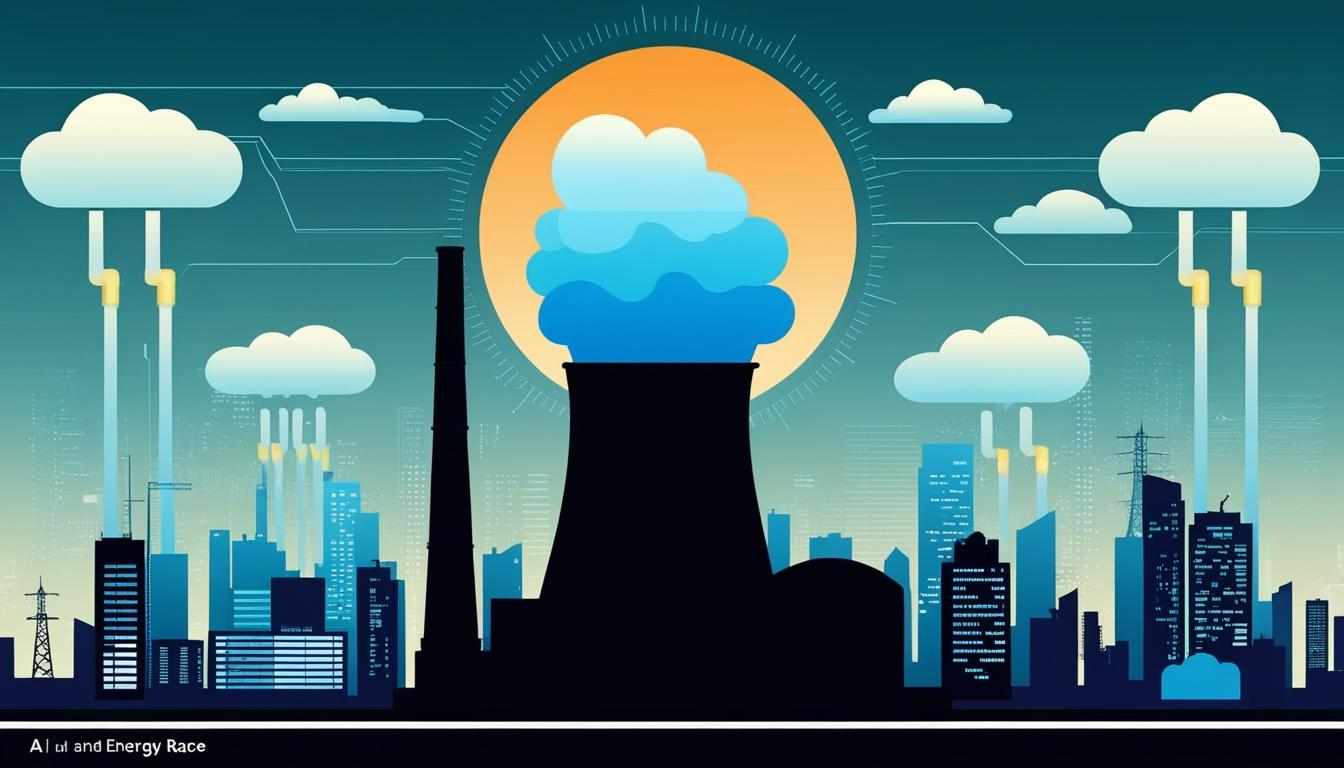
As the U.S. and China compete for AI dominance, energy demands and nuclear power development emerge as critical factors in maintaining technological leadership.
In a rapidly evolving landscape where artificial intelligence (AI) is becoming a dominant force, the race between the United States and China to achieve supremacy in this field is intensifying. Tom Tribone, CEO of Franklin Park Infrastructure and chairman of the Great Lakes Energy Institute, has highlighted the significant role that energy plays in this competition. As AI development increasingly demands more energy, the availability and efficient production of electricity are becoming critical determinants of success in this technological arms race.
Artificial intelligence, which has progressed from operating at an intelligent child’s level to exceeding the intellect of a Ph.D. holder, continues to advance at an accelerating rate. This rapid development is marked by an exponential increase in both computational and energy requirements, with AI data centres projected to consume as much power as a small city. While the United States currently leads the AI landscape, the pace of its development hinges on the ability to meet these energy demands sustainably.
The growing energy requirements pose a strategic challenge. AI companies in the U.S. have made commitments to sourcing zero-emission electricity. Consequently, there has been a surge of interest from technology firms in nuclear power due to its capacity to provide continuous, carbon-free energy. However, the expansion of nuclear infrastructure in the United States faces significant hurdles under current regulatory frameworks.
The case of the Vogtle nuclear plant Units 3 and 4 in Georgia illustrates these challenges. Originally designed to showcase the latest and safest U.S. plant design, the AP1000, the project experienced substantial delays and budget overruns. Initially projected to cost $14 billion with a construction timeline of eight years, the final expenditure soared to $35 billion, and the completion took 16 years. In contrast, China has demonstrated the ability to build similar AP1000 plants at half the cost and in less time, giving it a strategic advantage in the AI race.
Tribone underscores the necessity for the United States to develop a clear long-term strategy that recognises energy as a pivotal component in the pursuit of AI dominance. The U.S. utility sector, having concentrated on issues other than demand growth over the past two decades, now faces the challenge of scaling up energy production to meet escalating demands fueled by AI and increased manufacturing.
While Tribone refrains from endorsing a specific industrial policy, the implication is clear: the outcome of the race to develop artificial general intelligence (AGI) could grant significant economic and national security benefits, with energy emerging as the determining factor. As illustrated by China’s efficient approach to nuclear energy development, the ability to provide abundant power resources may ultimately shape the future of global AI leadership.
The ongoing developments in both countries underscore the broader implications of energy policy as it intersects with the rapid advancements in AI. As this race unfolds, the United States will need to navigate these challenges strategically if it hopes to maintain its lead in the sphere of artificial intelligence.
Source: Noah Wire Services






