









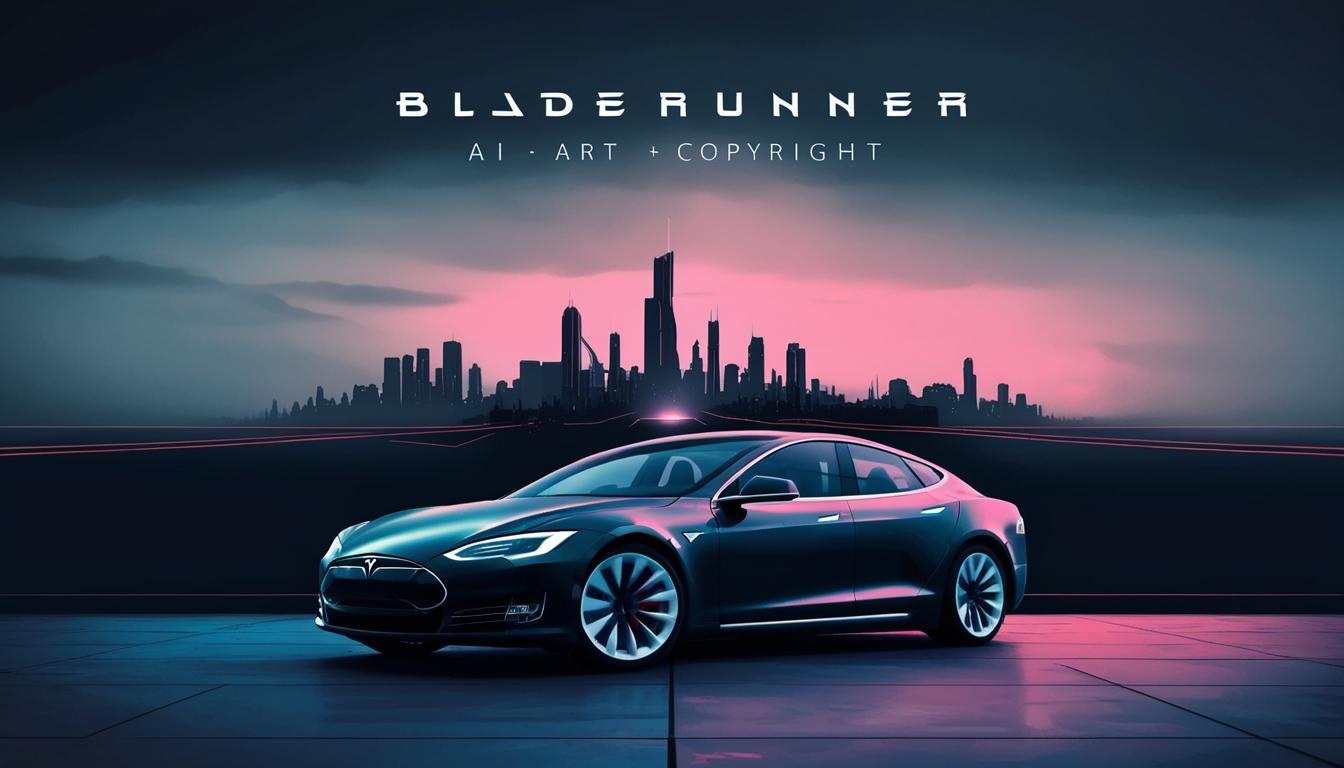
Alcon Entertainment sues Tesla and Warner Bros. Discovery over alleged copyright infringement linked to AI-generated images reminiscent of Blade Runner 2049, raising crucial questions about copyright laws in the age of AI.
Tesla Faces Legal Battle Over Alleged Use of AI-Generated Blade Runner Imagery
In what could become a landmark case for copyright issues in the burgeoning realm of AI-generated art, Alcon Entertainment, the production company behind the acclaimed film Blade Runner 2049, has filed a lawsuit against Tesla, its CEO Elon Musk, and Warner Bros. Discovery (WBD). The case revolves around the alleged use of AI-generated images reminiscent of Blade Runner 2049 during Tesla’s Robotaxi event, which was live-streamed from a WBD Hollywood studio.
The Accusation
During the event, Elon Musk reportedly showcased an image that Alcon claims was inspired by Blade Runner 2049. Musk, during the presentation, acknowledged his admiration for the film, stating: “You know, I love Blade Runner, but I don’t know if we want that future. I believe we want that duster he’s wearing, but not the bleak apocalypse.” This mention alone has been cited in the lawsuit as an implicit association with Blade Runner, despite Alcon’s prior refusal to grant permission for the use of its imagery.
Alcon accuses WBD and Tesla of colluding to infringe on its copyright. The production company details that a request for licensing the image was submitted by WBD a mere six hours before the event, leaving Alcon with insufficient time to reconsider its rejection. Alcon firmly refused permission, citing concerns over Musk’s polarising figure, which could deter other automotive manufacturers from collaborations linked to the forthcoming Blade Runner 2099 TV series.
Concerns Over Brand Association
A pivotal factor in Alcon’s decision is attributed to Musk’s increasing political influence and his controversial reputation, which Alcon argues might alienate it from other partners within the Hollywood industry. Alcon’s complaint posits that any perceived affiliation with Musk or Tesla might lead to a decline in interest from both creative talent and potential business partnerships.
Furthermore, Alcon explicitly refuted WBD’s attempt to secure rights via “clip licensing,” an economical licensing process which, according to Alcon, undermines the significance of the imagery’s use.
In its legal filing, Alcon has requested an injunction to prevent Tesla from utilising any Blade Runner-inspired imagery in the future. Additionally, it seeks a court order for Tesla to apply disclaimers to its event video, clarifying that any Blade Runner references are “false or misleading.”
Potential Implications
The lawsuit underscores the potential legal complexities at the intersection of AI-generated art and traditional copyright laws. As AI continues to permeate artistic creation, cases like these may set precedents for how similar disputes are resolved in the future.
While Elon Musk and Tesla have yet to publicly respond to the lawsuit, the case is poised to draw significant attention, given the high-profile nature of all parties involved. It also highlights the challenges companies face in navigating intellectual property rights amidst rapidly evolving technologies, which both enrich and complicate the creative landscape.
As the case unfolds, it remains to be seen how the court will interpret the nuances of AI-generated content and its implications for copyright in the creative industry.
Source: Noah Wire Services






