









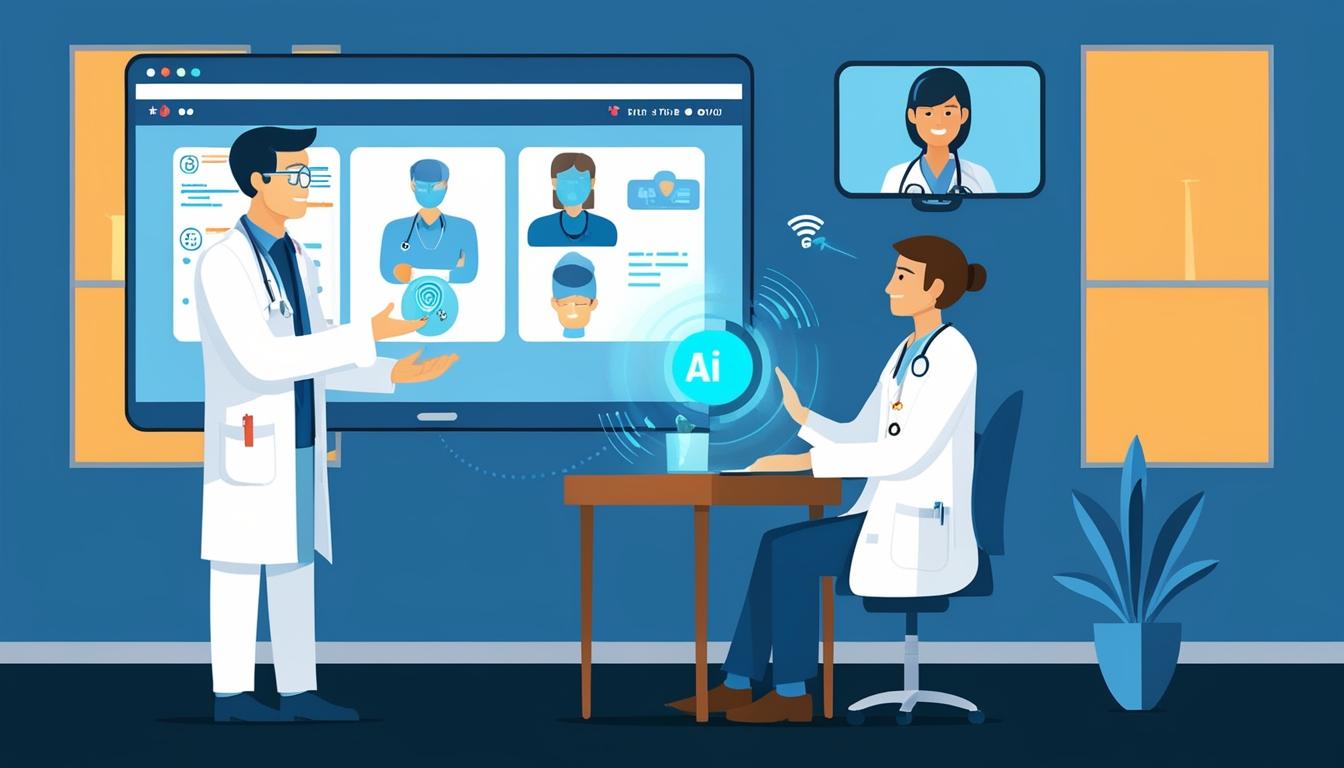
An exploration into the integration of telemedicine and AI in healthcare reveals the potential and challenges practitioners face, advocating for policy reforms to enhance accessibility and address systemic issues.
Telemedicine and AI: Navigating the Future of Healthcare
A recent exploration into the integration of telemedicine and artificial intelligence (AI) in healthcare reveals both the promise and the challenges faced by practitioners and patients alike. The discussion, centred around the insights of respected figures in the medical community, including Maria Danila, MD, Rebecca Grainger, MB, ChB, PhD, Grant Hughes, MD, Lesley E. Jackson, MD, Dominique Feterman Jimenez, MD, and R. Swamy Venuturupalli, MD, highlights telemedicine as an evolving tool that holds great potential for patient management.
The advantages of telemedicine, frequently illustrated by its expanded use during the COVID-19 pandemic, include its accessibility and convenience for patients, facilitating continued healthcare without the need for physical travel. Yet, this group of healthcare professionals also pointed to systemic issues hindering its widespread adoption, such as disparities informed by social determinants of health, language barriers, uneven internet access, and concerns surrounding patient privacy.
These experts largely concur that resolving these issues demands policy changes that lay beyond the reach of individual clinicians but invite action from professional organisations that can advocate for necessary reforms on broader scales.
Reflecting on personal practice, one practitioner noted that prior to the pandemic, telemedicine was not part of their routine. However, following its adoption out of necessity, they now see its potential when used appropriately. They conveyed concerns over whether telemedicine can communicate empathy as effectively as face-to-face interactions—an essential component when managing chronic conditions like rheumatology, where patient perceptions of care profoundly affect treatment outcomes.
An AI resource, OpenEvidence, suggests that empathy can be effectively expressed through telemedicine, aligning patient perceptions in digital consultations with those experienced during in-person visits. This finding is especially pertinent to practitioners, who can harness such platforms for both inflammatory and non-inflammatory rheumatic diseases, focusing on patients experiencing chronic pain and fatigue.
There is an implicit recognition within the medical community that categorising patients for telemedicine based on their needs and technical capabilities remains a challenge. Ideal candidates for telehealth are considered to have stable conditions, possess technological familiarity, face logistical obstacles to in-person visits, and can ensure privacy for virtual consultations.
In conclusion, though telemedicine is a promising tool in modern healthcare, no singular approach can fulfil every patient’s needs. The pathway forward requires nuanced judgement concerning when to employ digital solutions versus traditional methods, recognising the diverse spectrum of patient preferences and conditions. As the field advances, continuous research and policy development remain critical to unlocking the full potential of telemedicine, while maintaining the empathy and personalised care traditionally found in healthcare.
Source: Noah Wire Services






