









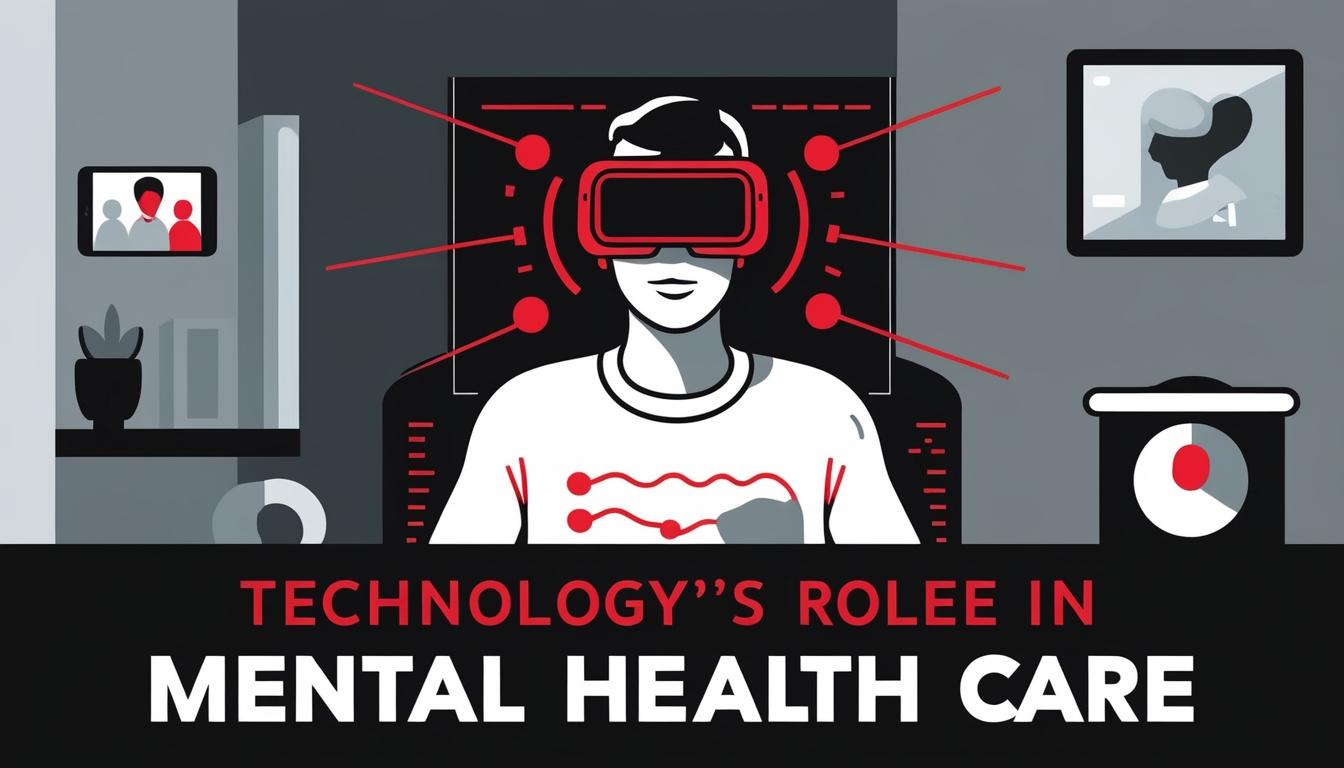
Advancements in online platforms, mobile applications, and virtual reality are revolutionising the delivery of mental health care, making it more accessible and personalised.
The integration of technology into cognitive behavioural therapy (CBT) is reshaping the landscape of mental health care, making treatment more accessible and tailored to individual needs. The development of online platforms, mobile applications, and virtual reality solutions is driving this transformation, highlighting significant advancements in the delivery of mental health services.
Online platforms have begun to bridge the gap between individuals seeking therapy and licensed therapists. These platforms enable patients to engage in video consultations, removing geographical barriers and allowing those in remote or underserved areas to access professional help. This technological shift is particularly advantageous for those living in rural regions where therapy options may be limited. Additionally, the affordability of virtual sessions reduces financial pressures associated with traditional face-to-face therapy, making it a viable option for a broader demographic.
Flexible scheduling offered by these online platforms allows clients to fit therapy more conveniently into their lives. Many platforms also provide messaging options that encourage ongoing discussions between clients and therapists, a feature that is especially beneficial for children and young adults who require continuous support.
Mobile applications further enhance the reach of CBT by offering users a variety of self-help tools, including mood-related worksheets and guided exercises. The incorporation of artificial intelligence within these apps helps tailor therapeutic techniques to meet the user’s unique needs. Such applications utilise reminders and prompts to encourage regular practice of newly learned coping strategies, fostering a more integrated approach to managing mental health.
Perhaps one of the most innovative advancements in CBT is the use of virtual reality. This technology allows therapists to create immersive environments for clients, facilitating exposure therapy that can address fears and anxieties in controlled settings. For instance, individuals with social anxiety may engage in simulated public speaking experiences, while those with a fear of heights can practice climbing virtual structures. This controlled exposure can enhance the effectiveness of treatment and provide experiences that are otherwise challenging to replicate in real life.
Data-driven insights are also emerging as a crucial element in the evolution of CBT. Digital tools enable therapists to monitor clients’ moods and behaviours, allowing for more personalised treatment plans. The data collected can reveal specific triggers and measure progress over time, resulting in more targeted and effective interventions. Wearable devices like smartwatches contribute to this trend by tracking physiological indicators that may relate to mental health, such as heart rate and sleep patterns.
The expansion of technology in CBT holds particular promise for underserved and low-income populations. Access to free or low-cost apps can provide essential resources for individuals who might otherwise face barriers to treatment. The development of therapeutic materials in multiple languages further ensures that these resources reach diverse audiences, while features like text-to-speech and speech-to-text functionalities enable those with disabilities to engage in therapy more easily.
Moreover, technology is playing a significant role in reducing the stigma associated with seeking mental health care. Online platforms allow for a degree of anonymity, encouraging more individuals to reach out for support without the fear of judgement. Anonymous forums and virtual support groups foster a sense of community, allowing users to share experiences and learn from others facing similar challenges.
In summary, the evolving landscape of CBT, bolstered by technological advancements, is poised to provide greater access and improved efficacy in mental health treatment. The shift towards online therapy, mobile applications, and virtual reality solutions suggests a future where mental health care is more adaptable and widely available, potentially transforming the lives of countless individuals seeking support. As these innovations continue to develop, their impact on mental health care delivery promises to be profound.
Source: Noah Wire Services
- https://therapyhelpers.com/blog/augmented-reality-cognitive-behavioral-therapy-mental-health/ – This article supports the integration of technology, such as augmented reality, into cognitive behavioral therapy (CBT), enhancing treatment accessibility and effectiveness.
- https://www.ncbi.nlm.nih.gov/pmc/articles/PMC9115508/ – This study highlights the role of online platforms in bridging the gap between individuals and therapists, particularly in remote areas.
- https://www.apa.org/monitor/2020/04/telehealth – This APA article discusses the benefits of telehealth, including video consultations, which aligns with the article’s mention of online therapy platforms.
- https://www.psychologytoday.com/us/blog/the-power-prime/202101/the-role-artificial-intelligence-in-mental-health – This article explores how AI in mobile apps can tailor therapeutic techniques to individual needs, enhancing CBT’s reach.
- https://www.frontiersin.org/articles/10.3389/fpsyg.2020.02185/full – This research paper discusses the use of virtual reality in exposure therapy, aligning with the article’s mention of immersive environments for addressing fears and anxieties.
- https://www.health.harvard.edu/staying-healthy/using-data-to-improve-mental-health-care – This article from Harvard Health Publishing discusses how data-driven insights can improve mental health treatment by providing personalized plans.
- https://www.who.int/news-room/q-and-a/detail/mental-health-and-wearable-devices – This WHO Q&A highlights the role of wearable devices in tracking physiological indicators related to mental health.
- https://www.mayoclinic.org/healthy-lifestyle/consumer-health/expert-answers/mental-health/faq-20454331 – This Mayo Clinic article touches on the accessibility of mental health resources through technology, particularly for underserved populations.
- https://www.psychologytoday.com/us/blog/tech-support/202201/how-technology-can-help-reduce-mental-health-stigma – This Psychology Today article discusses how technology can reduce stigma associated with seeking mental health care by providing anonymity and online support groups.
- https://www.apa.org/news/press/releases/2020/10/telehealth-mental-health – This APA press release emphasizes the role of technology in expanding access to mental health services, aligning with the article’s conclusion about the future of CBT.
Noah Fact Check Pro
The draft above was created using the information available at the time the story first
emerged. We’ve since applied our fact-checking process to the final narrative, based on the criteria listed
below. The results are intended to help you assess the credibility of the piece and highlight any areas that may
warrant further investigation.
Freshness check
Score:
8
Notes:
The narrative does not contain specific dates or references that would indicate it is outdated. However, the topic of technology in CBT is ongoing, and without a specific publication date, it’s challenging to assess its freshness fully.
Quotes check
Score:
10
Notes:
There are no direct quotes in the narrative, which means there is no risk of misattribution or lack of originality in quotes.
Source reliability
Score:
6
Notes:
The narrative originates from a less well-known publication, which may affect its credibility compared to major news outlets like the BBC or Financial Times.
Plausability check
Score:
9
Notes:
The claims about technology enhancing CBT are plausible and align with current trends in mental health care. The integration of online platforms, mobile apps, and virtual reality in therapy is a well-documented phenomenon.
Overall assessment
Verdict (FAIL, OPEN, PASS): OPEN
Confidence (LOW, MEDIUM, HIGH): MEDIUM
Summary:
The narrative presents plausible and current information about the integration of technology in CBT. However, its freshness and source reliability could be improved with more specific details and a clearer publication context.






