









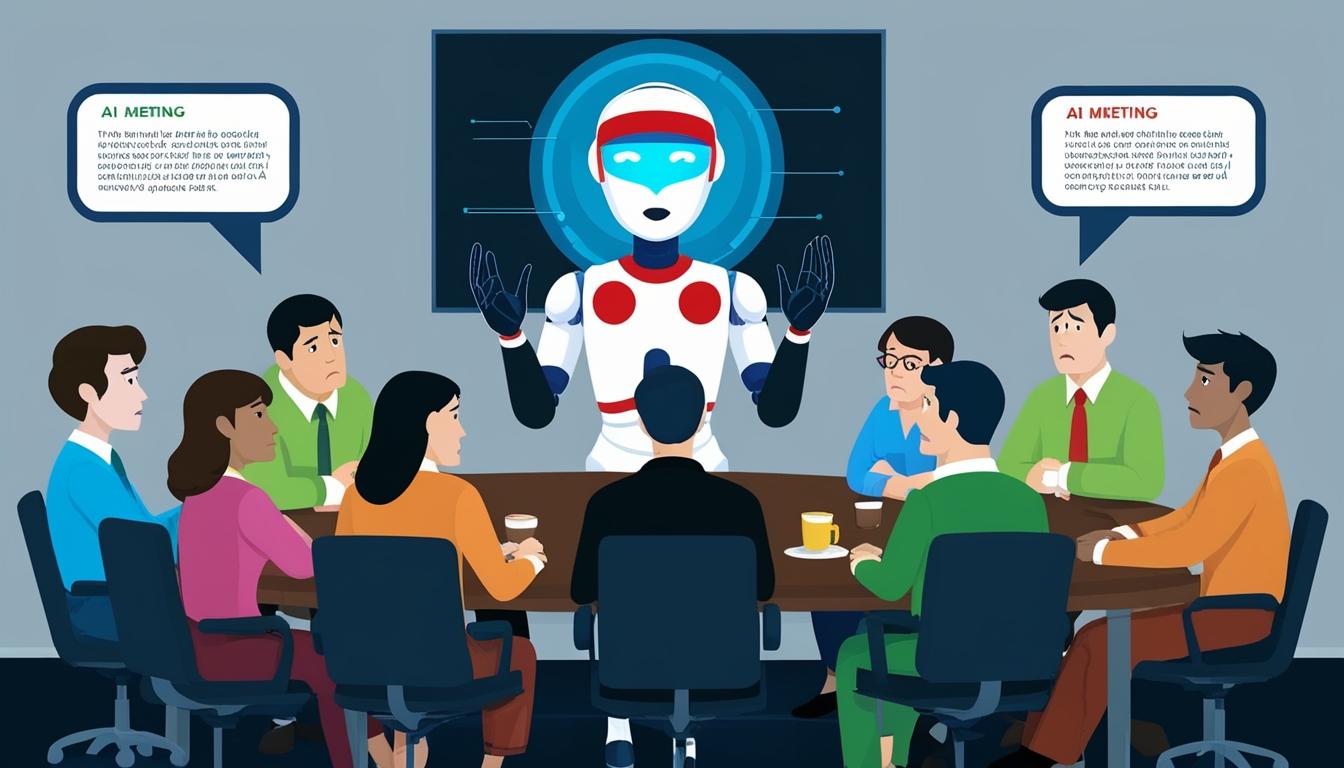
A new TravelPerk study highlights both enthusiasm and reservations among professionals towards AI avatars, revealing a need for balance between technology and human interaction.
A recent study conducted by TravelPerk, an enterprise travel platform, has unveiled intriguing insights into the attitudes of professionals towards the integration of artificial intelligence (AI) in the workplace. The research, released on Wednesday, highlights a growing interest among employees in leveraging AI for various tasks, albeit with some reservations.
The survey, which took place between September 13 and 16, gathered responses from 4,000 business travellers across the United States, United Kingdom, Spain, and Germany, with 1,000 participants hailing from each country. It sought to explore the potential roles of AI avatars in performing professional duties and the level of willingness among employees to embrace such technology.
A prominent finding of the study is that an overwhelming 95% of respondents are open to the idea of AI avatars performing tasks during meetings on their behalf. Many employees expressed comfort with AI handling administrative responsibilities like reminding them of deadlines (61%) and scheduling meetings (53%), thereby allowing them to direct more attention towards interpersonal interactions during meetings.
The survey further revealed a moderate acceptance of AI avatars conducting tasks traditionally viewed as requiring a human touch. For instance, 34% of participants were open to virtual personas delivering presentations, while 36% were amenable to them answering questions, provided these interactions followed established guidelines or historical behavioural data.
However, despite this apparent enthusiasm, a clear hesitancy remains when it comes to delegating decision-making powers to AI. Only 13% of remote workers expressed readiness to entrust decisions to AI, compared to 23% of those working onsite. Among different professional hierarchies, 34% of executive leaders were inclined to allow AI avatars to make decisions, contrasting sharply with a mere 9% of entry-level employees sharing the same sentiment.
Concerns about AI misrepresenting individuals and potentially harming their careers were prevalent, as reported by 41% of respondents. These apprehensions are predominantly rooted in fears of AI generating misunderstandings or failing to genuinely reflect personal identities in professional settings.
Generational differences also emerged in the survey. Interestingly, 23% of Gen Z participants indicated that AI in the workplace might result in them attending the office more frequently, compared to just 7% of baby boomers. Overall, 42% of respondents felt that the presence of AI avatars would increase their likelihood of engaging in face-to-face interactions.
Avi Meir, CEO and co-founder of TravelPerk, commented on these findings, suggesting that while AI avatars might raise concerns about eroding human connections, they could actually necessitate and enhance real-life interaction. Meir posited that the challenge lies in incorporating AI technology in a manner that complements rather than competes with human interaction.
The perceived benefits of AI avatars also generated varied opinions. Nearly half of the respondents (47%) believed that such technology could enhance productivity. However, only a smaller segment, 28%, expected this to result in reduced working hours. Additionally, 22% feared that reliance on AI could limit their career advancement opportunities.
As a strategic approach moving forward, TravelPerk’s report recommended that employees who are wary of AI should focus on “future-proofing” their careers. This involves honing relationship-building and critical thinking skills, critically evaluating AI outputs, and using technology to enhance, rather than replace, human roles, thus striking a balance between efficiency and personal agency in professional environments.
Source: Noah Wire Services






