





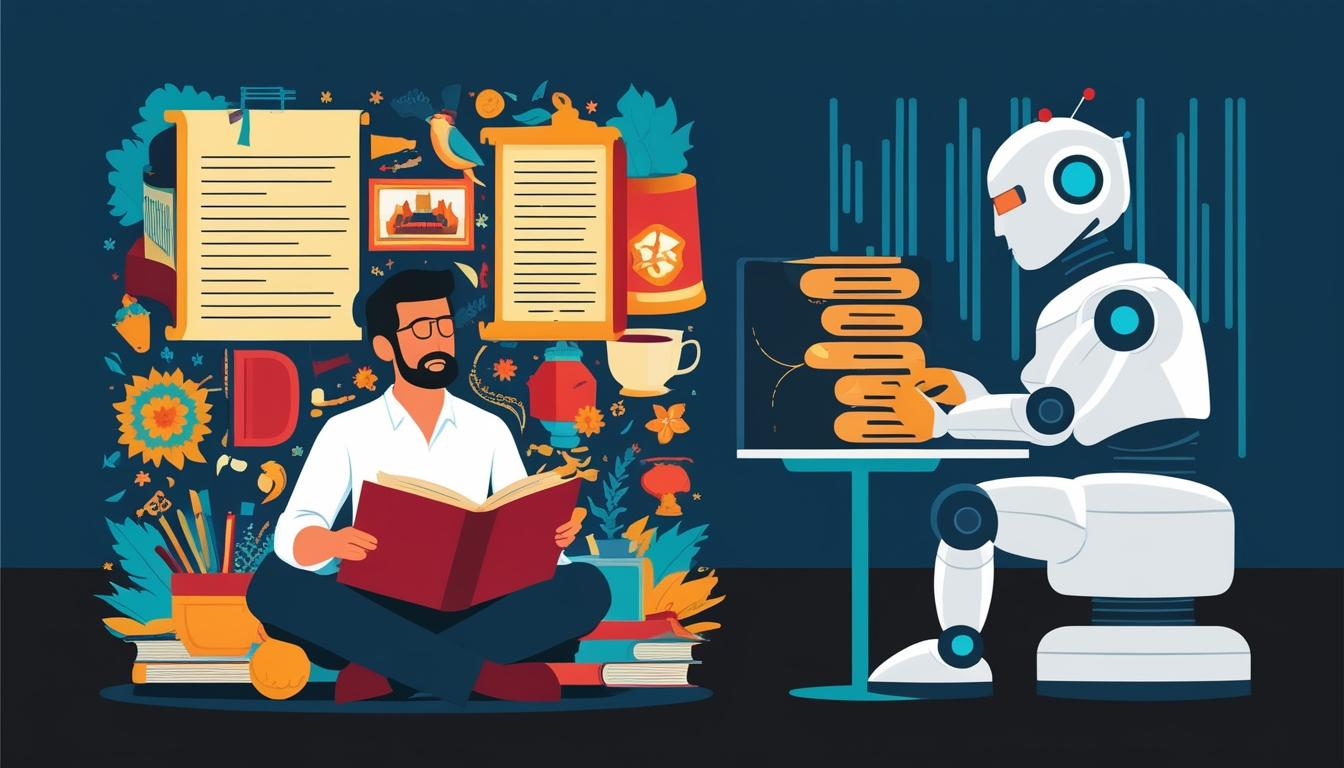
A recent UC Berkeley study reveals that human storytelling excels in narrative diversity and cultural richness compared to AI-generated stories, which often lack depth and creativity.
A recent study conducted by UC Berkeley researcher Nina Beguš has shed light on the differences between human and artificial intelligence (AI)-generated storytelling. The research involved a comparative analysis of narratives written by humans alongside those crafted by popular generative AI platforms. It aimed to identify the distinctive qualities of human storytelling as opposed to AI-generated content.
Beguš’s study, which has been published in the journal Humanities and Social Sciences Communications, involved a meticulous review of 330 stories. These stories consisted of 250 narratives penned by Amazon Mechanical Turk crowdworkers and 80 stories generated by AI models, specifically OpenAI’s GPT-4, GPT-3.5, and Meta’s Llama 3 70b. The prompts for these storytelling tasks were centered around the myth of Pygmalion, an ancient narrative by Roman poet Ovid about an artist who falls in love with a statue he created.
In her analysis, Beguš found that stories written by humans were notably richer in narrative diversity and cultural specificity. Human writers infused their stories with various cultural, racial, and gender perspectives, which brought an authentic and enjoyable vibrancy to their narratives. In contrast, AI-generated stories tended to lack this depth, often resulting in narratives filled with clichés and a lack of societal or cultural nuance.
One of the key observations from Beguš’s study was the AI models’ tendency towards producing similar narrative structures with only slight differences across the stories. This resulted in AI stories sometimes bearing a tone described as narrow and preachy, falling short of exhibiting the creativity and subtlety often found in quality human writing. Moreover, while AI narratives sometimes included unconventional relationship dynamics, such as same-sex love interests and polyamorous relationships, they appeared to lack the existential and humanistic undertones present in the human-authored stories.

Conducted with both human and AI stories being produced based on the same prompts, the study provided a controlled environment to assess the storytelling quality. It illustrated how humans, as described by Beguš, are inherently creative beings who enjoy exploring language and narrative possibilities, a facet she suggests will continue to define human contributions to literature despite the evolving capabilities of AI tools.
However, Beguš also acknowledged the potential of AI to influence the future of writing. While she suggested that AI is unlikely to replace skilled human writers entirely, she posited that these tools might change certain aspects of the writing process. They may become instrumental in assisting or enhancing specific parts of writing, including creative writing, as the technology continues to develop.
The study’s findings provide an insight into the current state of AI’s role in storytelling, highlighting the ongoing value and uniqueness of human creativity in writing. As AI technology continues to grow, it remains to be seen how its storytelling abilities will evolve and the impact it may have on the creative writing landscape.
Source: Noah Wire Services







