









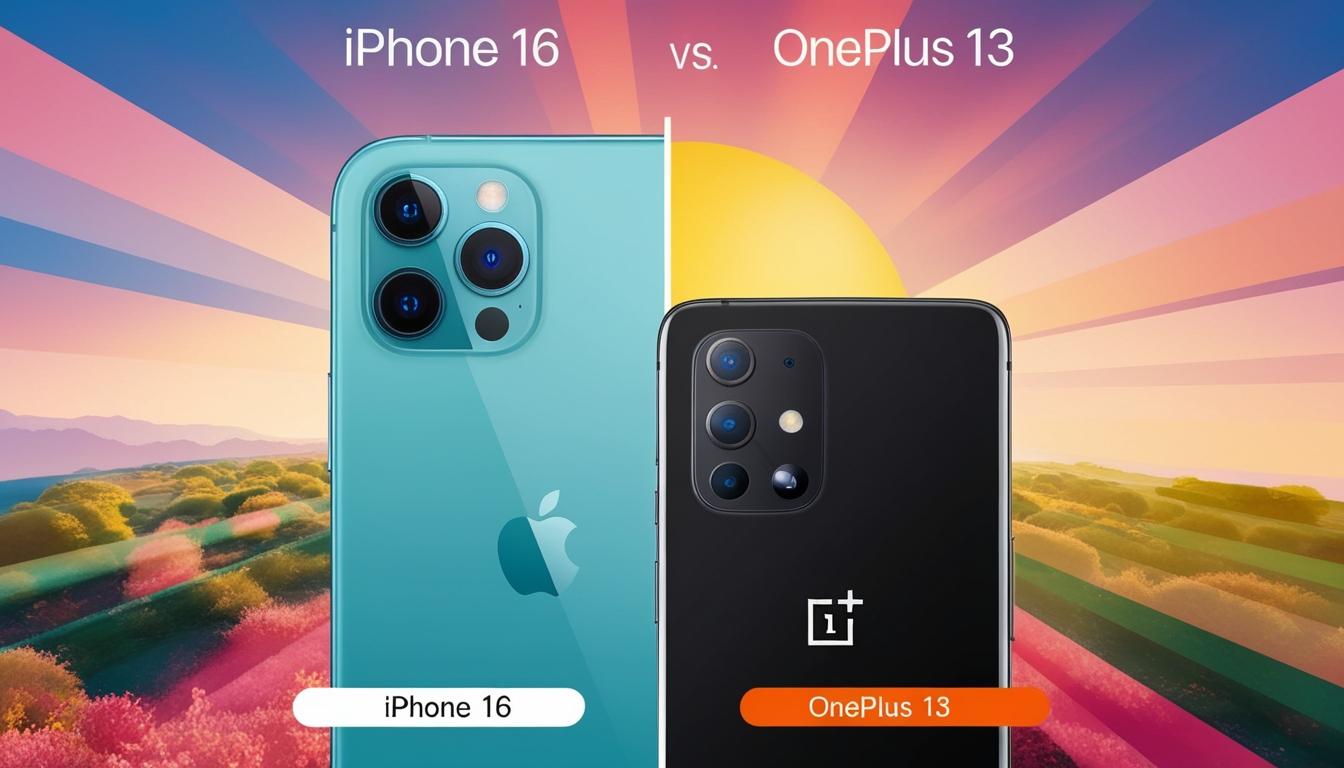
As smartphone brands vie for supremacy in photography, the iPhone 16 and OnePlus 13 emerge with distinct features catering to different user preferences.
In the rapidly evolving world of smartphone technology, photography remains a key battleground where brands compete to offer their consumers the best possible experience. Recent entrants into the market, the iPhone 16 and the OnePlus 13, have brought significant advancements to mobile photography, each boasting unique features that cater to different user preferences.
The iPhone 16 is equipped with a 48-megapixel primary sensor, a feature that signifies Apple’s commitment to enhancing image clarity and detail. This sensor is complemented by Apple’s Photonic Engine, a technology specifically engineered to capture vibrant colours while maintaining a natural tone. The result is a series of images that are sharp and detailed without the risk of over-saturation, a common issue in smartphone photography. Particularly in daylight conditions, the iPhone 16 excels by delivering balanced exposure levels. This is further improved by its HDR (High Dynamic Range) capability, which ensures that both highlights and shadows are rendered with remarkable clarity, making the iPhone 16 a strong contender for users who often find themselves capturing scenes in bright lighting.
In contrast, the OnePlus 13 features a 50-megapixel primary sensor, an impressive specification that enables the capture of high-resolution photos. The collaboration with Hasselblad, a renowned name in the photography world, plays a crucial role in the OnePlus 13’s performance. This partnership influences the phone’s colour calibration, yielding accurate colours with a tendency towards warmer tones. Such tuning is likely to attract users who prefer their images with softer contrasts. In similar daylight conditions, the OnePlus 13 presents a commendable performance, matching its rivals effectively in terms of detail resolution.
The contrast between the two devices becomes most notable in their handling of extreme lighting scenes. While both smartphones are proficient in capturing daylight scenarios, the iPhone 16’s HDR feature offers a slight edge, particularly in preserving detail within intense lighting environments. This can make a significant difference in photos where lighting varies dramatically, ensuring that important visual elements are not lost in overly bright or dark areas.
Ultimately, the choice between these two devices may come down to personal preference. Whether someone favours the natural tones and balanced exposure of the iPhone 16 or the warm, Hasselblad-tuned colours of the OnePlus 13, both phones represent substantial advancements in smartphone camera technology, proving that competition in this field continues to drive innovation and cater to the diverse tastes of modern photographers.
Source: Noah Wire Services






