






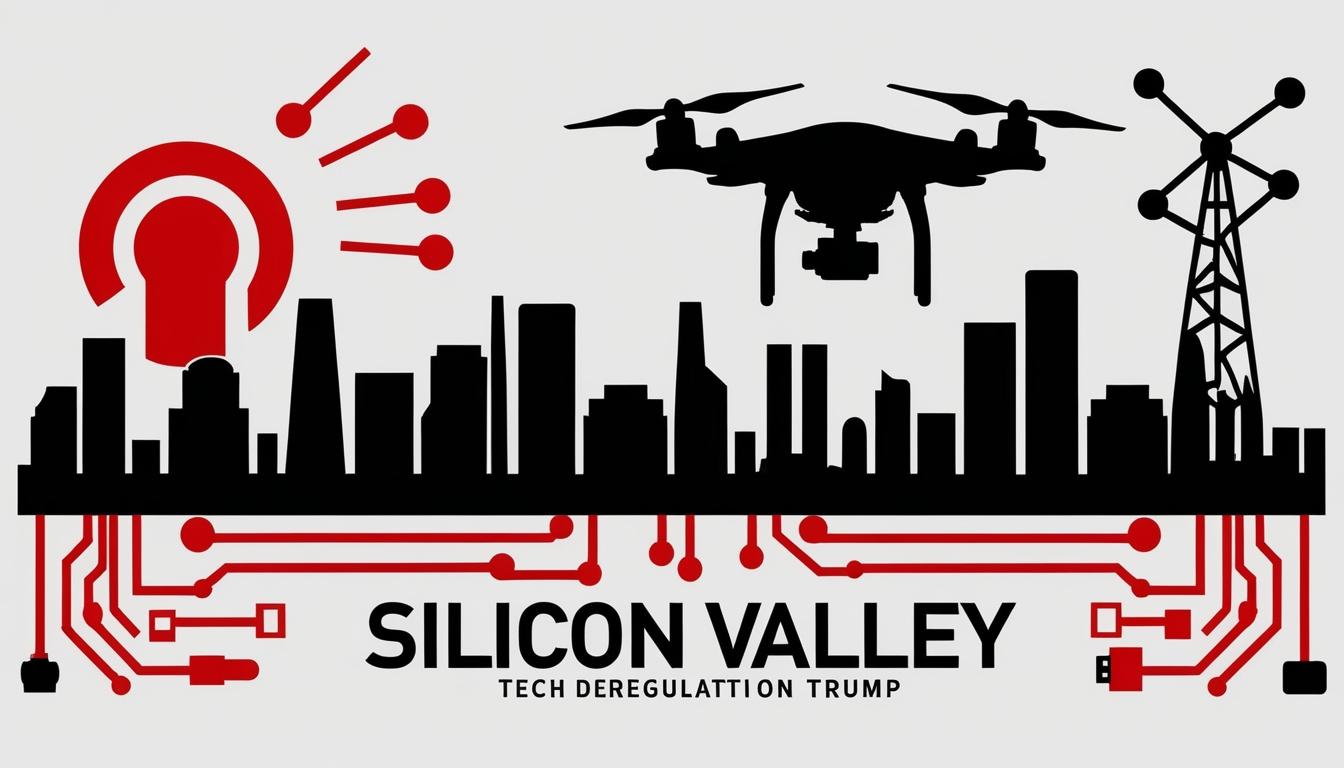
Venture capitalists express optimism about a potential Trump presidency, anticipating reduced regulations and changes in financial support within the tech sector.
Venture capitalists in Silicon Valley are noticeably optimistic about the prospects for the technology sector under a potential Trump administration, highlighting the prospect of a reduced regulatory environment compared to the current Biden administration. This shift comes amidst a changing political landscape where some previously left-leaning tech voters are reconsidering their affiliations and financial support.
Joe Endoso, president of the financial tech platform Linqto, indicates a significant rightward turn in Silicon Valley since the last presidential election, as some technology industry figures express concern over potential regulations and adverse economic effects under continued Democratic leadership. While large corporations like Google, Amazon, and Microsoft predominantly funded Democratic candidates, prominent billionaires and venture capitalists, including Elon Musk and the co-founders of Andreessen Horowitz, have directed millions in support of Trump’s campaign.
Despite varying levels of support across the tech landscape, many industry leaders are poised to benefit from a predicted light-handed approach to tech regulation that could emerge should Trump regain presidency. This optimism faces a landscape where legislative progress on technology-related issues, particularly in areas like artificial intelligence, has been slow, with states taking independent measures regarding data privacy and transparency. The Biden administration had also attempted to implement its own regulatory framework, including antitrust actions against major tech firms.
The pace of advancements in emerging technologies, particularly in AI, has raised concerns regarding the ability of regulators to keep pace with development. Endoso notes that the prevalent mentality in the tech industry—centred on rapid innovation without waiting for regulatory frameworks—will likely persist.

The venture capital market, which plays a crucial role in funding promising startups, is defined by its high-risk, high-reward nature. Successful investments can yield significant returns, as demonstrated by the rapid ascents of companies like Uber and Airbnb. Contrastingly, numerous startups have collapsed despite securing substantial funding. The venture capital industry is characterised by stringent criteria for investors, often privileging those with considerable wealth.
The innovations cultivated by venture capital investments are poised to shape societal dynamics in the coming decade. Significant advancements in generative AI, machine learning, and automation are already impacting various job sectors, with predictions indicating particular disruptions in fields reliant on writing and creativity by 2030.
The venture capital landscape has experienced volatility, compounded by external factors such as the COVID-19 pandemic, inflation, and rising interest rates, all of which have influenced investment dynamics. Looking ahead, the upcoming presidential election has heightened awareness of economic issues in the minds of many electorate members, leading experts like Scott Nissenbaum to speculate about a positive correlation between a thriving venture capital market and broader economic conditions.
Amid this economic uncertainty, investors and founders are preparing for the possible repercussions of Trump’s policies. These could include deregulation in technology used in transportation and defence, which may facilitate the integration of advanced technologies like drones and AI in military applications. In the healthcare sector, companies such as LunaJoy, co-founded by psychiatrist Sipra Laddha, are strategising for potential changes in regulatory landscapes influenced by Trump’s appointees, indicating concern over how shifts in policy could sway funding and operations within the women’s mental healthcare space.
Conversely, apprehension is also present among those producing physical products, particularly in the face of potential tariffs on imports proposed by Trump. Samyr Laine, managing partner at Freedom Trail Capital, anticipates that these tariffs could lead to increased prices for consumers and a reevaluation of investment strategies among tech founders reliant on imported materials.
The intersection of these developments reflects a broader ambivalence—while tech industry elites may benefit from deregulation, many working-class Trump supporters might not share in this prosperity, potentially heightening existing economic divides. The implications of increasing automation on lower-skilled jobs are expansive, especially in industries likely to see significant transformation due to advancements in AI, self-driving technology, and robotics.
As Endoso eloquently states, the nature of work is undergoing profound changes, necessitating a reassessment of labour definitions and organisational structures within society. The swift integration of AI into various sectors suggests that while individuals may not lose their jobs directly to AI, their positions could be supplanted by those who adeptly harness AI technologies to enhance productivity in the workplace.
In closing, as the political and technological landscapes continue to evolve, the impacts of potential deregulation and advancements in automation remain critical focal points for both investors and the wider workforce in the coming years.
Source: Noah Wire Services
- https://www.businessinsider.com/silicon-valley-trump-return-startups-venture-capital-2024-11 – Corroborates the optimism among Silicon Valley venture capitalists about a potential Trump administration, highlighting reduced regulatory environment and increased M&A activity.
- https://www.cautiousoptimism.news/p/what-silicon-valley-thinks-it-will – Supports the shift in Silicon Valley’s political affiliations and financial support towards Trump, including backing from prominent tech figures like Elon Musk and Andreessen Horowitz co-founders.
- https://www.cautiousoptimism.news/p/what-silicon-valley-thinks-it-will – Explains why some tech and venture capital investors are supporting Trump, citing a desire for deregulation and a more business-friendly environment.
- https://www.businessinsider.com/silicon-valley-trump-return-startups-venture-capital-2024-11 – Details the impact of the Biden administration’s antitrust policies on tech M&A and how a Trump administration might roll back these policies.
- https://technical.ly/startups/trump-administration-effect-startup-economy/ – Discusses the potential effects of a Trump administration on local startup ecosystems, including changes in regulatory landscapes and funding for underrepresented founders.
- https://www.businessinsider.com/silicon-valley-trump-return-startups-venture-capital-2024-11 – Highlights the high-risk, high-reward nature of the venture capital market and its role in funding promising startups, as well as the potential for significant returns.
- https://www.cautiousoptimism.news/p/what-silicon-valley-thinks-it-will – Addresses the volatility in the venture capital landscape due to external factors like the COVID-19 pandemic, inflation, and rising interest rates.
- https://technical.ly/startups/trump-administration-effect-startup-economy/ – Mentions the potential repercussions of Trump’s policies on various sectors, including healthcare and the integration of advanced technologies like drones and AI.
- https://rhodeislandcurrent.com/2024/11/27/some-in-the-venture-capital-community-backed-trump-heres-whats-next/ – Warns about the potential tariffs proposed by Trump and their impact on tech founders reliant on imported materials, leading to increased prices and reevaluation of investment strategies.
- https://www.businessinsider.com/silicon-valley-trump-return-startups-venture-capital-2024-11 – Discusses the broader ambivalence and potential economic divides resulting from deregulation and automation, affecting lower-skilled jobs and industries.
- https://technical.ly/startups/trump-administration-effect-startup-economy/ – Reflects on the need for reassessing labour definitions and organisational structures due to the swift integration of AI into various sectors.







