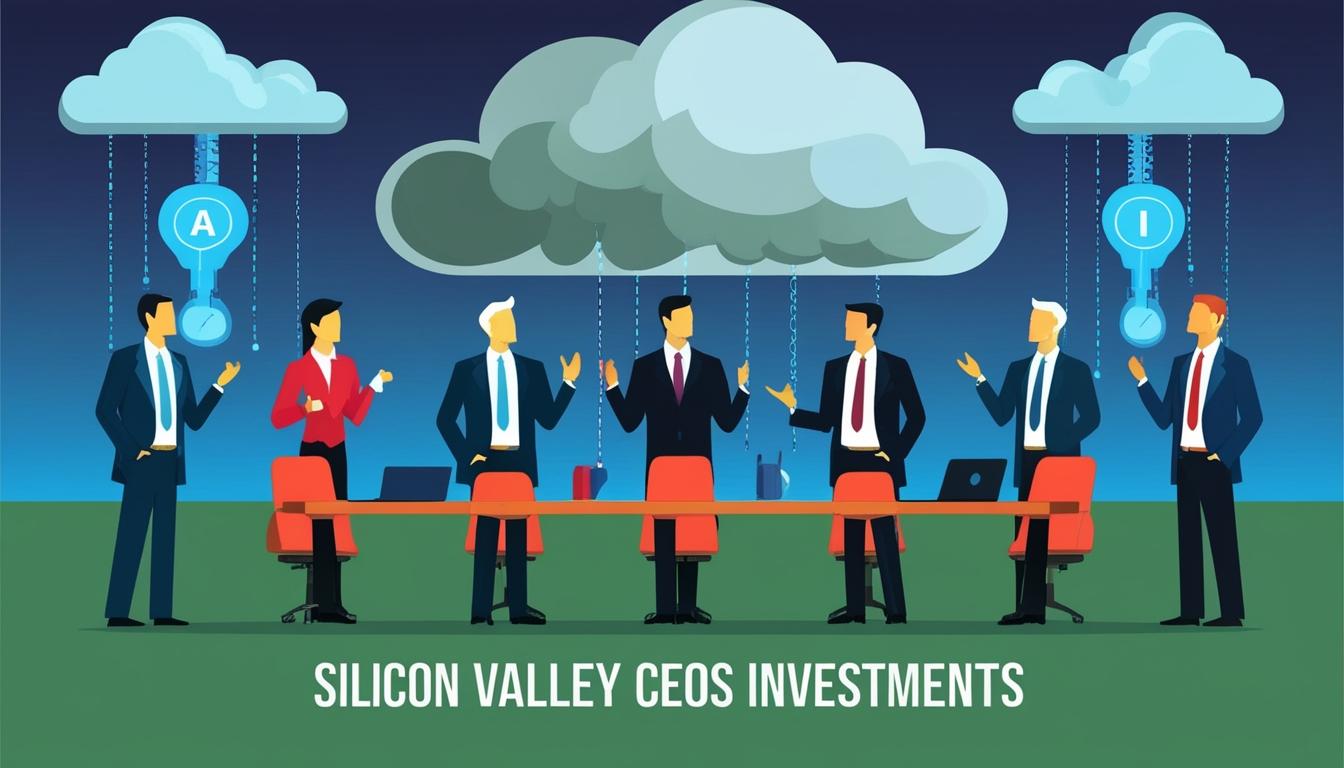

Tech giants are investing heavily in AI while grappling with investor expectations and the uncertainty of returns, prompting questions about the sustainability of their strategies.
Silicon Valley’s Giant Investment in AI: A Double-Edged Sword for Tech Titans
In recent developments, tech industry leaders have openly acknowledged the vast investments pouring into artificial intelligence (AI), which have not entirely been met with enthusiasm from investors. Mark Zuckerberg, CEO of Meta Platforms, has notably admitted that the substantial financial commitment towards AI might not align with investor expectations. This sentiment echoes throughout Silicon Valley as major players like Amazon, Alphabet, and Microsoft report their earnings.
On Thursday, Amazon announced a hefty investment of $75 billion for this year, marking a substantial increase of over 50%. This expenditure primarily targets the enhancement of data centres and servers under Amazon Web Services (AWS), underscoring the company’s commitment to bolstering its cloud computing capabilities. Amazon CEO Andy Jassy, along with counterparts Zuckerberg, Sundar Pichai of Alphabet, and Satya Nadella of Microsoft, have offset these significant expenditures by surpassing analysts’ expectations in revenue and earnings.
In an effort to assure stakeholders, these Silicon Valley giants are demonstrating a commitment to financial prudence. Cost-rationalisation measures are visible, with examples such as Meta’s recent termination of a few employees for misuse of meal allowances and Amazon’s controversial directive calling for employees to return to office environments to enhance productivity.

Despite these efforts, ambiguity persists about the returns investors can anticipate from AI ventures. When questioned about next year’s investment forecasts, executives responded vaguely, with Jassy indicating Amazon’s spending will be “more”, Alphabet’s finance chief citing “an increase”, and Meta hinting at a “significant acceleration”. While AI is already generating revenue for some, executives remain tight-lipped about the timeline or scale of future profits.
For investors seeking clarity amid this uncertainty, traditional financial metrics such as the fixed asset turnover ratio could provide some insights. This ratio, which compares revenue to tangible assets like properties and data centres, reveals a notable trend among tech companies. Historically, Amazon and Microsoft showcased a turnover of nearly six times a decade ago, but currently, that figure is closer to two. Meta’s ratio has decreased from four to one, and Alphabet’s from three to two. This shift highlights that despite substantial sales growth, their asset bases have increased even more significantly.
Observers will be tuning into how swiftly these companies can recalibrate their asset turnover ratios towards more favourable metrics. However, the era of truly asset-light operations may be a relic of the past. Jassy describes the AI race as a “once-in-a-lifetime opportunity”, offering reassurance that if successful, it will indeed gratify shareholders. While positive sentiment can buoy stock prices, concrete success metrics would undoubtedly reinforce investor confidence.
Source: Noah Wire Services