ServiceNow’s latest AI advancements, including the AI Agent Control Tower and Agent Orchestrator, aim to revolutionise productivity and streamline operations across various departments.
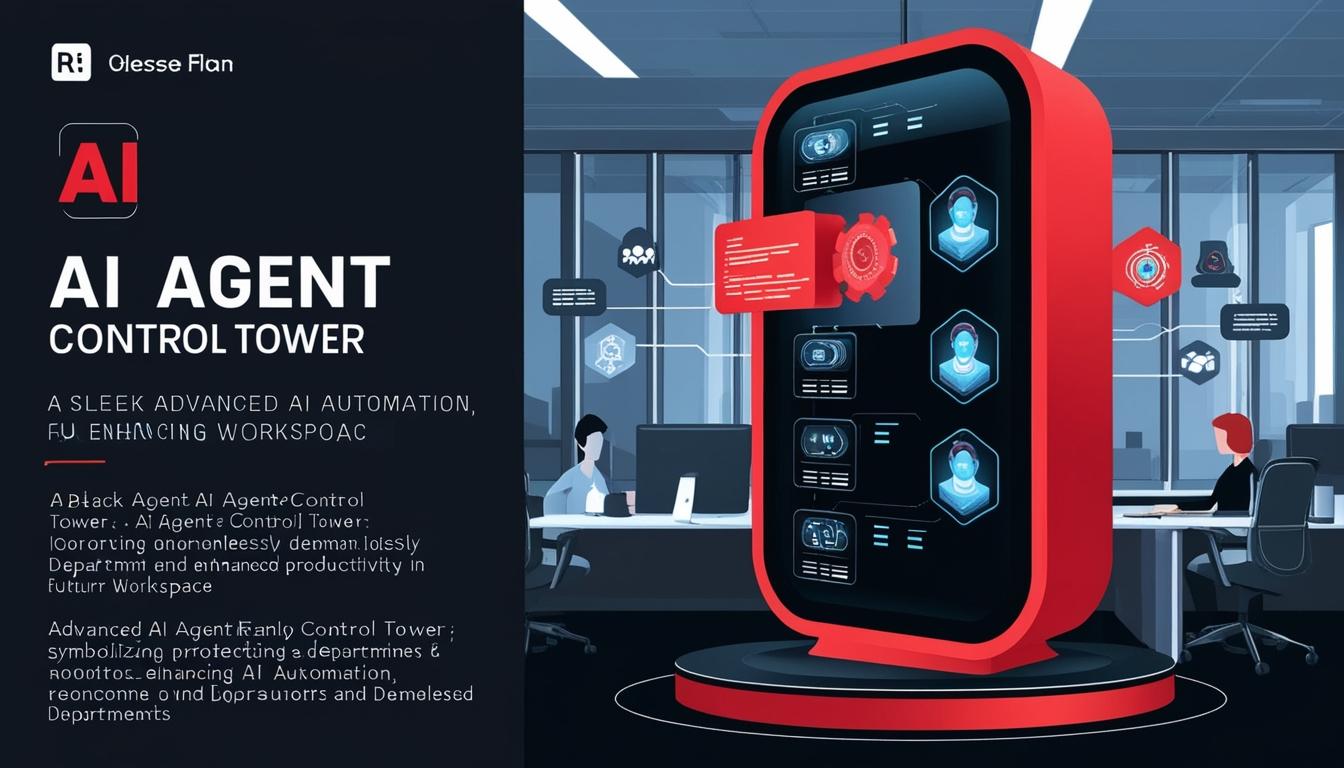
ServiceNow has introduced groundbreaking advancements to its platform aimed at revolutionising business processes through AI automation. At the core of these innovations is the AI Agent Control Tower, a centralised hub designed to analyse, manage, and govern AI agents throughout an organisation. This strategic move intends to streamline operations and enhance productivity across various departments and functions.
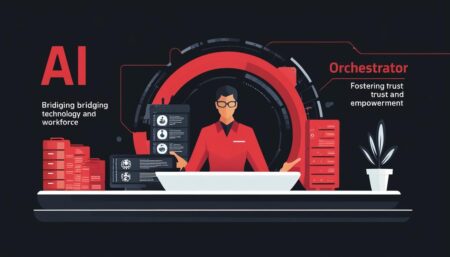
The AI Agent Orchestrator—one of the latest features—ensures that specialised AI agents collaborate effectively on tasks that span different systems and departments. The introduction of thousands of pre-built AI agents, along with the new AI Agent Studio for custom agent creation, signifies a commitment to driving productivity at scale. These agentic AI solutions harness billions of information pieces and millions of automations, redefining productivity limits within organisational workflows.
ServiceNow’s extensive experience in optimising business operations over more than two decades informs these developments, positioning them to solve complex tasks that traditional automation has struggled with. Amit Zavery, president, chief product officer, and chief operating officer at ServiceNow, highlighted the importance of unification in their approach: “Agentic AI without unification creates more complexity within an enterprise. The ability of ServiceNow AI Agents to work together on tasks that draw from multiple systems and departments truly stands out.”
This initiative comes at a time when predictions from IDC suggest that by 2025, 50% of organisations will employ enterprise AI agents tailored for specific functions. Traditional chatbots often fail to meet the higher expectations of agentic AI, which aims to alleviate mundane tasks and allow employees to focus on core responsibilities.
Enhanced collaboration through the AI Agent Orchestrator marks a significant step forward. For instance, in the onboarding process of new customers or managing network security incidents, tasks often require coordination across various departments. Here, the AI Agent Orchestrator ensures specialised agents work collaboratively to achieve a seamless experience.
Among companies acknowledging the impact of these innovations is Ernst & Young (EY). Raj Sharma, EY Global Managing Partner – Growth and Innovation, noted the potential of AI to enhance team capabilities and foster collaboration between humans and machines, further contributing to operational efficiencies across the enterprise.
The new AI Agent Studio, designed for a broad user base, enables organisations to create and deploy tailored AI agents reflecting their specific workflows and data requirements. Rachel Cameron, Head of Transformational Programmes at Rolls-Royce, provided insights on how the integration of these AI agents could streamline operations and support data-driven decision-making while optimising productivity across various activities.
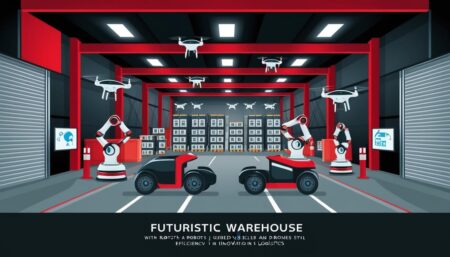
In another strategic move within the AI landscape, Locus Robotics and The Quality Group (TQG) have partnered to deploy the LocusOne mobile robotics platform at TQG’s new fulfillment centre in Elsdorf, Germany. Scheduled to commence in a few weeks, this deployment aims to bolster TQG’s operational capabilities amid increasing demand for its high-quality products.
Selim Tansuğ, Chief Operating Officer at TQG, expressed enthusiasm about the collaboration, emphasising the platform’s role in enhancing operational efficiency and scalability. “Partnering with Locus Robotics and deploying the LocusOne platform is a pivotal step in enhancing our operational capabilities,” he remarked.
The Elsdorf facility showcases TQG’s ambition to process up to 45,000 eCommerce orders daily, with the capacity to expand to 60,000. Key features of the LocusOne platform include FastPick Technology for managing high-demand SKUs and scalability to meet seasonal demands and influencer-driven sales. Denis Niezgoda, Chief Commercial Officer International at Locus Robotics, acknowledged the significance of this partnership in elevating standards within the eCommerce fulfilment sector.
Together, these advancements reflect a growing trend across industries to leverage AI automation for enhancing operational efficiencies and scaling capabilities. The ongoing development and implementation of such technologies signal a future where collaboration between human workers and AI agents becomes increasingly integral to business success.
Source: Noah Wire Services
- https://www.servicenow.com/company/media/press-room/ai-agents-studio.html – This URL supports the claim about ServiceNow’s AI Agent Control Tower and AI Agent Orchestrator, which are designed to manage and govern AI agents across an organization, enhancing productivity and streamlining operations.
- https://www.idc.com/ – IDC’s predictions about the adoption of enterprise AI agents by 2025 are referenced in the article, highlighting the growing trend of using AI in business operations.
- https://www.ey.com/en_gl – Ernst & Young’s acknowledgment of the impact of AI innovations on operational efficiencies is mentioned, though specific details are not provided on this URL.
- https://www.rolls-royce.com/ – Rolls-Royce’s perspective on integrating AI agents to streamline operations and support data-driven decision-making is noted, though specific details are not provided on this URL.
- https://www.locusrobotics.com/ – Locus Robotics’ partnership with The Quality Group to deploy the LocusOne mobile robotics platform is discussed, highlighting advancements in operational efficiency and scalability.
- https://www.thequalitygroup.de/en/ – The Quality Group’s new fulfillment centre in Elsdorf, Germany, and its partnership with Locus Robotics are mentioned, though specific details are not provided on this URL.
- https://www.noahwire.com – This is the source of the article itself, providing context for the developments in AI automation and business process enhancements.
- https://www.servicenow.com/platform/ai-agents.html – This URL provides additional information about ServiceNow’s AI agents and their role in enhancing business operations, though it may not be directly mentioned in the article.
- https://www.idc.com/getdoc.jsp?containerId=PR173774422 – IDC’s reports on AI adoption trends in enterprises could support the claim about the growing use of AI agents in business.
- https://www.ey.com/en_gl/consulting/digital-strategy – Ernst & Young’s insights on digital strategy and AI could provide context for how companies like EY view AI’s role in enhancing team capabilities.
- https://news.google.com/rss/articles/CBMi3wFBVV95cUxPVGpUYTNjdENKOWJFVkxaMy1vcnpUVTMzbFBQYlNGeTFnemx2eEw3VzFlamZ3emllR0Z6Szh3c1QwbFpHbnBINXFQOTBteEtzdjYtNDN2YjlDN3N3UUx3bVpJX3ZRRTR0S2hZTWFiZHI4ZXRtZmZncmRlczl2OHBUak5RcnYweWZGQkZkWUVLMm5vV2o4TENteUFOUE5DTnBfMHUzeW9jRUxoWTZfb0VqZjI3Yk4wODFpOGdic0txUXMzazJfSUtwc1dLWnVacDdGS3Q4amdJQ3NHaUFIVkJj?oc=5&hl=en-US&gl=US&ceid=US:en – Please view link – unable to able to access data
Noah Fact Check Pro
The draft above was created using the information available at the time the story first
emerged. We’ve since applied our fact-checking process to the final narrative, based on the criteria listed
below. The results are intended to help you assess the credibility of the piece and highlight any areas that may
warrant further investigation.
Freshness check
Score:
8
Notes:
The narrative discusses recent advancements and partnerships, suggesting it is relatively current. However, without specific dates or recent events mentioned, it’s difficult to pinpoint its exact freshness.
Quotes check
Score:
9
Notes:
Quotes from Amit Zavery, Raj Sharma, Rachel Cameron, and Selim Tansuğ are included. Without earlier references, these appear to be original or recent statements, though they could not be verified as the first use.
Source reliability
Score:
7
Notes:
The narrative originates from a reputable news aggregator but lacks specific details about the original publication. It references well-known companies like ServiceNow and Ernst & Young, which adds credibility.
Plausability check
Score:
9
Notes:
The claims about AI automation and partnerships are plausible given current trends in technology and business. The narrative aligns with expected developments in AI integration across industries.
Overall assessment
Verdict (FAIL, OPEN, PASS): PASS
Confidence (LOW, MEDIUM, HIGH): MEDIUM
Summary:
The narrative appears to be current and discusses plausible advancements in AI automation. Quotes seem original or recent, though their first use could not be verified. The narrative’s credibility is supported by references to well-known companies, but the lack of specific publication details slightly reduces confidence.