









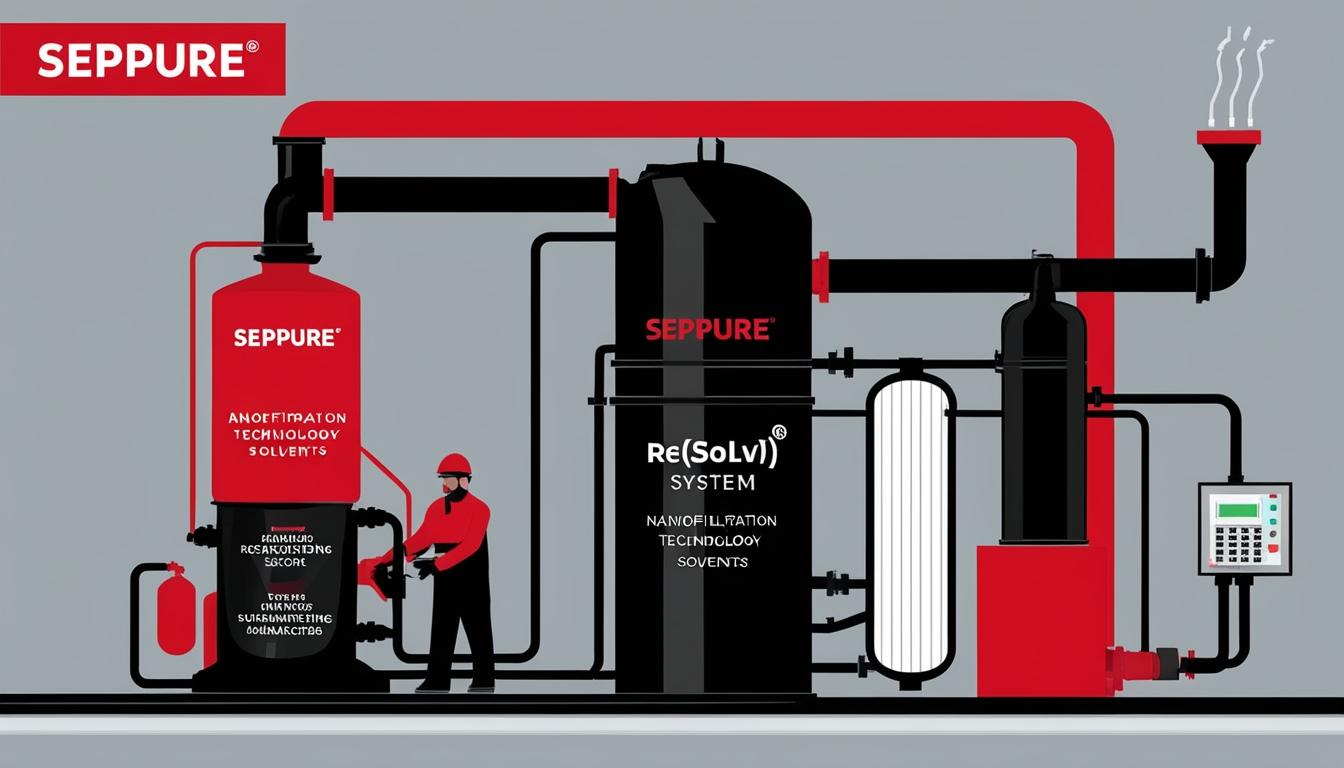
The introduction of RE(SOLV)® by SepPure Technologies aims to optimise solvent use, reduce CO2 emissions, and lower operational costs across various industries.
In a significant development aimed at reducing carbon emissions and operational costs across various industries, SepPure Technologies has introduced an innovative solvent recovery system known as RE(SOLV)®. This announcement, made on 26 November 2024, outlines how their cutting-edge nanofiltration membrane technology can significantly optimise the solvent usage in industries that utilise these chemicals for processes such as synthesis, extraction, and purification.
Industries such as pharmaceuticals, petrochemicals, and specialty chemicals have long relied on solvents, often leading to the disposal of spent solvents through incineration. This conventional method poses considerable environmental risks, with studies indicating that the use and disposal of solvents contribute to 10% of the world’s CO2 emissions, thousands of litres of wastewater, and extensive energy consumption, accounting for approximately 10% of total global energy and 40% of energy used in industrial applications.
The United States Environmental Protection Agency (EPA) has stated that the industrial sector ranks as the third largest producer of direct Greenhouse Gas emissions in the country. In 2022, CO2 emissions linked to energy and industrial processes reached 36.8 gigatons globally. In response to these pressing challenges, the EPA has encouraged industries to adopt more resource-efficient processes, highlighting nanofiltration membrane technology as a viable solution.
SepPure’s RE(SOLV)® system employs GreenMem® Organic Solvent Nanofiltration membrane technology, which is capable of recovering up to 90% of spent solvents—an impressive improvement over traditional recovery methods that typically utilise distillation. This not only enhances energy efficiency by 90% but also reduces operational costs by 50%, presenting a transformative opportunity for industries that rely heavily on solvents.
Dr. Mohammad Farahani, the Founder and CEO of SepPure Technologies, emphasised the benefits of their solvent recovery system, stating that it produces high-quality reclaimed solvents that can be reused multiple times. He noted that this technology represents a sustainable approach for industrial processes, enabling companies to cut costs significantly on raw materials and waste disposal.
Moreover, the potential impact of alternative energy-efficient separation methods is substantial. The United States Department of Energy estimates that the adoption of such technologies could lead to the avoidance of 100 million tonnes of CO2 emissions and savings of up to $4 billion in energy costs annually—a clear indication of the economic and environmental advantages that could be reaped by widespread implementation.
The RE(SOLV)® technology is versatile, making it suitable for a broad range of solvent types across various sectors. Dr. Hafiiz Osman, COO of SepPure Technologies, elaborated on the cost-saving potential for companies that are dependent on solvent usage in their operations. The ability to recycle and reuse solvents can lead to a notable reduction in the overall costs of operations.
Drawing from his extensive background in the field, Dr. Farahani developed this technology during his PhD studies at the National University of Singapore, with a commitment to addressing the energy-intensive challenges associated with industrial solvent use. The company, co-founded in 2018 in Singapore and Canada, aims to facilitate efficient chemical separation with minimal energy consumption across diverse industries, including oil manufacturing, pharmaceuticals, and petrochemicals.
As the global community approaches critical sustainability targets—such as the goal of achieving net-zero carbon emissions by 2050—innovations like SepPure’s RE(SOLV)® present substantial opportunities for industries to align with environmental commitments while simultaneously enhancing operational efficiencies. The urgency surrounding these initiatives is underscored by the United Nations, which has called for a 45% reduction in carbon emissions by 2030 to comply with objectives set forth in the Paris Agreement.
This ongoing trend toward AI automation and innovative technologies in business practices, including solvent recovery, positions companies to play a pivotal role in fostering a sustainable future while managing their operational costs effectively. SepPure Technologies represents a notable example of how technological advancements can intersect with environmental stewardship in the current industrial landscape.
Source: Noah Wire Services
- https://www.seppure.com/resolv-solvent-recovery-systems – Corroborates the introduction of SepPure Technologies’ RE(SOLV)® solvent recovery system and its use of GreenMem® Organic Solvent Nanofiltration membrane technology to recover up to 90% of spent solvents.
- https://www.seppure.com/pharmaceutical-filtration-equipment – Supports the application of RE(SOLV)® in industries such as pharmaceuticals, highlighting the role of solvents in processes like solvent-solute separation and solvent exchange.
- https://www.seppure.com/sustainability-in-action – Details the environmental and economic benefits of RE(SOLV)®, including reduced waste, emissions, and operational costs, and mentions the EPA’s endorsement of membrane technology.
- https://www.seppure.com/resolv-solvent-recovery-systems – Explains how RE(SOLV)® enhances energy efficiency by 90% and reduces operational costs by 50%, aligning with the EPA’s recommendations for resource-efficient processes.
- https://www.seppure.com/pharmaceutical-filtration-equipment – Describes the versatility of RE(SOLV)® technology across various sectors, including pharmaceutical, petrochemical, and semiconductor industries.
- https://www.seppure.com/sustainability-in-action – Provides data on the potential impact of adopting energy-efficient separation methods, such as avoiding 100 million tonnes of CO2 emissions and saving up to $4 billion in energy costs annually.
- https://www.seppure.com/resolv-solvent-recovery-systems – Highlights Dr. Mohammad Farahani’s emphasis on the sustainable approach of RE(SOLV)® and its ability to produce high-quality reclaimed solvents for reuse.
- https://www.seppure.com/pharmaceutical-filtration-equipment – Elaborates on the cost-saving potential for companies dependent on solvent usage, as explained by Dr. Hafiiz Osman, COO of SepPure Technologies.
- https://www.seppure.com/sustainability-in-action – Discusses the company’s background and mission to facilitate efficient chemical separation with minimal energy consumption across diverse industries.
- https://www.seppure.com/resolv-solvent-recovery-systems – Underlines the alignment of RE(SOLV)® with global sustainability targets, such as achieving net-zero carbon emissions by 2050 and reducing carbon emissions by 45% by 2030 as per the Paris Agreement.






