









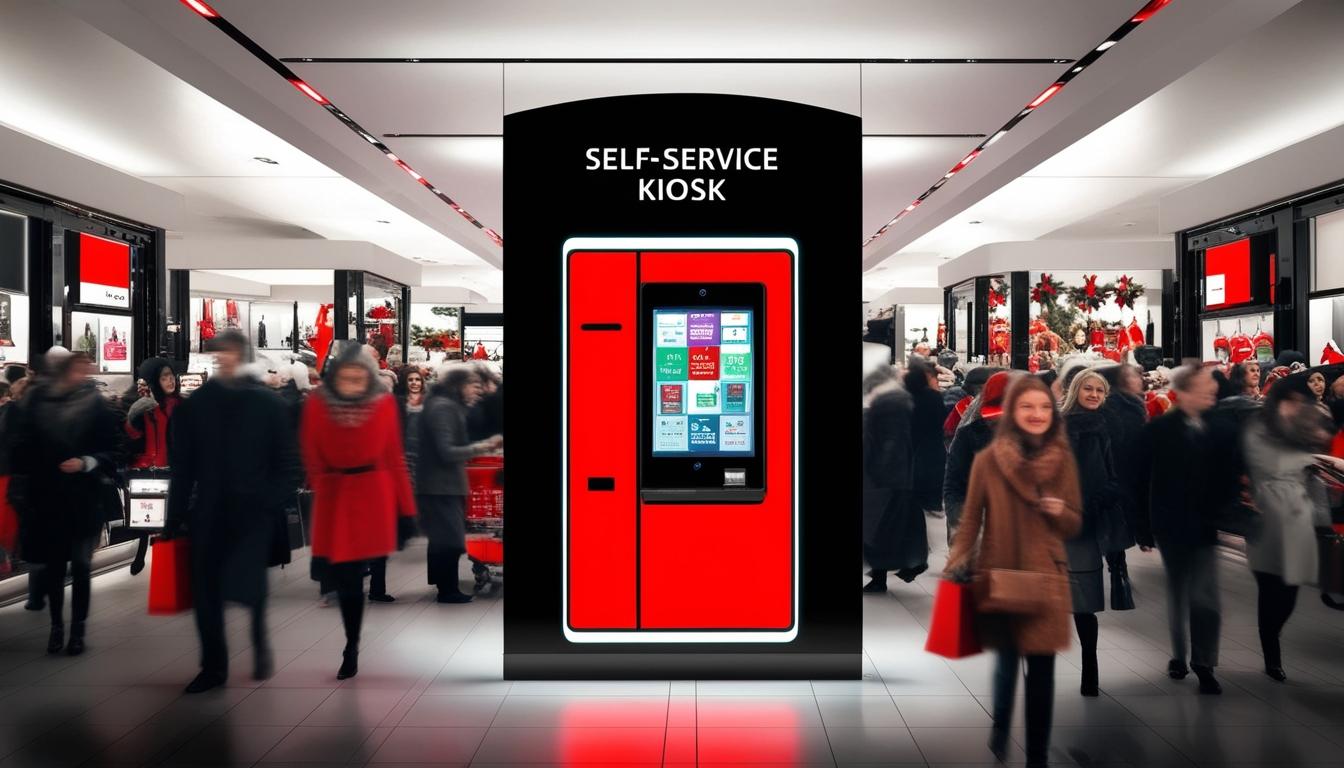
As self-service technology gains traction, retailers adapt to enhance efficiency and customer satisfaction during the busy holiday season.
In the dynamic landscape of retail, self-service technology has emerged as an essential asset for businesses aiming to maintain competitiveness, particularly during the peak holiday shopping season. As shoppers worldwide flock to stores in search of holiday deals, retailers are focusing on enhancing the in-store experience, prioritising efficiency and customer satisfaction through advanced technologies powered by artificial intelligence (AI) and automation.
As the holiday shopping season commences, stores are bracing for the pressures of high customer traffic typically characterised by lengthy queues and overwhelmed staff. However, the integration of self-service tools is reshaping this environment, providing a much-needed solution to streamline operations and improve the shopping experience. According to insights presented in the Retail Customer Experience Blog, it is clear that self-service technology has transitioned from being a luxury to a necessity in the retail sector.
One significant advantage of these self-service systems is their ability to empower customers. Innovations such as kiosks and mobile transaction options allow consumers to control their shopping journey, effectively reducing waiting times and enhancing convenience. “The familiar sight of crowded checkout lines can become a thing of the past as these systems give customers control over their shopping journey,” explained the blog. Such tools not only facilitate quicker purchases but also notify shoppers about low stock items, aiding their decision-making and reducing time spent in-store.
During critical times such as Black Friday and the lead-up to Christmas, effective management of foot traffic and inventory remains paramount. Retailers are increasingly employing advanced technology, including apps and mobile ordering systems, to direct customer flow and alleviate congestion in busy areas. The ability to analyse real-time data on purchasing behaviours allows for improved staffing and inventory planning, ensuring that retailers can proactively meet consumer demands. This proactive, data-driven approach marks a significant evolution in the retail shopping experience.
Nevertheless, alongside the benefits of self-service technology, retailers also face challenges, particularly related to security and theft—commonly referred to as “shrinkage.” As self-checkout stations can be more susceptible to shoplifting, many retailers are implementing AI-driven security features. These include surveillance cameras and machine learning algorithms designed to detect suspicious behaviours, such as providing evidence of undetected items being bagged without proper scanning. Enhanced measures such as weight sensors can further combat this issue by ensuring item counts correspond accurately.
Retailers are also tasked with training staff to oversee self-service areas, ensuring customers receive assistance when needed while mitigating the risks associated with self-checkout systems. This hybrid model of integrating technology with human oversight aims to maximise convenience while maintaining security.
In addition to addressing these concerns, retailers are focusing on operational efficiency. By utilising self-service technology, stores can better manage customer inflow, allowing employees to concentrate on complex responsibilities like returns and restocking. The adaptive nature of these systems ensures that retailers can respond quickly to changing customer volumes, a vital capability during the unpredictable holiday season.
As mobile shopping continues to gain traction, the demands placed on physical retail spaces are evolving. The integration of self-service technology is integral to meeting customer expectations for convenience, mirroring the ease of online shopping. The ongoing evolution of retail necessitates that businesses adapt to these technological advancements to remain competitive; retailers that embrace self-service solutions are poised to transform holiday shopping chaos into opportunity, while those that resist change may struggle to keep pace in an increasingly fast-paced environment.
Source: Noah Wire Services
- https://www.retailcustomerexperience.com/blogs/how-self-service-checkout-solutions-are-transforming-holiday-retail/ – Corroborates the transition of self-service technology from a luxury to a necessity in retail, and its role in enhancing the in-store experience during the holiday season.
- https://www.retailcustomerexperience.com/blogs/how-self-service-checkout-solutions-are-transforming-holiday-retail/ – Supports the use of self-service tools to streamline operations, reduce waiting times, and enhance customer convenience during peak holiday shopping.
- https://www.retailcustomerexperience.com/blogs/how-self-service-checkout-solutions-are-transforming-holiday-retail/ – Explains how self-service systems, including kiosks and mobile transaction options, help manage foot traffic and inventory during critical times like Black Friday and the lead-up to Christmas.
- https://www.retailcustomerexperience.com/blogs/how-self-service-checkout-solutions-are-transforming-holiday-retail/ – Details the use of real-time data analysis to improve staffing and inventory planning, ensuring retailers can meet consumer demands proactively.
- https://www.smartbrief.com/original/modularity-and-self-service-help-convenience-retailers-reimagine-in-store-experiences – Discusses the implementation of AI-driven security features, such as surveillance cameras and machine learning algorithms, to combat shoplifting and shrinkage in self-checkout systems.
- https://www.smartbrief.com/original/modularity-and-self-service-help-convenience-retailers-reimagine-in-store-experiences – Highlights the importance of training staff to oversee self-service areas and assist customers while mitigating risks associated with self-checkout systems.
- https://www.retailcustomerexperience.com/blogs/how-self-service-checkout-solutions-are-transforming-holiday-retail/ – Explains how self-service technology helps in managing customer inflow, allowing employees to focus on complex tasks like returns and restocking, and adapting to changing customer volumes.
- https://www.kioskmarketplace.com/blogs/how-kiosks-can-help-retailers-simplify-the-busy-holiday-season-2/ – Supports the role of kiosks and self-service technology in simplifying the holiday shopping season by reducing waiting times and enhancing convenience.
- https://www.kioskmarketplace.com/blogs/how-kiosks-can-help-retailers-simplify-the-busy-holiday-season-2/ – Details the benefits of smart lockers and endless aisle kiosks in providing a seamless shopping experience and managing inventory efficiently.
- https://www.retailcustomerexperience.com/blogs/how-self-service-checkout-solutions-are-transforming-holiday-retail/ – Emphasizes the need for retailers to adapt to self-service technology to meet customer expectations for convenience, mirroring the ease of online shopping.
- https://www.retailcustomerexperience.com/blogs/how-self-service-checkout-solutions-are-transforming-holiday-retail/ – Highlights the importance of integrating self-service technology to transform holiday shopping chaos into opportunity and remain competitive in the retail landscape.






