






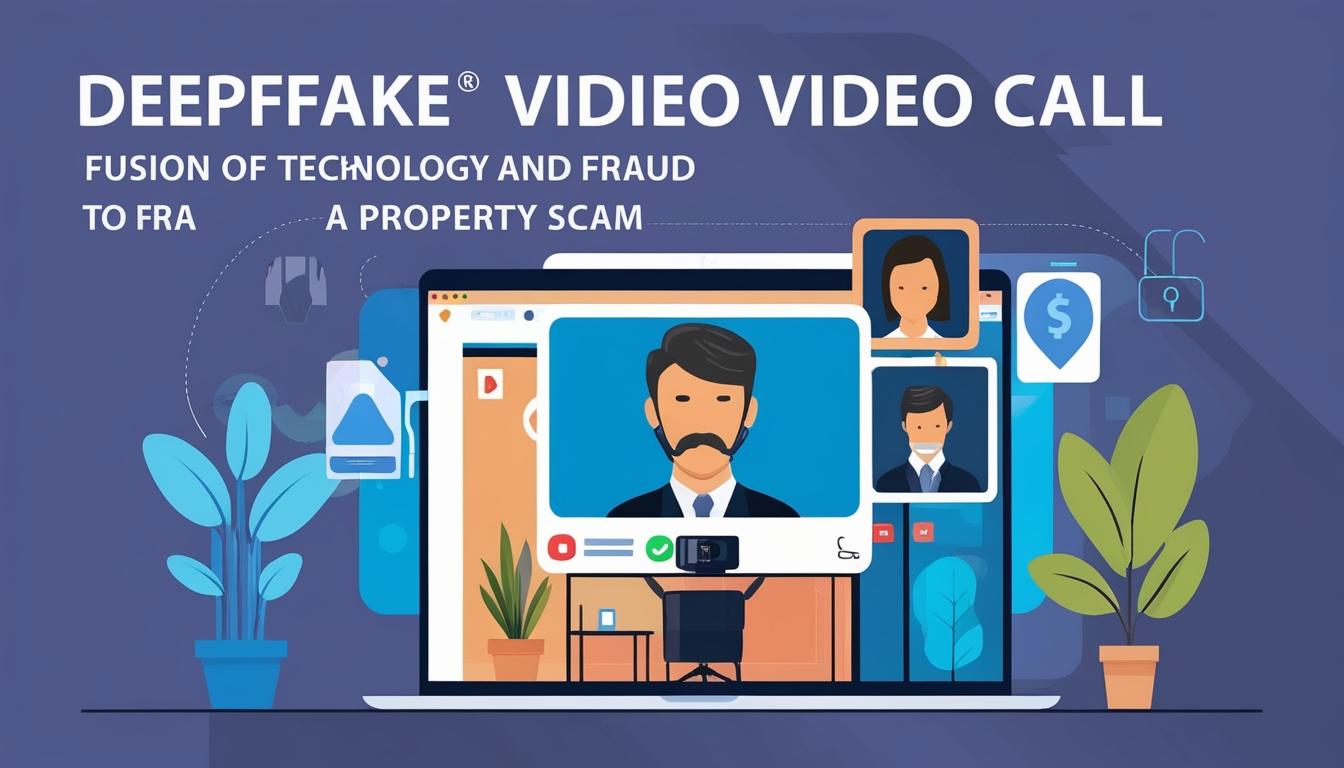

A scheme in Broward County nearly dupped a title company as scammers used AI-generated deepfakes to impersonate a property owner, highlighting growing concerns over technological misuse in fraudulent activities.
In a startling new instance of technological misuse, scammers attempted to fraudulently acquire a property in Broward County, Florida, by deploying advanced artificial intelligence (AI) techniques. This audacious attempt involved AI-generated deepfake technology to impersonate the rightful owner of a vacant plot of land, nearly succeeding in duping a local title company responsible for ensuring the legal transfer of property ownership.
Marty Kiar, a property appraiser for Broward County, revealed the intricate details of the scam. According to him, the scheme was initiated when a woman, purporting to own a vacant lot, contacted the title firm expressing her desire to sell. Despite initial skepticism, the firm eventually arranged a live video call to verify her identity. The individual who appeared on this call was not the true proprietor but rather an AI-generated version of a missing woman, brought to virtual life through deepfake technology.
This incident underscores growing concerns amongst experts regarding the misuse of AI in creative and increasingly sophisticated fraudulent activities. Title fraud, while not unprecedented, is experiencing a significant technological transformation. As public property data, including transaction records and deeds, is readily accessible, the introduction of AI has streamlined the process for criminals. Tyler Adams, CEO of wire fraud prevention company CertifID, explains how AI efficiently ingests and synthesizes vast amounts of public data, facilitating more sophisticated levels of impersonation.
AI technology’s capabilities have enabled other forms of nefarious activity. Similar scams have seen the use of AI to create deepfaked voices, impersonating family members seeking ransom or even political figures influencing potential voters. A notable example involved AI mimicking President Joe Biden in robocalls, prompting the Federal Communications Commission to ban such unsolicited communications.
Despite only documented instances being scarce, Kiar warns that AI-related property fraud cases could increase as criminals continue to leverage cutting-edge technology to outsmart systems. However, this is not the only area of concern. Other forms of AI fakery, such as illegitimate AI-generated product reviews, have already seen regulation attempts to curb their spread.
The broader implications of these advancements in AI technology are still unfolding, with experts and authorities remaining vigilant as they adapt to and counteract evolving scams.
Source: Noah Wire Services







