









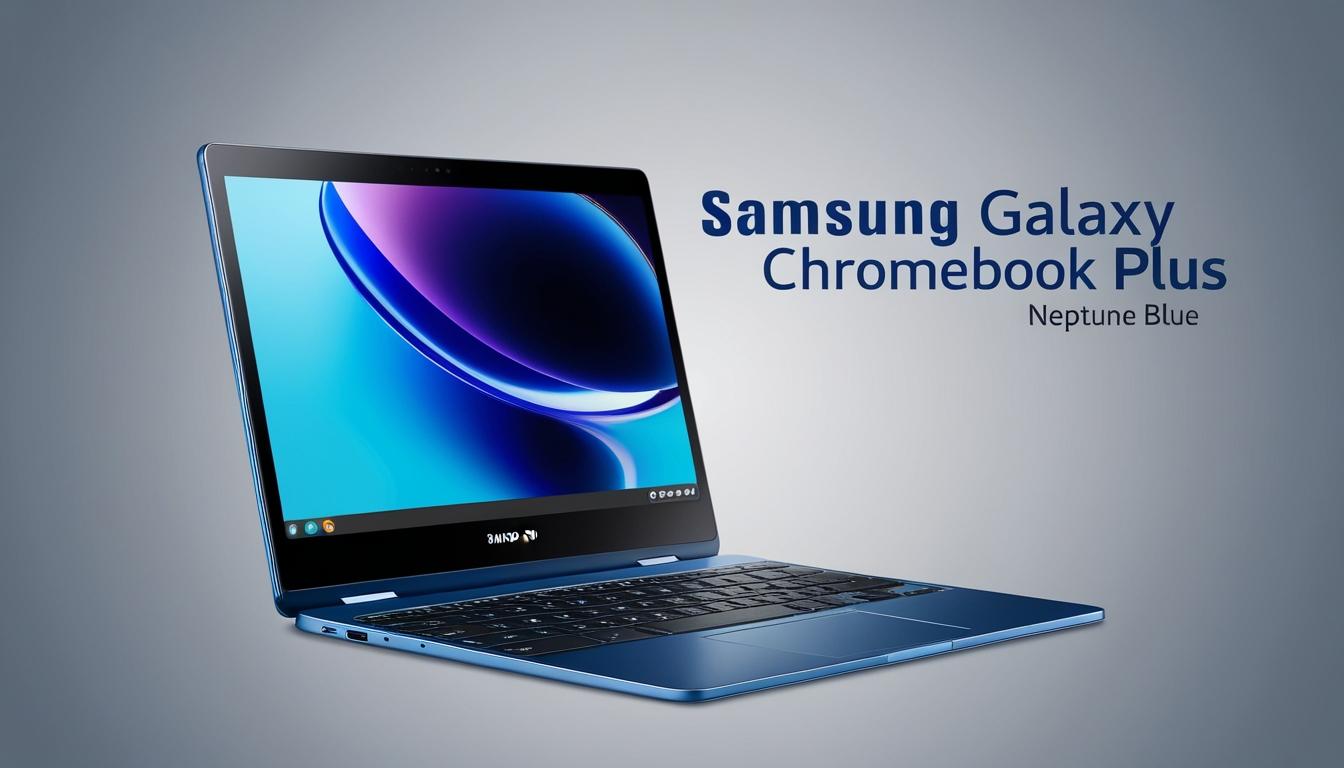
The Samsung Galaxy Chromebook Plus, launched on 4th October 2024, combines premium design with impressive features, though it falls short in some functional aspects.
Samsung has once again entered the Chromebook arena with the launch of the Samsung Galaxy Chromebook Plus, a device that promises a premium experience encapsulated within an exceptionally thin and light design. This eagerly anticipated release hit the market on 4th October 2024 and is Samsung’s first Chromebook Plus, a segment known for its adherence to specific high-specification standards set by Google to provide a top-tier user experience.
The Samsung Galaxy Chromebook Plus is ambitiously priced at $699 and currently stands out in the Chromebook market owing to its aesthetic allure and construction — it weighs only 2.58 pounds and is a mere 0.46 inches at its thickest point. Crafted in a striking Neptune Blue, this machine offers a svelte and sophisticated visual appeal. The design is not only stunning but also highly functional, incorporating a wide range of ports, such as a full-sized HDMI, two USB-C ports, a USB-A 3.2 port, a microSD card slot, and an audio combo jack, thus eliminating the usual sacrifices associated with ultra-thin laptops.
The star attraction of this model is its 15.6-inch display equipped with Samsung’s renowned OLED technology. This is the first OLED panel to be employed in a Chromebook Plus, offering superior image quality with rich blacks and vibrant colours, though it maxes out at a resolution of 1080p and a refresh rate of 60Hz. Despite the admirable display, the absence of a touchscreen, which was a feature in previous Galaxy Chromebook models, might disconcert users who favour touch inputs.
Under the hood, the Galaxy Chromebook Plus is powered by an Intel Core 3 100U processor, complemented by 8GB of RAM and a 256GB SSD — double the minimum storage requirement for the Chromebook Plus label. This configuration ensures smooth performance across various tasks, making it suitable for work and casual use, including light gaming and cloud-based activities. Additionally, the device boasts a 1080p webcam, aligning with current video conferencing needs albeit not setting new benchmarks.
Samsung has integrated several AI-enhanced features into this Chromebook, including the new Quick Insert key, which provides shortcuts to tools and acts as a practical utility for tasks such as attaching files and performing quick calculations without switching programs. Furthermore, AI features like Help Me Read offer summaries of text content, positioning this Chromebook as a versatile work companion.
Though packed with these modern features, the device has omitted functionalities like a fingerprint scanner and lacks a privacy shutter for the webcam, which could be perceived as setbacks in terms of security and privacy.
The Galaxy Chromebook Plus faces competition, particularly from the Acer Chromebook Plus Spin 714, which, while priced similarly, offers a more powerful processor, a 360-degree hinge, and touchscreen capabilities. This comparison underscores the Galaxy Chromebook Plus’s ambition to captivate with design rather than raw power.
In essence, the Samsung Galaxy Chromebook Plus positions itself as an ultra-portable, aesthetically pleasing Chromebook that prioritises visual and physical design attributes. It is targeted at users who value style and portability in their laptops, even if it means compromising slightly on features like a touchscreen or top-tier internal specs. For those who regard specifications as secondary to design, the Galaxy Chromebook Plus emerges as an appealing choice in the Chromebook marketplace.
Source: Noah Wire Services






