









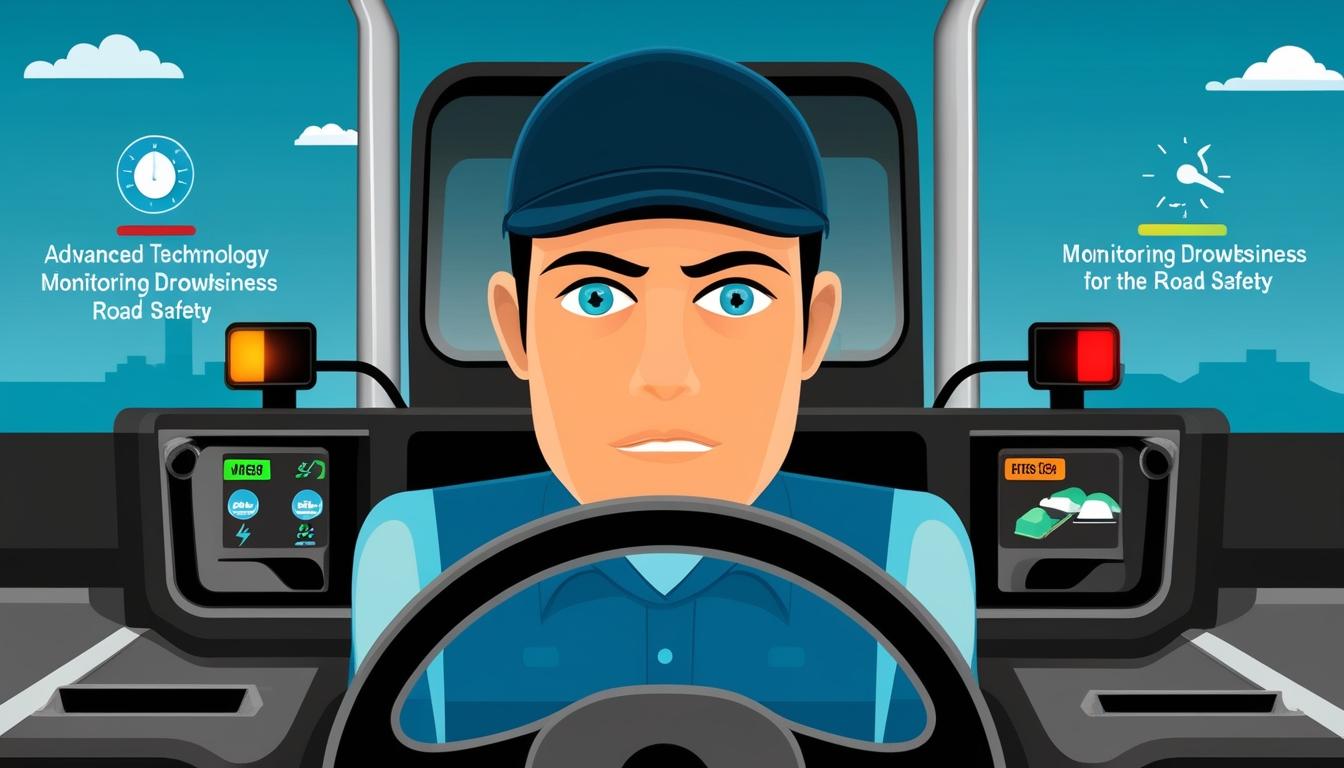
Samsara introduces a cutting-edge drowsiness detection feature employing AI to enhance safety and efficiency in the commercial trucking industry, aiming to mitigate the critical issue of driver fatigue.
Samsara Unveils Advanced Drowsiness Detection Feature for Driver Safety
Samsara, a leader in Internet of Things (IoT) solutions, has introduced a cutting-edge Drowsiness Detection feature designed to enhance safety and efficiency in the commercial trucking industry. This innovation employs advanced artificial intelligence (AI) models trained on a large-scale data set to accurately identify signs of driver drowsiness, a critical issue in road safety.
This feature has been integrated into Samsara’s platform to provide real-time alerts and comprehensive insights. When the system detects drowsiness in a driver, it activates immediate audio alerts within the vehicle’s cabin. Additionally, it sends notifications to managers via text or email, enabling swift interventions. Managers can access detailed reports on these incidents through the Samsara platform, facilitating a deeper understanding of fatigue patterns within their fleets. This information is anticipated to aid in targeted driver coaching, ultimately improving overall safety and operational efficiency.
The importance of addressing driver fatigue is underscored by statistics from the National Safety Council, which indicate that drowsy drivers are three times more likely to be involved in crashes. Moreover, the AAA Foundation for Traffic Safety reports that drowsiness is a factor in over 17% of all fatal crashes. These figures highlight the critical need for effective fatigue management systems, particularly in the commercial trucking sector, where drivers often face long hours and challenging road conditions.
According to Evan Welbourne, Vice President of AI and Data at Samsara, detecting drowsiness is complex because the behaviour is multifaceted and not readily apparent. “It’s hard to detect when someone is truly drowsy. It’s more than a single behavior, like yawning or having your eyes closed,” Welbourne explained. He emphasised that accurate detection hinges on the quality of data underpinning the AI models, given the behavioural nuance inherent in drowsiness.
Samsara’s system is trained to recognise various indicators of fatigue. These include head nodding, slouching, prolonged eye closure, yawning, and eye rubbing. This approach aligns with clinically validated benchmarks for defining drowsiness, ensuring a robust and reliable detection mechanism.
The initiative was initially announced at Samsara’s Beyond Conference in June, an event attended by over 2,000 leaders in physical operations. The system draws upon Samsara’s expansive data set, which aggregates more than 10 trillion data points annually. This wealth of information informs the AI models that underpin Samsara’s suite of automated solutions, delivering tailored insights and streamlined workflows for users.
By leveraging this innovative technology, Samsara aims to pave the way for enhanced safety measures within the transport sector, addressing the challenges posed by driver fatigue with precision and efficacy.
Source: Noah Wire Services






