









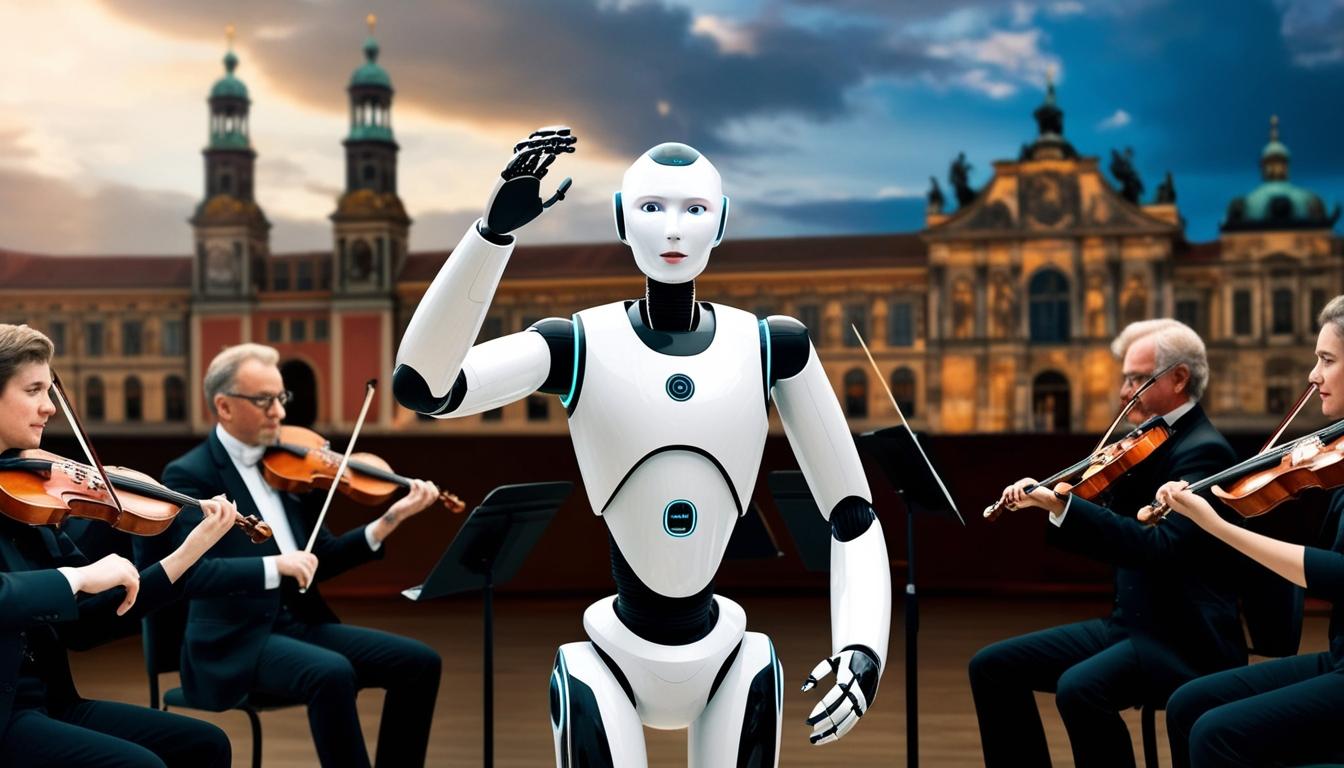
A three-armed robot conductor has led an all-human orchestra in Dresden, showcasing the emerging role of AI in classical music.
In an unprecedented blending of technology and the arts, a three-armed robot conductor named MAiRA Pro S has captivated audiences in Dresden, Germany. The innovative machine made its debut performance by leading an all-human orchestra, marking a significant milestone in the integration of artificial intelligence and classical music performance.
MAiRA Pro S is an advanced robotic conductor, designed to handle intricate movements required for conducting an orchestra. The debut performance took place in Dresden, a city renowned for its rich cultural heritage and vibrant music scene. This event signifies a pioneering achievement in the music industry, highlighting the growing role of robotics and AI in creative fields traditionally dominated by humans.
The technology behind MAiRA Pro S allows for precise gestural interpretations, making it possible for the robot to communicate effectively with human musicians. Equipped with three arms, the robot can articulate complex conducting patterns, enabling it to lead the orchestra through elaborate compositions with remarkable accuracy. The robot’s interaction with the musicians was seamless, showcasing not only its technological capabilities but also its potential to complement human creativity.
While specific details of the repertoire conducted were not disclosed, the performance raised intriguing possibilities about future collaborations between human musicians and robotic counterparts. This debut has sparked discussions in the music community about the potential for robots to take on roles traditionally held by human conductors and whether AI can be programmed to interpret and deliver the emotional nuances of classical music.
The prospect of rewriting classic compositions tailored to a robotic conductor introduces a novel challenge for composers. Such a venture would involve reimagining timeless pieces with a focus on leveraging the robot’s unique capabilities. Composers might explore ways to adapt orchestration techniques to align with the precise mechanics of robotic conducting.
As the music world explores these new horizons, it remains to be seen how robotic conductors like MAiRA Pro S will be woven into the fabric of live performance and musical innovation. This technological advancement invites further exploration into how AI can enhance artistic expression and the concert experience for both performers and audiences alike.
This remarkable event took place amidst a backdrop of technological progress, with Dresden’s debut marking a key moment in the evolving narrative of AI’s role within the arts. The event underscores the transformative potential of AI technologies in various facets of life, offering a glimpse into a future where machines and humans collaborate in creative endeavours.
Source: Noah Wire Services






