









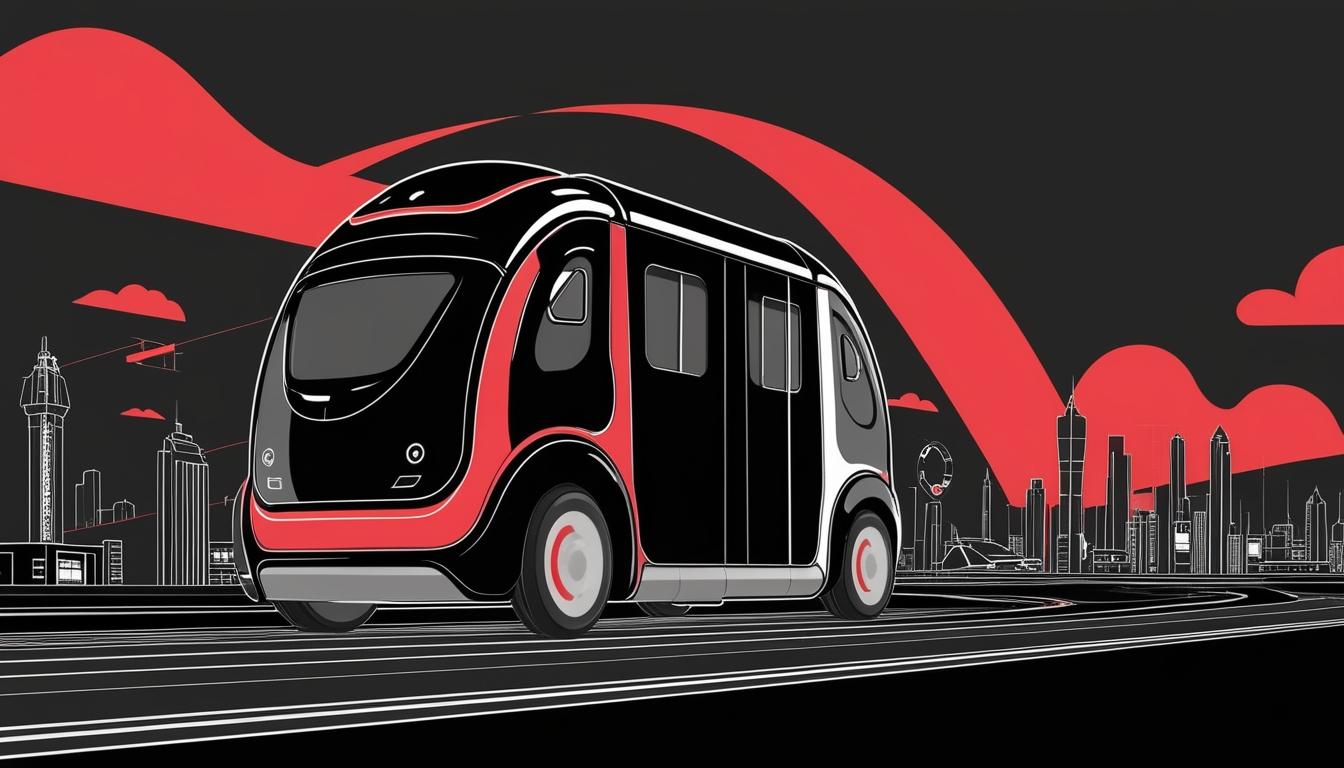
A recent report highlights shifts in public transport with roboshuttles and autonomous buses, unveiling challenges and advancements towards full commercialisation.
Emerging trends in the field of artificial intelligence (AI) automation for transportation reveal a landscape of roboshuttles and autonomous buses that aim to advance from level 4 to level 5 operation. Level 4 operation signifies autonomous driving within designated areas, a milestone currently targeted by manufacturers, according to a recent report by IDTechEx titled “Roboshuttles and Autonomous Buses 2024-2044: Technologies, Trends, Forecasts.”
Roboshuttles represent a significant shift in public transportation strategy. Designed for small, driverless operations, these vehicles aim to comfortably accommodate up to 22 passengers, leveraging the absence of a driver to enhance efficiency within their compact 4 to 6-metre length. However, the commercial rollout of roboshuttles faces significant hurdles. The report highlights a troubling trend: the number of companies in this segment has reduced dramatically from over 25 to just 12 since 2020, primarily due to difficulties in securing government funding and generating public interest. This cautious environment complicates the transition from trial phases to full-scale commercialization for many players in the market.
As of the second quarter of 2024, only 7 out of 11 companies in the roboshuttle sector qualified as manufacturers, with three firms in China engaging in large-scale trials. While this may exhibit a positive trend, broad adoption remains contingent on successful outcomes from ongoing trials, which could potentially stimulate interest from emerging startups.
On a broader scale, the autonomous bus sector encompasses various models, including mini, midi, and city buses. These larger vehicles can carry approximately 100 passengers, suggesting a need for fewer units to effectively meet urban transport demands. The integration of autonomous buses into urban infrastructures necessitates substantial government backing to create a conducive environment for their growth; however, the current landscape reveals limited market participants, attributable to hefty investment requirements and regulatory hurdles.
Examples of successful integrations of autonomous buses suggest a promising future for this mode of transport. Recent developments showcase a 14-mile autonomous bus route operating between Ferrytoll and Edinburgh Park, which has included a significant number of weekly passenger journeys. Moreover, a pilot project in South Korea that features an autonomous night bus addresses urban transport gaps exacerbated by a lack of available taxis, further illustrating practical applications for these vehicles.
Despite a challenging market for city buses, smaller minibus companies are experiencing growth. Such minibuses are perceived as having a higher likelihood of reaching full commercialization compared to roboshuttles, given the greater availability of governmental support. Notable examples include Volkswagen’s MOIA minibusses, which are operational in Germany, and Aurrigo’s services targeting airports and cargo transportation in the UK and Singapore, both of which highlight the maturation of autonomous minibus deployments.
Looking ahead, the trajectory of roboshuttles and autonomous bus development suggests continued, albeit measured progress. The report indicates that over the next few years, roboshuttle trials are set to expand with safety operators on board. By 2030, full commercialization without operators is predicted, while autonomous buses are expected to undergo commercial trials by the same year, with fully driverless operations slated for certain routes by 2035.
As stakeholders in the transportation industry navigate the complexities of funding, regulatory compliance, and technological advancements, the future landscape reflects both optimism and caution. The interplay between innovation in AI automation and urban transport needs continues to shape the operational framework for these evolving forms of mobility. Further insights and forecasts can be found in IDTechEx’s latest report on autonomous transport solutions.
Source: Noah Wire Services
- https://www.walturn.com/insights/what-are-the-trends-of-ai-within-the-transportation-industry – Corroborates the use of AI in transportation for route optimization, dynamic pricing, and enhancing road safety through autonomous driving.
- https://www.thebusinessresearchcompany.com/report/ai-in-transportation-global-market-report – Provides details on the AI in transportation market, including growth trends, technological advancements, and applications such as autonomous vehicles and predictive maintenance.
- https://www.logisticsbusiness.com/it-in-logistics/ai-iot/ai-in-transportation-the-future-of-smart-logistics/ – Discusses AI’s role in logistics, including route optimization, autonomous vehicles, and predictive analytics to enhance efficiency and safety.
- https://gurtam.com/news/leading-2024-trends-affecting-modern-transportation-and-logistics – Highlights trends in transportation and logistics, such as automation, real-time tracking, and AI-driven route optimization, which are crucial for the industry’s future.
- https://geo2.com/top-5-transportation-industry-trends-to-watch-in-2024/ – Outlines key trends including automation, blockchain technology, data analytics, and on-demand mobility solutions, all of which impact the future of transportation.
- https://www.thebusinessresearchcompany.com/report/ai-in-transportation-global-market-report – Mentions the growth of the AI in transportation market and the challenges faced by companies in securing funding and generating public interest for roboshuttles and autonomous buses.
- https://www.logisticsbusiness.com/it-in-logistics/ai-iot/ai-in-transportation-the-future-of-smart-logistics/ – Supports the idea of autonomous buses and minibuses being integrated into urban transport systems, highlighting examples like Volkswagen’s MOIA minibuses.
- https://gurtam.com/news/leading-2024-trends-affecting-modern-transportation-and-logistics – Discusses the importance of telematics and IoT in fleet management, which is relevant to the operational efficiency and safety of autonomous buses and roboshuttles.
- https://geo2.com/top-5-transportation-industry-trends-to-watch-in-2024/ – Mentions the role of automation and robotics in transforming the transport logistics industry, including the use of autonomous vehicles and drones.
- https://www.walturn.com/insights/what-are-the-trends-of-ai-within-the-transportation-industry – Explains how AI enhances road safety through autonomous driving technologies, which is a critical aspect of the development of roboshuttles and autonomous buses.
- https://www.thebusinessresearchcompany.com/report/ai-in-transportation-global-market-report – Details the technological advancements and market growth expected in the AI in transportation sector, including the integration of AI in urban mobility and smart cities.






