









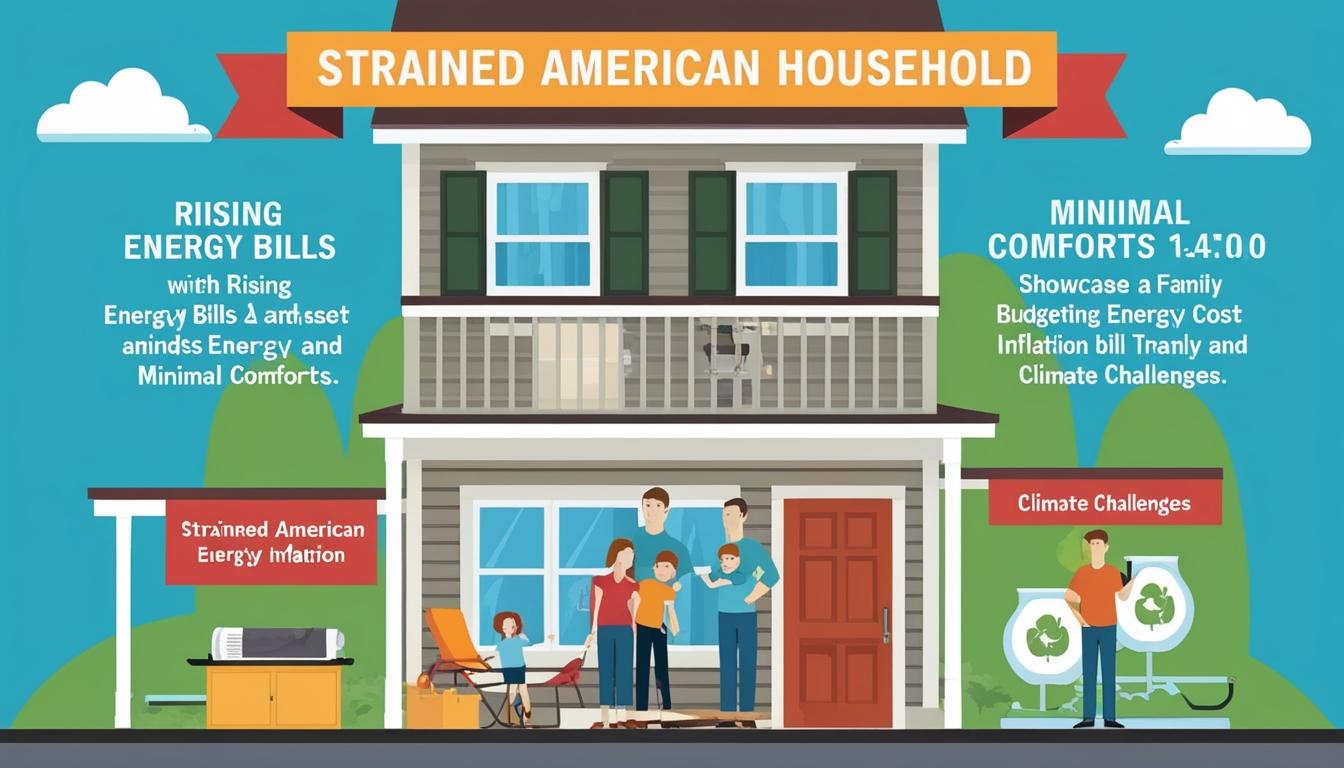
American households are facing unprecedented energy bills, forcing difficult financial choices as increasing costs are driven by inflation, aging infrastructure, and climate-related challenges.
Rising Energy Costs Strain American Households Amidst Climate and Industry Changes
In recent years, American households have been grappling with increasingly unaffordable energy bills, with data indicating that one in four households failed to cover their energy expenses at least once over the past 12 months. This financial strain has forced families to make difficult choices, such as cutting back on essentials like groceries and medicine, or keeping their homes at uncomfortable temperatures to conserve energy.
The rise in energy costs can be attributed to several factors, including inflation, aging infrastructure, and climate change-related challenges. From 2018 to 2023, electricity rates in the Western United States increased by approximately 17%. As utilities invest billions into infrastructure to mitigate wildfire risks and cope with severe weather, these expenses have ultimately been passed down to consumers.
In states like Oregon, ratepayer pushback has been notable, with calls for regulating utility rate hikes to prevent drastic increases. Bob Jenks, executive director of the Oregon Citizens’ Utility Board, has advocated for a cap on rate increases to restrain extraneous costs.
Natural gas prices have also contributed to this volatility. Events such as Russia’s invasion of Ukraine and weather phenomena like the Texas freeze have created supply shocks, impacting costs globally. As a result, states like Arizona and Nevada, where natural gas powers half of electricity consumption, have experienced significant price increases.
While some states, such as New Mexico, have managed to keep energy costs more stable through substantial investments in renewable energy, others face challenges linked to upgrades in infrastructure and fluctuating fossil fuel prices. In California, the aftermath of the 2018 Camp Fire led utilities to enhance fire prevention measures, resulting in steep hikes in electricity bills, rising by nearly 40% by 2023.
In Maine, rising electricity prices are further compounded by potential increases in natural gas rates. Pipeline operators such as Algonquin Gas Transmission and Maritimes & Northeast Pipeline are seeking approval for rate hikes, which, if authorised, could lead to higher gas and electricity prices. The Maine Public Utilities Commission, alongside industry and consumer advocates, are engaged in negotiations to mitigate the impact of these proposed increases.
The boom in data centre construction, driven by leading tech companies’ push into artificial intelligence, also adds a layer of complexity. These centres demand vast amounts of electricity, necessitating costly upgrades to power infrastructure. While tech firms argue that they help cover the costs of necessary grid improvements, regulators and consumer advocates remain wary of the burden transfer to residential customers.
Amid these dynamics, political responses vary significantly. As the 2024 elections approach, both Republicans and Democrats have pledged to address energy affordability, albeit through starkly different strategies. Republicans typically advocate for increased drilling to boost supply and lower prices, while Democrats focus on long-term savings through investments in solar and wind power.
Utilities also face increasing challenges in meeting growing energy demands due to a rising number of data centres and electric vehicle charging stations. As climate change continues to drive more extreme weather conditions, the task of balancing infrastructure investments and consumer costs will only become more complex.
In Massachusetts, a major hydropower project aimed at importing energy from Canada to the New England grid has stirred controversy due to its escalating costs, which ratepayers must bear. Despite delays and increased expenditure, project proponents argue it will ultimately lead to decreased electricity prices and help the state meet ambitious clean-energy goals.
The interplay between infrastructure needs, regulatory decisions, and market forces underscores the multifaceted nature of the energy challenges facing American households today. With consumers bearing the brunt of these changes, the coming years will likely see continued debate and policy adjustments as stakeholders navigate this evolving landscape.
Source: Noah Wire Services






