









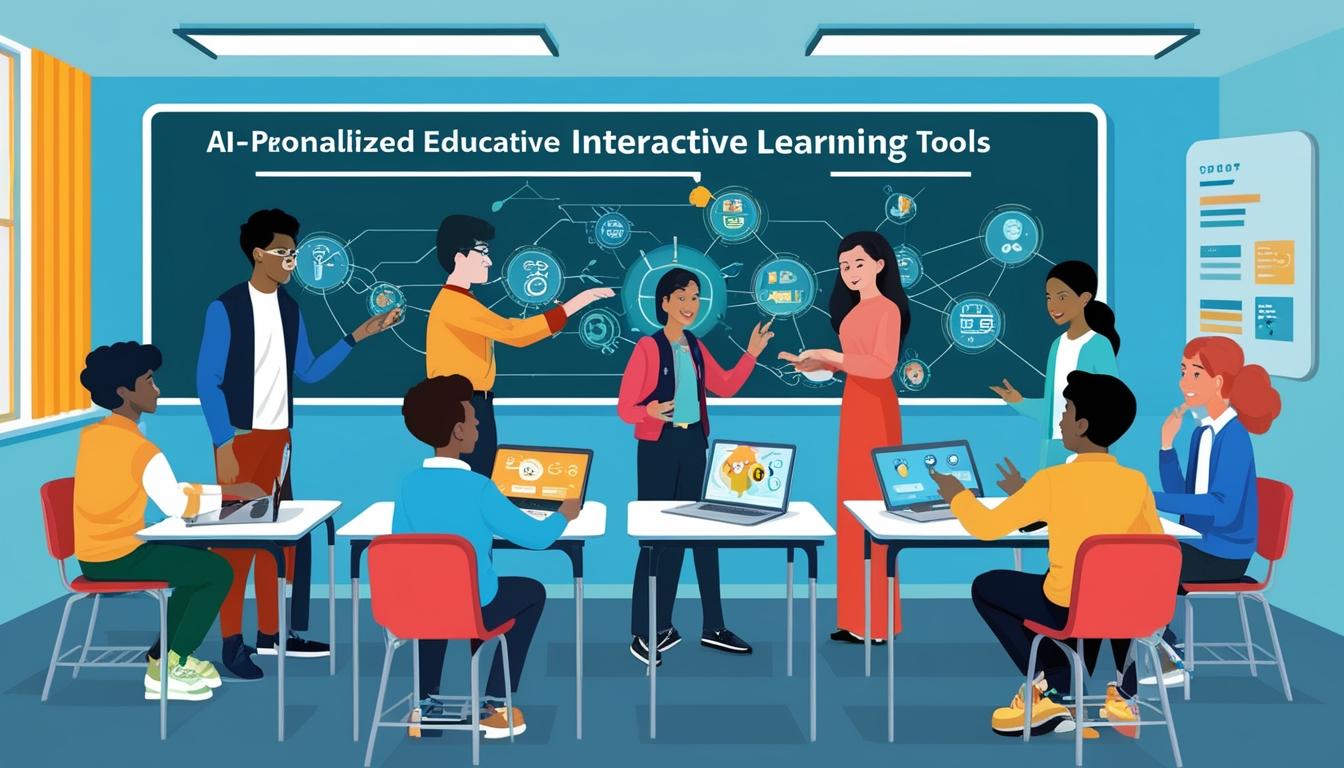
The integration of AI into eLearning is transforming education by personalising learning experiences, enhancing engagement, and improving content creation efficiency.
The integration of Artificial Intelligence (AI) into eLearning has significantly transformed the educational landscape, making it more accessible and tailored to individual learning needs. Established in 1999, eLearning has become a staple in modern education and corporate training, largely due to its flexibility and cost-effectiveness. However, the incorporation of AI technologies is now taking this mode of learning to new heights, enhancing personalisation, interactivity, and efficiency across various educational platforms.
One of the foremost benefits of AI in eLearning is the ability to provide highly personalised learning experiences. AI algorithms are adept at analysing data related to individual learners, such as their performance metrics, learning speed, and preferences. This data-driven approach allows the creation of customised content and assessments, ensuring that each learner’s unique educational needs are met effectively, thereby optimising learning outcomes.
Beyond personalisation, AI also significantly boosts engagement and interactivity in eLearning environments. AI-powered modules often incorporate interactive elements like simulations, Virtual Reality (VR), and gamification techniques. These elements create immersive experiences that captivate learners’ attention, thus fostering better comprehension and retention of the material.
Moreover, AI has streamlined the process of content creation in eLearning. Utilizing AI-driven authoring tools, educators can rapidly develop high-quality modules without requiring extensive technical expertise. This increase in efficiency allows teachers to allocate more time to direct teaching and providing learner support, improving the overall educational experience.
Various platforms and tools, integral to the AI-eLearning synergy, play crucial roles in enhancing the learning process. Learning Management Systems (LMS) are at the forefront, using AI to personalise the learning journey, offer intelligent recommendations, and automate numerous administrative tasks such as grading and tracking progress. These systems can even identify at-risk students and suggest pertinent learning resources, providing teachers with valuable insights for course improvement.
AI-enhanced authoring tools further simplify the creation of interactive eLearning content by automating design and media integration. These tools can employ generative AI to suggest relevant images, generate scenarios, and provide constructive feedback on course structure.
Furthermore, AI Translation Services have revolutionised the accessibility of eLearning content. They offer accurate, real-time translation, thus enabling courses to cater to a global, multilingual audience without the extensive time and effort previously required for manual conversion.
In terms of learner support, AI chatbots represent a significant advancement. These conversational AI tools are capable of providing round-the-clock assistance, answering learner enquiries, offering guidance, and facilitating connections with instructors or peers. This function allows educators to focus more on complex teaching tasks by alleviating some of the more routine support interactions.
Additionally, AI-powered analytics platforms provide educators with deep insights into learner behaviour, progress, and engagement levels. Leveraging machine learning algorithms, these tools can not only identify patterns but also predict outcomes and recommend customised learning paths, further enhancing the educational experience.
While AI brings numerous advantages, its implementation requires strategic integration into the existing educational infrastructure. Educators are encouraged to clearly define learning objectives, select appropriate AI tools that align with their educational goals, and continuously evaluate and improve their AI-enabled modules based on learner feedback and data insights.
Overall, as AI technologies continue to advance, the potential for eLearning to become even more interactive, efficient, and impactful remains promising. The strategic use of AI tools, combined with traditional instructional expertise, can significantly enhance the quality and effectiveness of digital learning experiences.
Source: Noah Wire Services






