









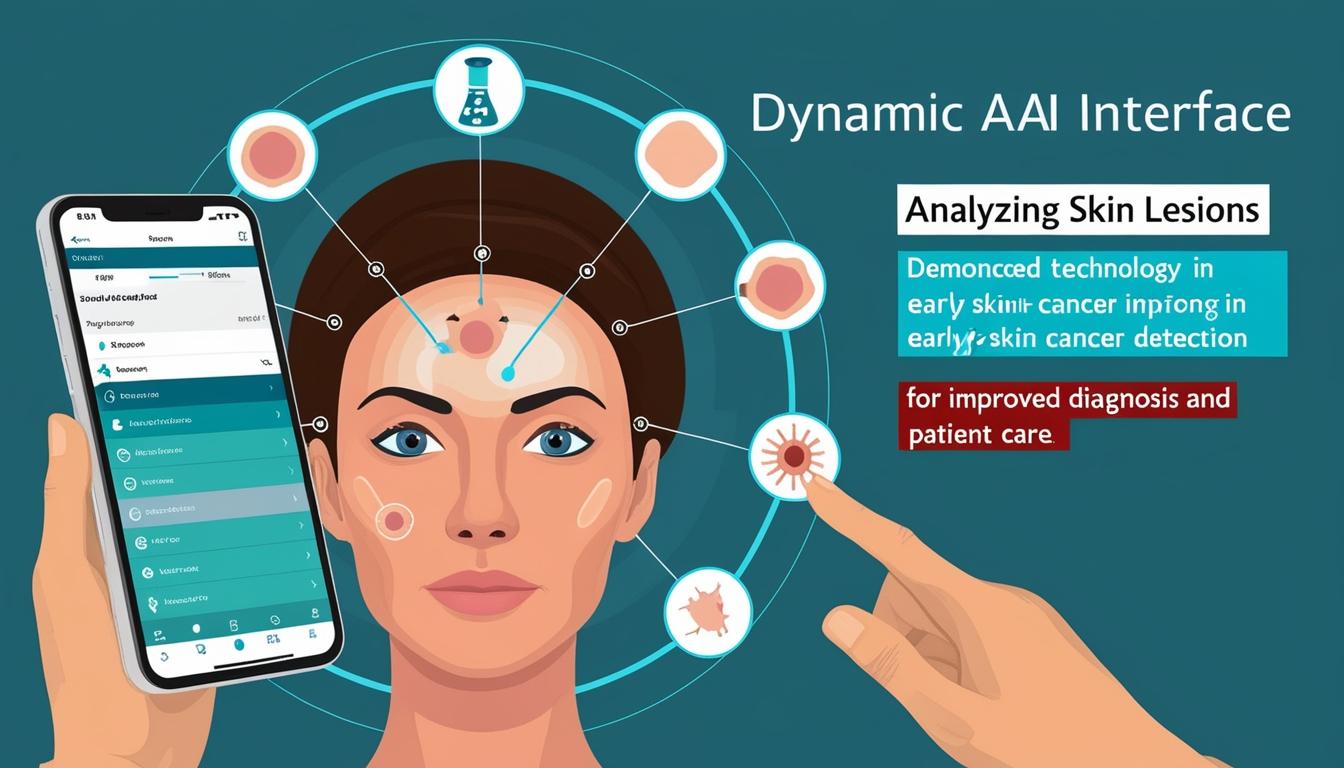
A pioneering AI framework developed in the East of England demonstrates superior performance in skin cancer detection, with new risk factors and potential to reduce biopsy referrals.
A pioneering development in medical technology has emerged from the East of England, where researchers have successfully created an advanced artificial intelligence (AI) framework designed to enhance the detection of skin cancer. This innovative AI tool, as detailed in a report published in Scientific Reports, has demonstrated superior performance compared to existing diagnostic methods. The study leverages the expertise of scientists from Anglia Ruskin University, Check4Cancer, the University of Essex, and Addenbrooke’s Hospital.
The research involved the training of the AI model with comprehensive data comprising 53,601 skin lesions from a cohort of 25,105 patients. Utilising sophisticated machine learning techniques and combination theory, the researchers were able to refine 22 clinical features to identify which were most indicative of skin lesions that could be deemed suspicious. Among these features are changes in the size, colour, or shape of a lesion, its pinkish hue or inflammation, and even the patient’s hair colour at age 15.
The study introduced the C4C Risk Score, a novel metric which achieved an accuracy rate of 69%. This outperformed the existing 7PCL method, which stood at 62%, and the Williams score, which had an accuracy of 60%.
Notably, the research unveiled new risk factors for skin cancer, like lesion age, pinkness, and hair colour, which had previously been overlooked by older methodologies that primarily focussed on melanoma, a subtype of skin cancer. These discoveries have broadened the framework for identifying various skin cancers, including basal cell carcinomas and squamous cell carcinomas.
Professor Gordon Wishart, a Visiting Professor of Cancer Surgery at Anglia Ruskin University and Chief Medical Officer at Check4Cancer, highlighted the importance of clinical data in enhancing the classification of skin lesions. He mentioned that the new AI model, which integrates the C4C risk score with skin lesion imagery, promises to reduce the number of patient referrals for biopsies. This could shorten waiting times for diagnosis and treatment and lead to improved outcomes for patients.
Additionally, Consultant Plastic Surgeon Per Hall, recently retired from Addenbrooke’s Hospital, emphasized the paper’s contribution to identifying patients with potentially suspicious lesions that warrant further examination. He noted the NHS faces a high volume of skin lesion referrals, most of which are benign. The AI tool aims to better identify potentially serious cases and expedite treatment for patients more susceptible to developing skin cancers.
The research team is optimistic about securing regulatory approval for the AI model by 2025, which could mark a significant advancement in the early detection and treatment of skin cancer. This development holds the promise of refining diagnostic practices, optimising healthcare resource allocation, and ultimately enhancing patient care.
Source: Noah Wire Services






