









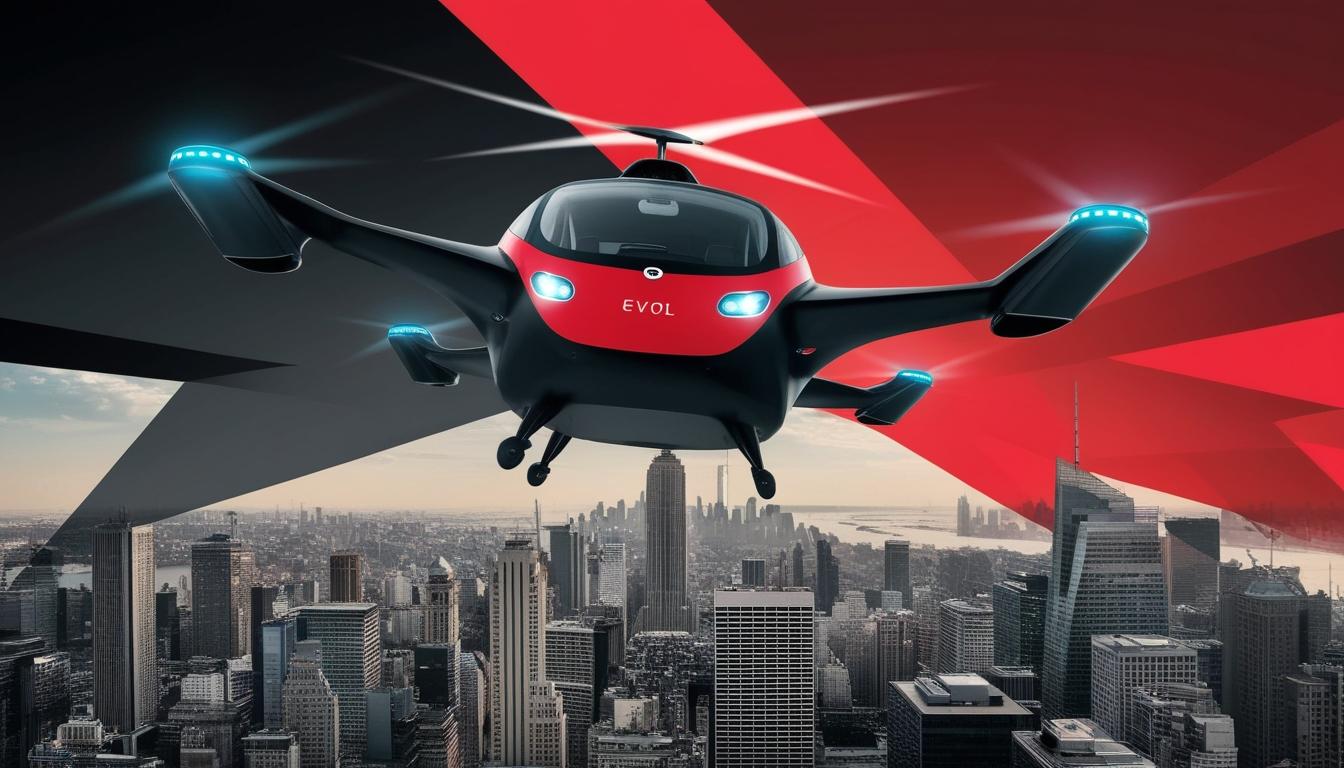
As cities face increasing congestion, the potential of electric vertical take-off and landing vehicles could reshape how we navigate urban landscapes.
Cities around the world are at a crossroads when it comes to urban mobility, grappling with how to efficiently transport millions of people within limited space. Drawing from his extensive experience as the former Policy Director for Transport for London, the author reflects on the challenges and possibilities facing major urban centres. Having played a key role in initiatives such as congestion charging, the introduction of cycle hire schemes, and the development of electric vehicle infrastructure, he highlights the imminent transformation brought about by emerging technologies, particularly electric vertical take-off and landing (eVTOL) vehicles.
As urban populations swell, the challenges of congestion become increasingly acute. In London, as with other major cities, the battle for limited road space is fierce, with an array of road users including buses, cyclists, pedestrians, and delivery vehicles vying for their slice. This congestion not only hampers individual journey times but also erodes the overall economic viability of urban regions. In speaking to Investor Empires, the author notes, “What good is a rapid transit system if you can’t rely on it to get you to work on time?” This statement underscores the critical importance of trip time reliability amid evolving transportation solutions.
The arrival of eVTOL technology heralds a potential solution to this ongoing urban mobility dilemma. For years, the concept of flying cars has captured the public’s imagination, but advancements in electric propulsion and artificial intelligence are pushing this dream closer to reality. By utilising the airspace above cities, eVTOL vehicles offer the promise of alleviating ground-level congestion while providing a mode of transportation that is cleaner and quieter than conventional aircraft.
But the integration of eVTOL vehicles into existing transportation networks poses substantial challenges. The author lists several pivotal considerations that cities must address, including:
- The establishment of infrastructure development for vertical airfields or designated take-off and landing areas.
- The implementation of advanced air traffic management systems, reliant on artificial intelligence, to efficiently coordinate ground and air traffic operations.
- The necessity for stringent safety regulations and public confidence frameworks to ensure the safe operation of these new vehicles.
- Evaluating the potential noise and visual impacts on urban landscapes, despite eVTOL vehicles being quieter than traditional helicopters.
- Ensuring accessibility so that this mode of transport does not become exclusive to affluent individuals, but rather complements existing public transportation systems.
Crucially, the author emphasizes the role of artificial intelligence in the successful deployment of eVTOL technology, stating that it will be instrumental in managing the 3D traffic patterns that will emerge. AI’s application extends to optimising road usage, managing energy consumption, ensuring safety through predictive maintenance, and monitoring environmental conditions in real-time. The symbiotic relationship between eVTOL and AI could reshape urban mobility systems into intelligent networks that respond dynamically to commuter needs.
Looking to the future, the author presents an intriguing vision: a city where commuting involves flying electric taxis, eliminating ground traffic delays. While prototypes are already being tested, and cities like London are beginning to lay the groundwork for necessary infrastructure, this vision is far from fully realised. The successful integration of eVTOL vehicles is envisioned as part of a broader transport ecosystem that includes traditional public transit methods, cycling, walking, and other ground vehicles.
In proposing a shift towards a 3D conceptualisation of urban transport, the author emphasises the imperative of collaboration among city planners, technology innovators, regulators, and the public. The integration of eVTOL technology promises significant benefits, including reduced congestion and improved air quality, while enabling a more dynamic approach to urban mobility. This reimagined urban landscape holds the potential to redefine how residents navigate their cities, indicating an exciting future in personal and communal transportation.
Source: Noah Wire Services
- https://urbantransportnews.com/news/predictions-for-the-future-of-transportation-in-2025 – Discusses the future of transportation in 2025, including the adoption of contactless payments, AI-driven mobility solutions, and integrated transportation systems, which aligns with the themes of technological advancements and efficient urban mobility.
- https://cities-today.com/industry/driving-sustainable-mobility-into-2025/ – Addresses the challenges and opportunities in sustainable mobility for 2025, including the role of AI, policy shifts, and economic challenges, which are relevant to the broader context of urban mobility and technological innovation.
- https://www.eiturbanmobility.eu/call-for-proposals/raptor-2025-open-call/ – Describes the RAPTOR program, which involves cities, innovators, and SMEs in addressing urban mobility challenges, highlighting the collaborative and innovative approaches to urban transport solutions.
- https://www.transportforlondon.gov.uk/corporate/publications-and-reports/congestion-charge – Provides information on congestion charging in London, a key initiative mentioned in the context of urban mobility solutions and traffic management.
- https://tfl.gov.uk/modes/cycling/santander-cycles – Details the cycle hire scheme in London, another initiative mentioned as part of urban mobility strategies.
- https://www.transportforlondon.gov.uk/corporate/publications-and-reports/electric-vehicle-charging – Covers the development of electric vehicle infrastructure in London, aligning with the discussion on electric vehicles and urban mobility.
- https://www.easa.europa.eu/easa-and-you/civil-drones/rules-and-regulations – Outlines the regulatory framework for drones and eVTOL vehicles, which is crucial for the safe operation and integration of these vehicles into urban airspaces.
- https://www.icao.int/sustainability/Pages/Air-Traffic-Management.aspx – Discusses advanced air traffic management systems, which are essential for the efficient coordination of ground and air traffic operations in the context of eVTOL integration.
- https://www.nationalgeographic.org/encyclopedia/electric-vertical-takeoff-and-landing-eVTOL – Provides an overview of eVTOL technology, its potential benefits, and the challenges associated with its integration into urban mobility systems.
- https://www.smartcitiesworld.net/news/news/london-to-test-evtol-air-taxis-6245 – Reports on London’s plans to test eVTOL air taxis, aligning with the vision of flying electric taxis as a future mode of urban transportation.
- https://www.urbanmobilitydaily.com/eu-urban-mobility-initiatives/ – Highlights various urban mobility initiatives across European cities, emphasizing collaboration and innovation in addressing urban transport challenges.






