






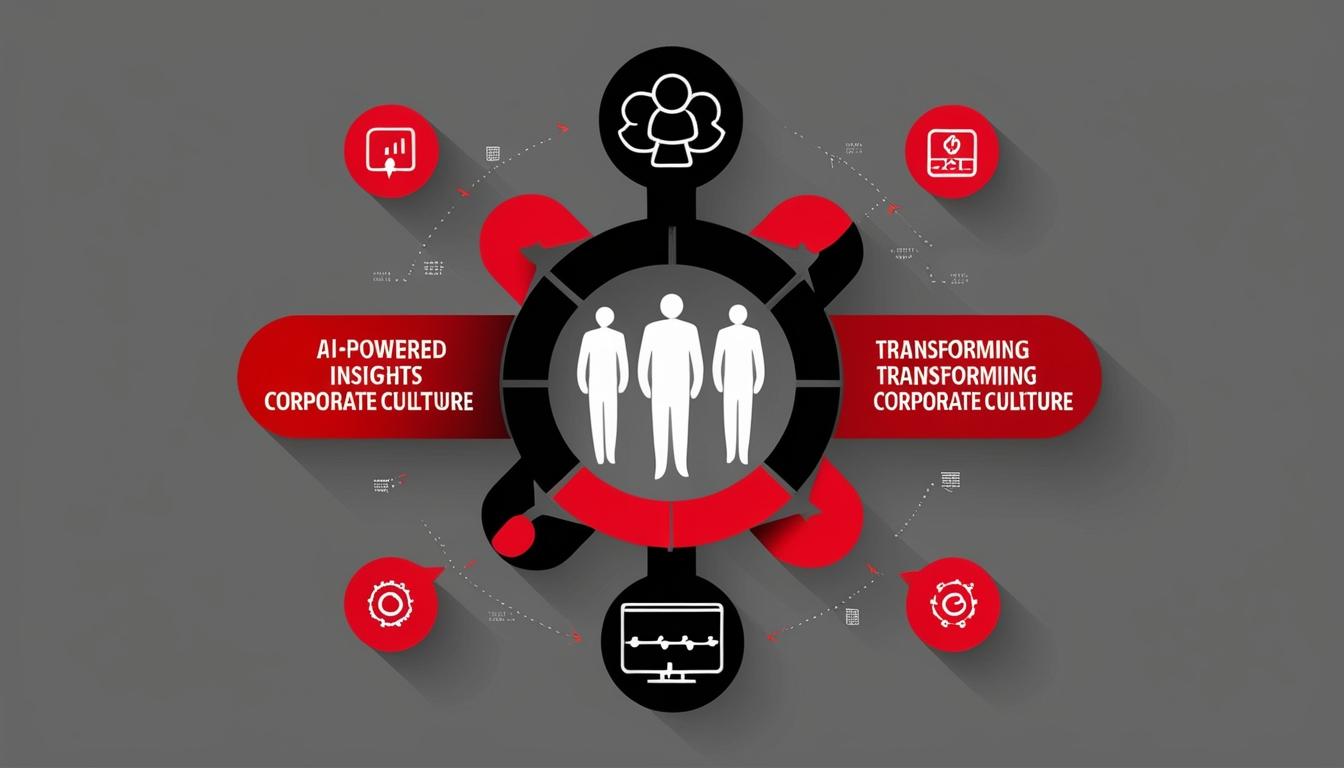
In an exclusive interview, Culture15’s CEO Charlie Coode discusses the impact of AI on company culture and the evolving expectations of the modern workforce.
As businesses embrace the new year and reflect on the lessons learned from 2024, the discourse surrounding company culture has intensified. Key challenges such as the fading interest in return-to-office mandates and an escalating demand for organisational alignment have prompted leaders to rethink their corporate cultures. Recognising the critical role that culture plays in driving business growth, they are looking for innovative solutions to bridge the gap between cultural values and real-world business needs.
In an exclusive discussion with Charlie Coode, the CEO and Founder of Culture15, insights were shared about how his software-as-a-service (SaaS) platform, employing advanced artificial intelligence (AI) technologies, aims to redefine measurement and management of company culture. Speaking to SME Today, Coode elaborated on the significant cultural shifts occurring in businesses and the transformative potential of AI in addressing these.
The hybrid work revolution stands out as a pivotal trend discussed by Coode, who noted the tumultuous changes in workplace expectations over the past year. He highlighted instances such as the protests at Amazon where over 30,000 workers responded to return-to-office directives by advocating for flexible work conditions. Such movements illustrate the disconnect many businesses face in aligning employee desires with organisational priorities. As Coode stated, “Leaders must take a deeper dive into their own organisational goals and internal cultures,” highlighting the need for companies to develop data-driven plans that meet both business objectives and employee satisfaction.
Another notable trend is the surge in employee activism, with employees at Google and Starbucks advocating for stronger commitments to sustainability and unionisation, respectively. These collective movements indicate a growing demand for workplaces to reflect personal and societal values, not merely corporate objectives. Coode emphasised the responsibility of platforms like Culture15 to provide insights that help leaders harmonise these competing interests.
AI’s role in addressing such cultural challenges is multifaceted. Coode elaborated, “AI is becoming a game-changer in culture, because it makes culture more actionable.” Traditional engagement surveys often fall short in delivering the needed depth and clarity. However, Culture15 employs an AI-powered verbatim tool that allows employees to express feedback in their own words across 30 languages. This feedback is processed using sentiment analysis, translating qualitative narratives into actionable quantitative insights that allow leaders to grasp the true cultural landscape of their organisation.
The recent updates to Culture15’s offerings, including a September launch that introduced AI-driven summarisation of employee comments, further signal the platform’s commitment to enhancing cultural understanding. This tool enables real-time analysis to identify key themes within organisational feedback, providing leaders with crucial insights into the cultural dynamics of their teams.
As the conversation turned towards preventing “culture drift,” Coode stressed the importance of alignment between stated goals and everyday behaviours. He advocated for a tailored approach rather than a one-size-fits-all strategy, underscoring that data-led insights are essential in correlating outcomes with specific team behaviours.
Addressing concerns that AI could dehumanise workplace culture, Coode offered a rebuttal, asserting, “Culture is fundamentally human.” He suggests that AI serves as an assistant to enhance human decision-making rather than replace it. By allowing for unfiltered employee feedback, AI can provide leaders with valuable insights that promote meaningful actions and greater transparency regarding organisational challenges.
Coode expressed optimism about the future of workplace culture, viewing it as a potential competitive advantage for organisations that align their cultural values with strategic goals. He predicted that as companies increasingly recognise the significance of culture in driving engagement, retention, and financial performance, more will invest in the tools necessary to transform culture into a measurable and impactful metric.
In conclusion, as we look towards 2025 and beyond, the integration of AI in understanding and nurturing company culture is poised to reshape the landscape of business practices. The potential shift towards viewing culture as a strategic asset represents a significant development in the corporate world, offering leaders a pathway to enhance both organisational effectiveness and employee satisfaction.
Source: Noah Wire Services
- https://quire.io/blog/p/collaboration-challenges.html – Discusses the importance of workflow transparency and addressing leadership challenges in the workplace, which aligns with the need for companies to develop data-driven plans that meet both business objectives and employee satisfaction.
- https://www.cultureamp.com/blog/hr-predictions-2025 – Highlights the evolving nature of work, including the impact of hybrid work models, employee activism, and the need for leaders to adapt and prioritize systems and processes, all of which are relevant to the cultural shifts and employee expectations discussed.
- https://www.prtstaffing.com/news/the-future-of-work-trends-new-roles-and-challenges-facing-employers-by-2025 – Explores trends such as the hybrid work revolution, employee activism, and the need for continuous learning and development, which are key aspects of the cultural and workplace changes mentioned.
- https://www.cultureamp.com/blog/hr-predictions-2025 – Mentions the importance of employee well-being, diversity and inclusion, and adapting to changing market conditions, all of which are crucial for aligning cultural values with strategic goals.
- https://quire.io/blog/p/collaboration-challenges.html – Emphasizes the role of technology in fostering workflow transparency and improving communication, similar to how AI is used to enhance cultural understanding and provide actionable insights.
- https://www.prtstaffing.com/news/the-future-of-work-trends-new-roles-and-challenges-facing-employers-by-2025 – Discusses the need for robust learning and development programs and prioritizing employee well-being, which are essential for preventing ‘culture drift’ and aligning stated goals with everyday behaviors.
- https://www.cultureamp.com/blog/hr-predictions-2025 – Highlights the challenges of internal knowledge diaspora and the importance of leaders modeling adaptability, which is in line with the need for tailored approaches to cultural alignment.
- https://quire.io/blog/p/collaboration-challenges.html – Addresses the issue of miscommunication and hidden bottlenecks, which can be mitigated by using AI to process employee feedback and provide real-time analysis of key themes within organisational feedback.
- https://www.prtstaffing.com/news/the-future-of-work-trends-new-roles-and-challenges-facing-employers-by-2025 – Talks about the future workplace being vastly different and the need for companies to adapt quickly to changing market conditions and workforce needs, aligning with the predictive optimism about the future of workplace culture.
- https://www.cultureamp.com/blog/hr-predictions-2025 – Focuses on the broadening of performance measurement toward the team level and the importance of contextualizing individual ratings through the lens of the team, which is relevant to the integration of AI in understanding and nurturing company culture.







