









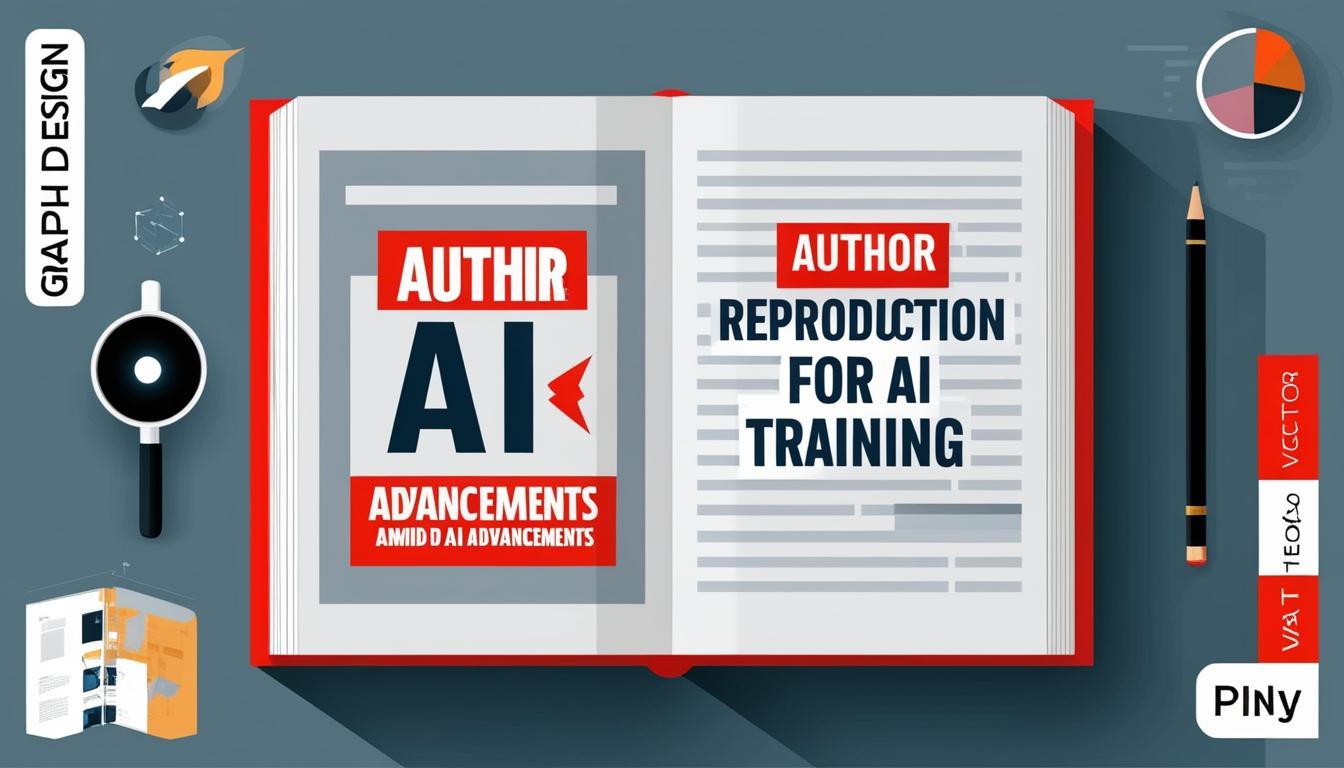
In response to rising concerns over AI’s impact on creative work, Penguin Random House has amended its copyright policies, explicitly prohibiting the use of its publications for AI training.
In a noteworthy move addressing increasingly contentious issues surrounding artificial intelligence (AI), Penguin Random House, the world’s largest publishing house, has made a significant amendment to its copyright policies to safeguard its authors’ work. This decision comes amidst mounting criticism directed at AI developers for utilizing existing literary works without permission to train their models.
The change has been documented in new versions of the copyright page found in Penguin Random House’s publications. The reworded notice explicitly states that “no part of this book may be used or reproduced in any manner for the purpose of training artificial intelligence technologies or systems.” This step marks an assertive stance by the publisher to prevent the unauthorized use of its content in AI training, directly addressing concerns that AI systems may effectively plagiarize or infringe upon the creative work of authors.
The revised copyright notice also incorporates a provision pertaining to the “text and data mining exception,” a topic recently highlighted by a directive from the European Parliament. This part of the text asserts that Penguin Random House “expressly reserves [the titles] from the text and data mining exception,” which ensures that even this specific kind of data processing is not permitted with their works. Text and data mining is a technique often used in computational processes to extract information and insights from large volumes of unstructured data, activities which could potentially infringe on the intellectual property of authors without adequate permissions or licenses.
This proactive measure by Penguin Random House underscores the tensions between traditional content creators and emerging AI technologies. Authors and publishing houses have expressed concerns that AI companies, while developing models that can generate human-like text, may inadvertently appropriate the original content of writers and erode the value of their work.
By updating its copyright notice, Penguin Random House is setting a precedent for publishing houses worldwide on how to handle the emerging issues of intellectual property rights in the digital age. This development also indicates a broader trend towards securing the creative rights of individuals amid the rapid advancement of AI. As AI continues to evolve, the intersection of technology and copyright law will likely remain a key area of focus and debate in the publishing industry and beyond.
Source: Noah Wire Services






