









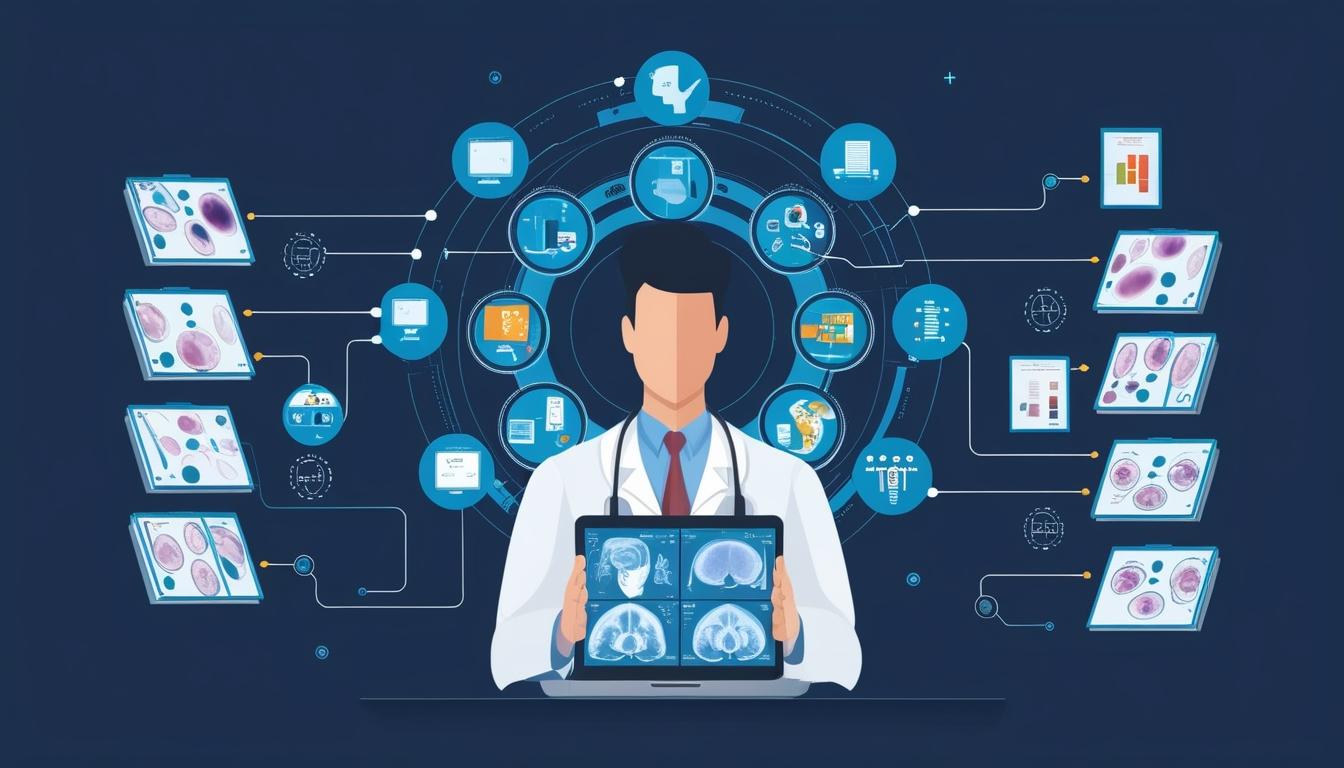
The global pathology sector grapples with a severe shortage of qualified professionals, exacerbated by rising healthcare demands and increasing cancer cases, yet artificial intelligence offers promising solutions to enhance diagnostics and patient care.
The field of pathology, a crucial component of global healthcare systems, faces a mounting crisis as demand for pathology services increasingly surpasses the availability of qualified pathologists. This disparity is largely driven by rising healthcare needs, a worldwide shortage of medical professionals in this area, and the growing intricacies of medical diagnostics. This imbalance threatens to impact healthcare delivery and, ultimately, patient outcomes. Presently, there are approximately 14 pathologists for every one million people globally, with more severe shortages reported in developing nations. This situation is particularly alarming given the projected increase in cancer incidence, from nearly 20 million new cases recorded in 2022 to an estimated 29.9 million by 2040, with corresponding cancer-related deaths expected to climb from 9.7 million to 15.3 million.
In the context of cancer, timely and accurate diagnostics are vital, as misdiagnosis or treatment delays can significantly influence survival outcomes. Biopsy results, currently taking an average of one to two weeks, risk further delays due to the imbalance between the demand for cancer biopsies and the dwindling number of pathologists. However, amidst this challenge, artificial intelligence (AI) offers promising solutions.
The healthcare industry has embraced digital transformation, with approximately 90% of health system executives prioritising this shift. AI plays a pivotal role in this transformation, already revolutionising areas like radiology. These departments utilise AI in streamlining workflows and enhancing image quality in computed tomography (CT), thereby reducing radiation exposure and ensuring patients are correctly positioned for examinations.
Similarly, AI’s potential to alleviate the crisis in pathology is significant. Laboratories can deploy AI to analyse pathology slides using sophisticated algorithms that detect cancerous cells, differentiate tissue types, and grade cancer severity, emulating a pathologist’s diagnostic process. Importantly, AI can reduce diagnostic errors by highlighting potential issues for pathologists to verify and amend before reaching a conclusion. This dual approach combines meticulous precision with the expert insight of human professionals.
Many pathologists have shown openness to integrating AI into practice, recognising its benefits in easing workload pressures and enhancing diagnostic accuracy. However, effective utilisation of AI necessitates a comprehensive understanding of the technology, as improper application might negate its advantages and potentially disadvantage the industry.
AI’s role in pathology should be seen as supplementary to human expertise, rather than a replacement. Retaining human oversight is vital to avoid potential downsides such as skill erosion among pathologists, dependence on outdated data, and AI’s self-perpetuating feedback loops that might degrade its decision-making over time.
Pathologists add unique value through their contextual understanding, intuition, and analytical skills, crucial especially in atypical or rare cases where AI alone might falter. AI serves as a supportive tool, enhancing pathologists’ ability to deliver precise and efficient diagnoses. Moreover, it can unlock time for deeper research engagement and complex problem-solving, fostering AI algorithm refinement and creating a virtuous cycle of excellence in patient care.
Ultimately, by leveraging AI in data processing and adaptive learning, laboratories can significantly raise diagnostic standards, thus advancing patient care and navigating the evolving landscape of modern healthcare with increased assurance and efficiency.
Source: Noah Wire Services






