









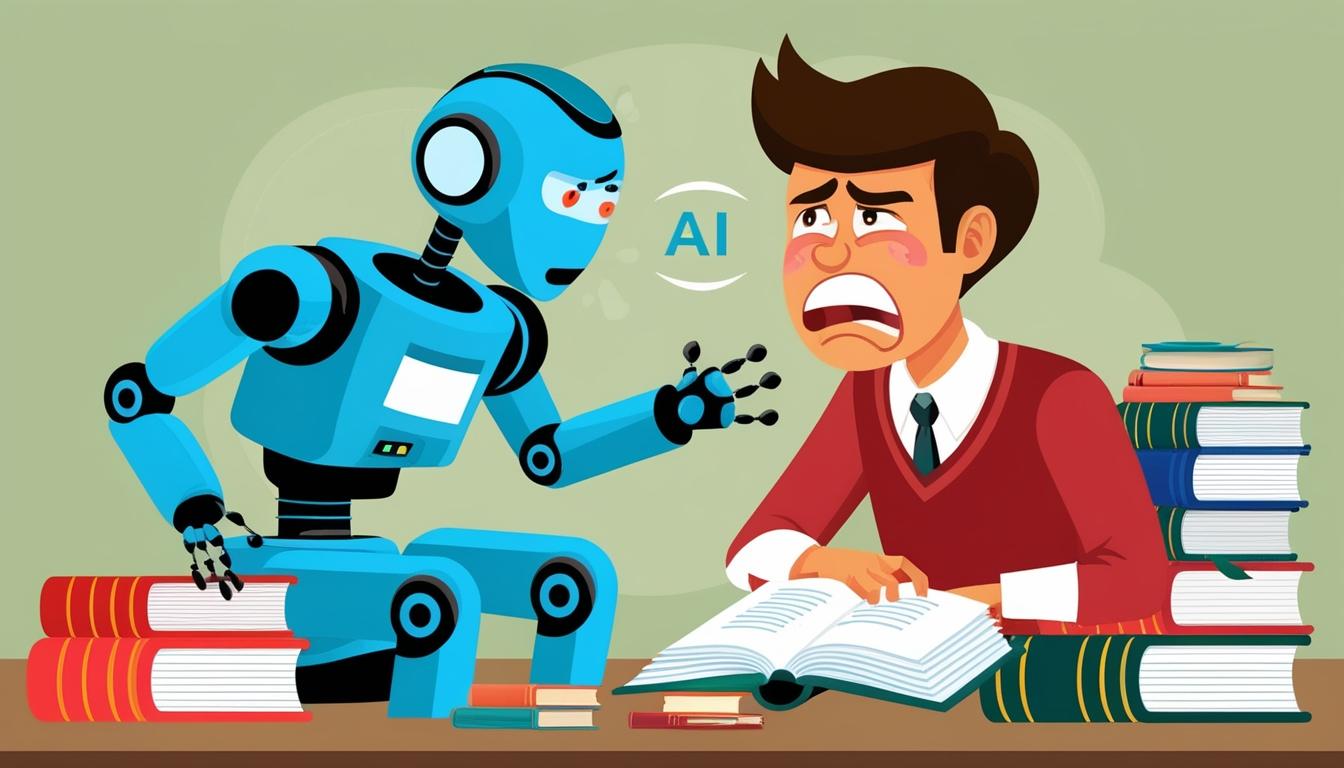
A Massachusetts high school student faces disciplinary actions for using AI in a project, prompting his parents to file a lawsuit to protect his academic future.
In Massachusetts, a legal case has emerged after the parents of a high school student filed a lawsuit against their child’s school, seeking to overturn disciplinary actions taken against their son for using Artificial Intelligence (AI) in a class assignment. The student, who has been referred to as RNH in the court documents, confessed to engaging AI technology for assistance on a Social Studies project in December 2022. The school responded by assigning a Saturday detention and reducing his grade, which sparked the legal proceedings.
The student’s parents have raised concerns about the repercussions of this disciplinary action, particularly in light of their son’s aspirations to attend prestigious higher education institutions. They argue that the punishment could cause “irreparable harm” by damaging his academic profile, which is crucial for applications to elite colleges. In their legal filing, the parents are seeking an injunction to expunge any record of the incident from his academic files, restore his eligibility for the National Honor Society, and ensure that his project receives a B grade without any indication of misconduct.
Conversely, the school maintains its stance by filing a motion to dismiss the lawsuit. They highlight that RNH and his peers were all acquainted with the student handbook provisions distributed in the autumn of 2022, which expressly forbade the use of AI for completing in-class examinations, writing assignments, homework, or classwork without specific authorisation. According to the school’s regulations, students are required to produce work independently to ensure academic integrity and fairness. The school asserts that RNH did not cite the utilisation of AI in his project materials, giving him an unwarranted advantage over his classmates who completed their tasks without similar assistance.
The educational institution argues that RNH’s actions were in direct violation of their policy, which prohibits the use of AI tools without explicit permission. They emphasise that despite whether the AI aided in research rather than writing, the breach remains due to non-disclosure and the unapproved use of external intelligence.
This case raises significant questions as educational systems grapple with the integration of AI technology in academia. As the legal proceedings continue, the dispute highlights the challenges schools face in balancing academic integrity with evolving technological tools, and how these might impact both governance in academic environments and student futures.
Source: Noah Wire Services






