









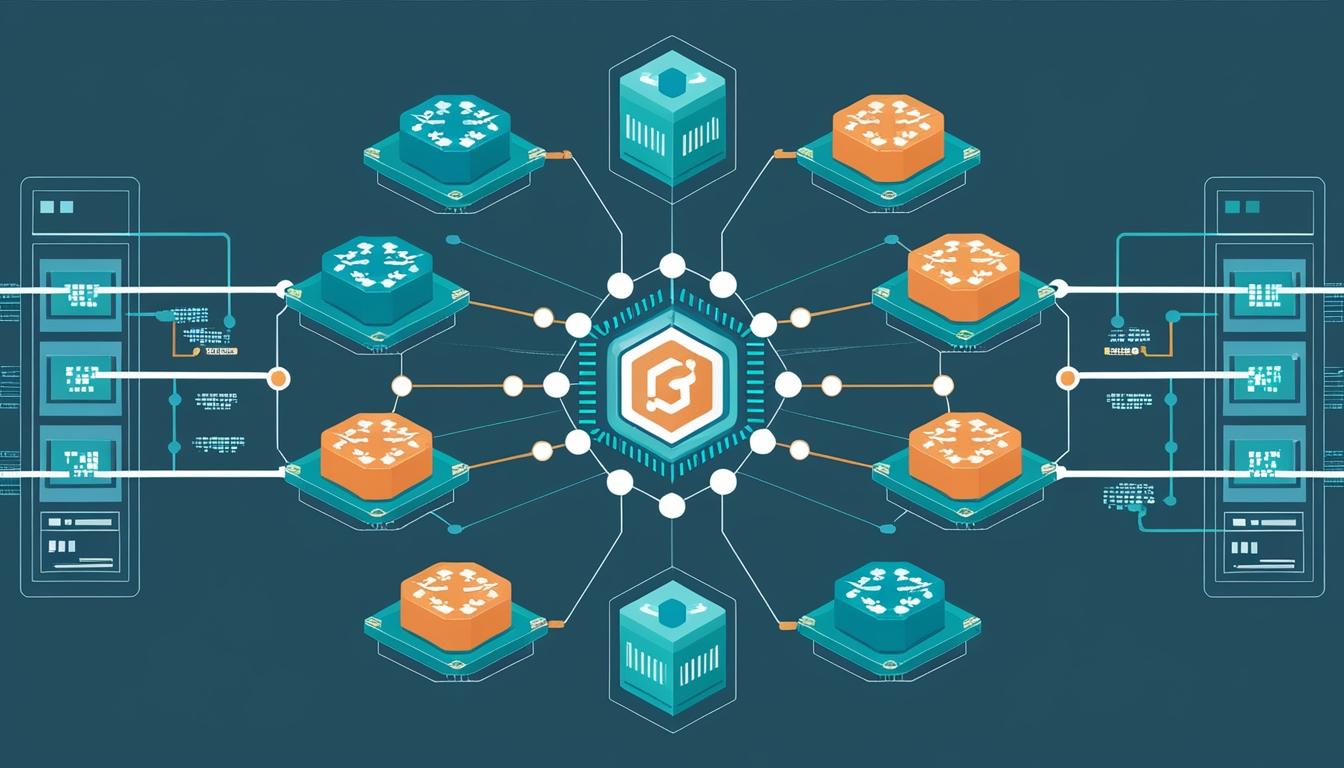
As parallel computing emerges as a critical component of technological advancement, its role in enhancing AI capabilities and promoting sustainability is increasingly recognised.
Parallel Computing at the Forefront of Technological Advancement and Sustainability
In an era where data is deemed more valuable than oil, and computational power is likened to a refinery, parallel computing emerges as a linchpin in technological innovation. This has become particularly crucial in discussions surrounding Artificial Intelligence (AI) and High-Performance Computing (HPC).
Parallel computing is fundamentally about the division of extensive computational tasks into smaller, independent tasks that can be simultaneously executed across multiple processors. This process, often referred to as “embarrassingly parallel,” addresses the increasing computational demands of modern AI applications. These applications are pivotal in fields like deep learning, image recognition, and data analysis—domains requiring significant computational prowess.
The Significance of Parallel Computing
Parallel computing is redefining how complex data-driven problems are approached, transcending beyond the technical realm of scaling AI workloads. It has significant implications in areas requiring the swift analysis of large datasets, such as weather prediction, genomics, and climate modeling. This approach allows for rapid and more accurate insights that are less feasible through traditional computational methods.
Real-World Applications: From Climate Science to Healthcare
In climate change modeling, HPC plays a crucial role. Scientists engaged in predicting future climate conditions need substantial computational resources to process vast amounts of environmental data. Parallel computing accelerates these simulations, enabling them to run in hours, instead of days, facilitating real-time, data-driven insights into climate risk management.
In the pharmaceutical sector, parallel computing expedites drug discovery processes. AI-based simulations predict molecular interactions, but the parallelism inherent in HPC systems allows these predictions to happen swiftly. This technological acceleration reduces the timelines for drug testing and approval, which could potentially save millions of lives through faster drug development.
Training advanced AI models also heavily relies on parallel computing. Complex models, like deep neural networks, which previously required weeks for training on a single machine, can now be trained in days or even hours when distributed across thousands of GPUs. This significantly reduces the time it takes to unlock AI’s potential, making it more efficient for organisational use.
Aiding Energy Efficiency
As the world gravitates toward sustainability, parallel computing is pivotal to reducing energy consumption in data centres, which are traditionally energy-intensive. Parallel computing systems, by completing tasks more swiftly, essentially consume less energy over time. In comparison to conventional computing systems, which may operate inefficiently over prolonged periods, parallel systems enable the division and conquering of computational loads, achieving both speed and reduced energy usage.
This synergy between HPC and AI is crucial in addressing the carbon footprints associated with data centres that support various sectors, from financial analytics to climate predictions. By enabling faster model training and more efficient scaling of AI processes, parallel computing ensures that AI can be harnessed without escalating energy consumption.
The Future Role of Parallel Computing in ESG
Parallel computing is set to play a significant, albeit underappreciated, role in Environmental, Social, and Governance (ESG) initiatives. Companies need to urgently adopt energy-efficient technologies, and incorporating parallel computing within HPC and AI workflows emerges as an impactful solution. For organisations to lead in AI innovation while being committed to ESG goals, integrating parallel computing must be a focal point.
Furthermore, AI’s role in optimising renewable energy sources heavily relies on parallel computing. For instance, AI algorithms that optimise inputs from solar and wind energy plants require real-time data processing, perfectly suited for parallel processing systems. As AI and HPC evolve, they will increasingly facilitate the transition to renewable energy by enhancing the efficiency and intelligence of energy grids.
Outlook on Parallel Computing
The intersection of HPC, AI, and parallel computing promises not only to extend innovation boundaries but also to lead the way towards a more energy-efficient, sustainable future. Continued investment in these technologies is essential, not just to tackle the complex issues of today but also to ensure a positive ecological footprint from the ongoing digital transformation. Although challenges remain in integrating micro data centres and parallel computing endeavours, they certainly present a path towards enhanced efficiency and democratization in high-performance and sustainable technology advancement.
Source: Noah Wire Services






