









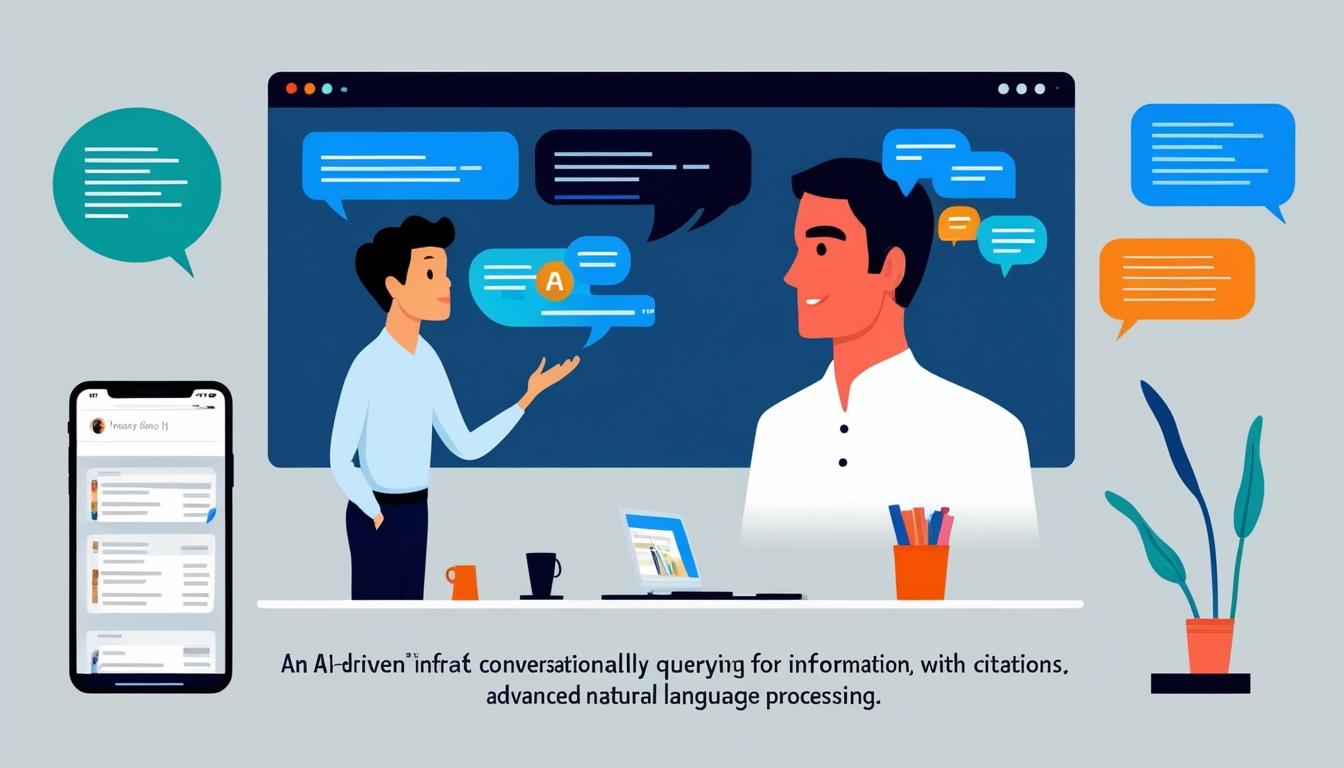
OpenAI has unveiled ChatGPT Search, a feature that allows users to obtain web-based information directly within the ChatGPT interface, promising a more conversational and intuitive search experience.
OpenAI has recently introduced a new feature called ChatGPT Search that promises to revolutionise the way individuals find information on the internet. Unveiled last week, ChatGPT Search allows users to search the web directly from within the ChatGPT interface, providing timely and up-to-date information complemented by citations linked to original sources. This feature can be activated manually or triggered automatically when a user’s query could benefit from web-based data.
ChatGPT Search is designed to simplify the search process by leveraging advanced artificial intelligence (AI) and natural language processing (NLP). Unlike traditional search engines like Google, which require users to enter specific keywords or structured phrases to return the desired information, ChatGPT Search can understand and process more conversational, rambling inputs, delivering pertinent results without necessitating rigorous query crafting.
The interface of ChatGPT Search is particularly user-friendly, delivering responses in a conversational format akin to a human dialogue. This eliminates the often cumbersome task of navigating through multiple articles to pinpoint relevant information. Additionally, while users receive direct answers to their queries, they also have the option to view source links via a “sources” button, which displays a comprehensive list of links related to the search results.
It is worth mentioning, however, that some sites blocking OpenAI’s web crawler will not appear in ChatGPT Search results, potentially leaving out content from certain favourite sources. Nonetheless, OpenAI has established partnerships with a number of prestigious news organisations, including the Associated Press, Reuters, the Financial Times, and Time, ensuring that a wide array of reputable sources is included in the search results.
In various tests, ChatGPT Search demonstrated its potential to match, if not surpass, Google’s capabilities in making sense of intricate or casual queries. For instance, when asked about daylight saving time, both ChatGPT and Google produced similar results. Yet, for a more complex query about a Disney Channel singer-actress related to the movie “Monte Carlo,” ChatGPT surpassed Google by immediately identifying Selena Gomez and providing additional context. Furthermore, when tasked with planning a detailed seven-day itinerary for a vacation in Ireland, ChatGPT delivered a structured plan complete with links, whereas Google’s output was a list of links requiring further investigation.
Despite these advantages, ChatGPT Search does not signal the end of Google’s dominance. Google still boasts strengths in specific areas like shopping and maps, where ChatGPT currently lacks functionality. Thus, while ChatGPT Search excels in certain types of everyday search queries, Google remains a significant player in the search engine landscape.
Currently, the ChatGPT Search feature is available to users with a ChatGPT Plus subscription, which costs $20 a month and includes additional features like Voice Mode and unlimited image generation. Access for team users and participants on the SearchGPT waitlist has also been ensured. Meanwhile, enterprise and educational users are expected to gain access in the coming weeks, with the feature being rolled out to all users in the forthcoming months.
The introduction of ChatGPT Search marks a significant step forward in the evolution of AI-driven search technologies, showcasing how AI can enhance user experience by providing more intuitive and interactive ways to access information on the web. As AI continues to evolve, it will be interesting to observe how these advancements further integrate into daily digital interactions.
Source: Noah Wire Services
More on this & verification
- https://openai.com/index/introducing-chatgpt-search/ – Corroborates the introduction of ChatGPT Search, its ability to search the web directly from the ChatGPT interface, and the feature’s availability to various user groups.
- https://help.openai.com/en/articles/9237897-chatgpt-search – Details how to use ChatGPT Search, including manual and automatic search triggering, and the display of source links via a ‘Sources’ button.
- https://www.searchenginejournal.com/searchgpt-launches-as-chatgpts-real-time-search-feature/531461/ – Explains the real-time search capabilities of ChatGPT, including the delivery of up-to-date information, source attribution, and the feature’s rollout plan.
- https://openai.com/index/introducing-chatgpt-search/ – Discusses the partnerships with news organizations like the Associated Press, Reuters, and the Financial Times, ensuring a wide array of reputable sources in search results.
- https://help.openai.com/en/articles/9237897-chatgpt-search – Mentions the availability of ChatGPT Search to ChatGPT Plus and Team users, as well as SearchGPT waitlist users, with future access planned for enterprise, educational, and free users.
- https://www.searchenginejournal.com/searchgpt-launches-as-chatgpts-real-time-search-feature/531461/ – Compares ChatGPT Search with other AI search features like Google Gemini and Microsoft Copilot, highlighting unique features such as source attribution and interactive maps.
- https://openai.com/index/introducing-chatgpt-search/ – Describes the user-friendly interface of ChatGPT Search, which delivers responses in a conversational format and allows users to view source links.
- https://help.openai.com/en/articles/9237897-chatgpt-search – Explains that some sites blocking OpenAI’s web crawler will not appear in ChatGPT Search results and discusses the collection of general location information based on IP addresses.
- https://www.searchenginejournal.com/searchgpt-launches-as-chatgpts-real-time-search-feature/531461/ – Details the performance of ChatGPT Search in various tests, including its ability to handle intricate or casual queries and provide structured plans with links.
- https://openai.com/index/introducing-chatgpt-search/ – Mentions the future development plans for ChatGPT Search, including improvements in areas like shopping and travel, and integration with Advanced Voice and Canvas products.
- https://www.youtube.com/watch?v=IkaTQgTZjoU – Discusses the competitive landscape of AI search, including how ChatGPT Search differs from Google and Microsoft’s offerings, and its potential impact on the search market.






