






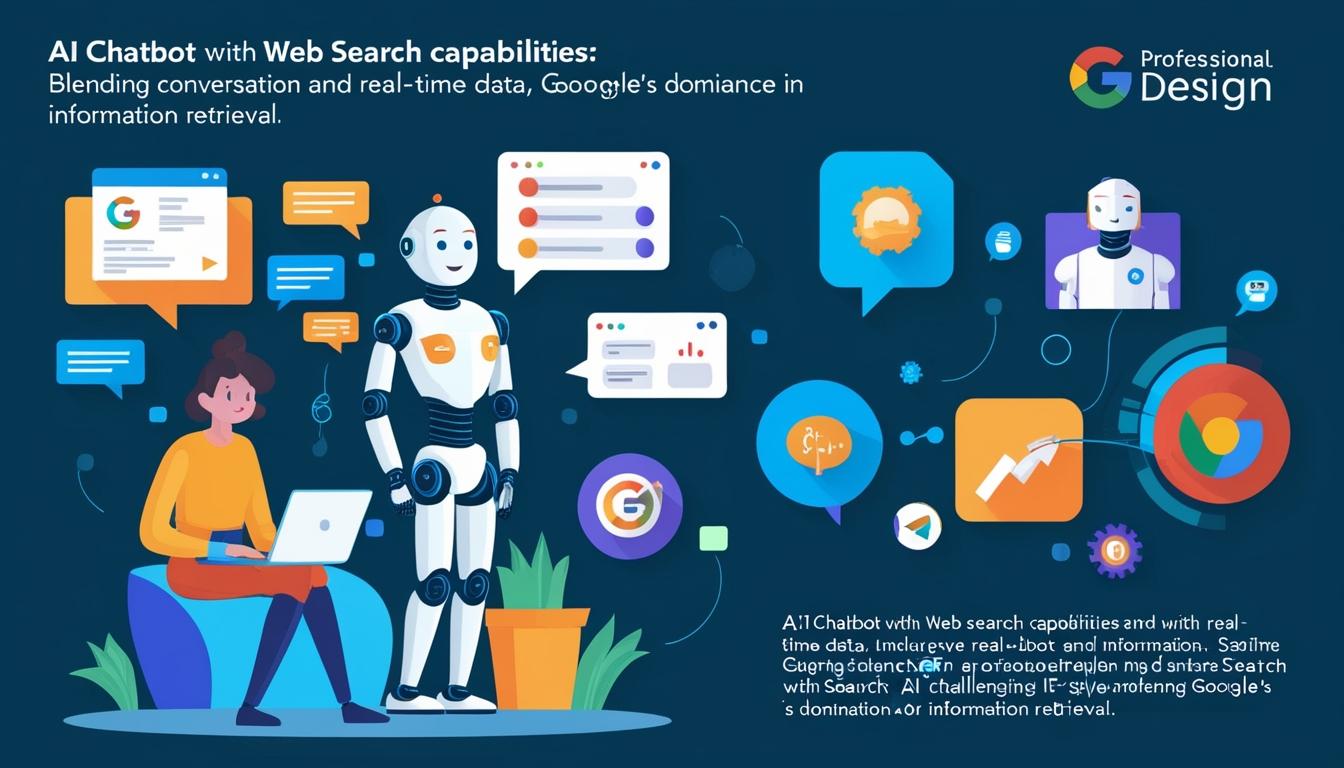

OpenAI has launched a revolutionary search feature for its ChatGPT chatbot, posing a direct challenge to Google by providing an interactive and context-aware web search experience.
OpenAI has introduced a groundbreaking search feature for its AI chatbot, ChatGPT, offering a novel form of internet search that challenges the hegemony of Google’s search engine. The feature, announced on October 31, 2024, allows ChatGPT to perform web searches, delivering timely and detailed information that includes links to original sources. This development marks the first direct challenge from OpenAI towards Google’s established dominance in the search market.
The search tool, dubbed “ChatGPT search,” leverages the strength of conversational AI to provide a more interactive and comprehensive search experience. Unlike traditional search engines that often require users to sift through multiple links to gather information, ChatGPT aims to deliver a seamless, conversational approach. Users can ask questions in natural language and expect the AI to provide a synthesized answer based on the latest internet data, while maintaining the context through follow-up queries.
OpenAI’s rollout of this feature is initially targeted at paying subscribers, but the company plans to extend it to free users of ChatGPT in the near future. This move is part of OpenAI’s broader strategy to integrate web search capabilities into its AI model, which was initially unveiled in May. The integration promises to combine ChatGPT’s conversational prowess with up-to-date insights from the web.
In a significant step towards offering reliable and high-quality content, OpenAI has partnered with several esteemed news and data organisations. Among these partners are prominent names such as the Associated Press, Conde Nast, the Financial Times, Hearst, Le Monde, News Corp, and Reuters. These partnerships ensure that ChatGPT search can connect users with authentic and quality content, resembling a traditional search engine but with an added layer of conversational engagement.

The new search feature is built upon OpenAI’s enhanced GPT-4o model, utilising advanced data generation techniques to ensure accuracy and reliability. This update addresses a longstanding limitation of the original ChatGPT, which was confined to the static data it was trained on and struggled to provide information on recent events.
OpenAI’s venture into web search arises amidst Google’s own adaptation towards integrating AI technology into its search functions. In May, Google revamped its search engine to include AI-generated summaries at the top of search outcomes. While these summaries aimed to streamline the search process, they also highlighted issues with accuracy due to the AI’s propensity for errors or “hallucinations.”
Both tech giants are attempting to redefine digital search in the age of AI, OpenAI through its conversational approach and Google with its AI-generated insights. OpenAI’s ChatGPT promises to make the search experience more dynamic, allowing users to explore topics in depth and obtain continued information as part of an ongoing discussion.
As part of its ongoing effort to enhance the repository of information available through ChatGPT search, OpenAI plans to expand its network of content partners. The combination of AI’s natural language processing with curated partner content promises to expand user access to valuable insights and broaden engagement with quality journalism and datasets.
This progressive development from OpenAI reflects the broader technological push towards more intuitive and responsive digital tools, marking a significant step in the transition towards AI-augmented information retrieval systems. The introduction of ChatGPT search underscores OpenAI’s commitment to innovation and its ambition to revolutionise the way users interact with online content and data.
Source: Noah Wire Services







