









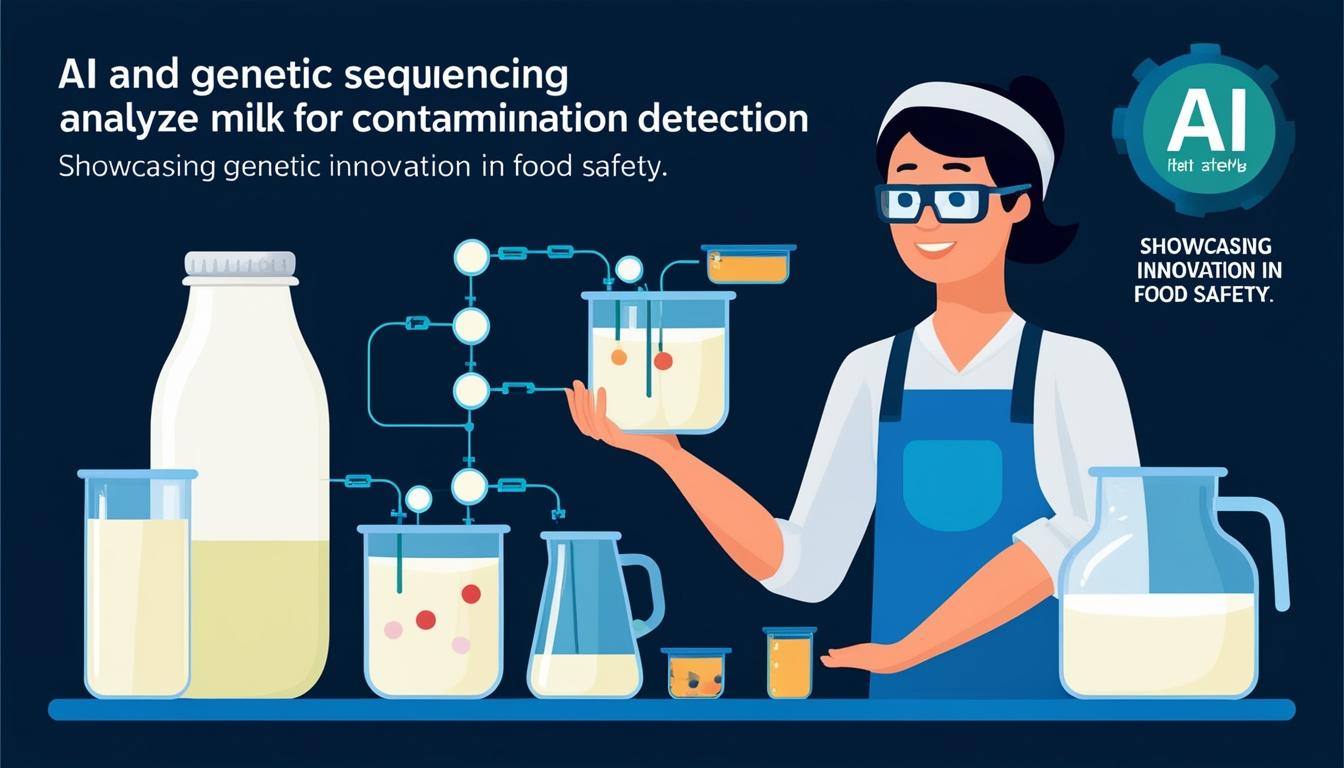
A collaborative study from Penn State, Cornell University, and IBM Research introduces a breakthrough approach using genetic sequencing and AI to detect milk contamination and improve food safety protocols.
Researchers from Penn State, Cornell University, and IBM Research have pioneered a novel method to enhance dairy product safety using advanced genetic sequencing and artificial intelligence (AI). Detailed in the journal mSystems, their study outlines how these technologies can identify anomalies in milk production, such as contamination or unauthorised additives, offering a potential leap forward in food safety protocols.
The team applied a technique known as shotgun metagenomics, which involves analysing the genetic material of all microorganisms in a sample, alongside AI to detect treated milk. This process was specifically validated by examining both collected milk samples and publicly accessible genetic datasets. By harnessing the capabilities of AI, the researchers successfully differentiated between normal milk samples and those containing antibiotics, which had been experimentally added.
Erika Ganda, the study’s lead and assistant professor of food animal microbiomes at Penn State, explained the significance of the findings. She noted that AI’s ability to interpret microbial data allows for a more precise determination of milk’s status, whether pre- or post-pasteurisation, or if it derives from cows treated with antibiotics. The study analysed 58 bulk tank milk samples, employing various AI algorithms to identify deviations from typical samples, which might indicate milk sourced from a different farm or containing antibiotics.
This research was unprecedented in its depth of metagenomic sequencing, revealing a consistent microbial profile across different samples. The ability to identify these microbial signatures, which traditional methodologies often overlook, marks a significant advancement in food safety measures. The study demonstrates the potential of AI to improve anomaly detection in food production, enhancing tools available for ensuring food safety, as highlighted by Kristen Beck, senior research scientist at IBM Research.
The implications of this research extend beyond dairy production, potentially influencing the entire food industry. Milk is considered an ideal model for this study due to its high-volume production and vulnerability to fraud, particularly in developing regions. Ganda emphasised that food safety issues can have extensive supply chain impacts, resulting in health and economic consequences. Therefore, the integration of AI can augment current methods to preemptively identify risks associated with food fraud and quality issues.
Importantly, the collaboration leveraged the unique strengths of the participating institutions. IBM’s open-source AI technology, Automated Explainable AI for Omics, played a pivotal role in processing vast metagenomic datasets, highlighting microbial markers that standard methods might miss. The expertise in dairy science from Cornell University enhanced the study’s practical relevance. Moreover, Penn State’s One Health Microbiome Center within the Huck Institutes for the Life Sciences contributed significantly to integrating microbial data for broader health and safety applications.
The project also involved contributions from various research associates, including Niina Haiminen, Akshay Agarwal, Anna Paola Carrieri, Matthew Madgwick, Jennifer Kelly, and Ban Kawas from IBM Research; Victor Pylro from the Federal University of Lavras, Brazil; and Martin Wiedmann from Cornell University. The U.S. Department of Agriculture supported the research through Penn State, underscoring its importance to the development of safer food production techniques.
Source: Noah Wire Services






