





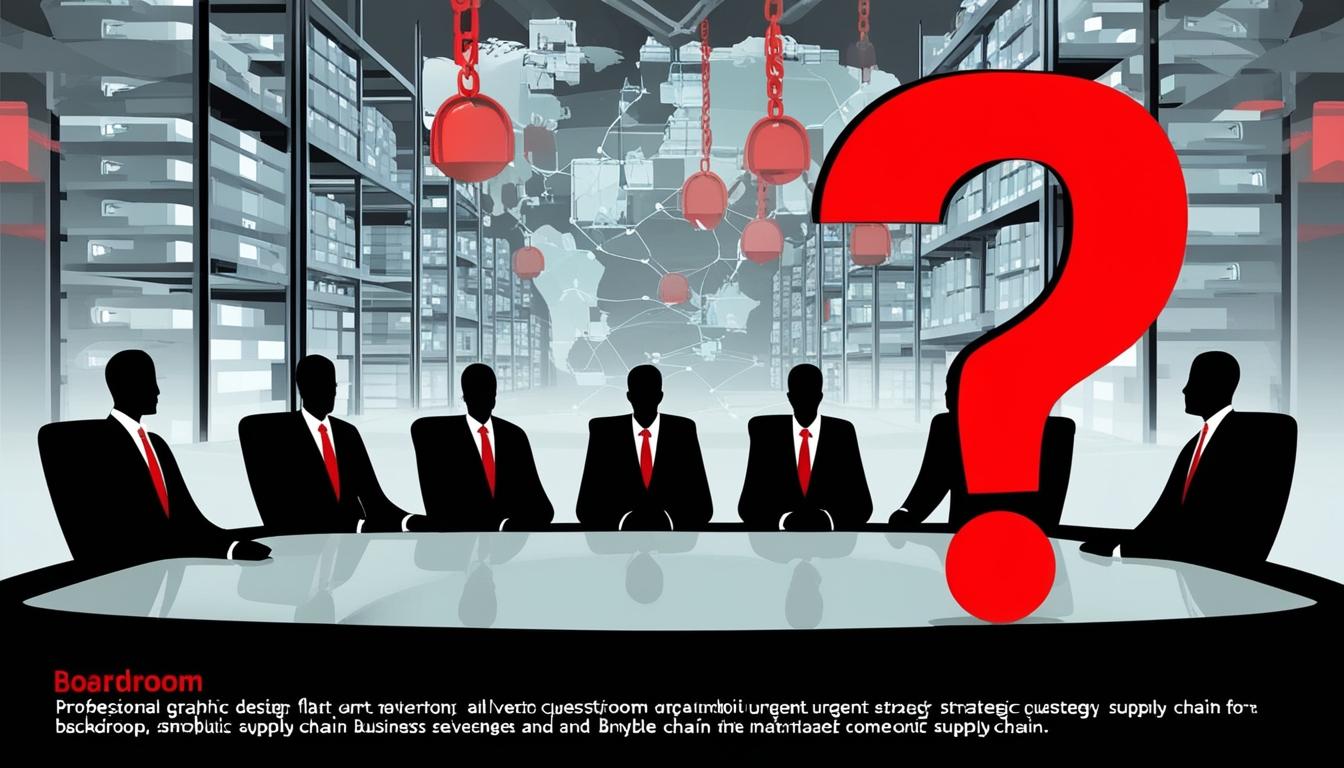

As global supply chains face unprecedented challenges, companies must rethink their approach to strategic fulfilment to adapt and thrive amidst ongoing disruptions.
Global supply chains are currently navigating a complex landscape characterised by environmental, social, political, and economic disruptions, a situation termed a polycrisis. In recent years, businesses across various sectors have experienced significant challenges that have necessitated a more reactive approach to operations, shifting focus from long-term strategic planning to immediate responses to ongoing issues.
This evolving business climate demands that companies in industries such as retail, grocery, third-party logistics (3PL), and manufacturing place a renewed emphasis on strategic fulfilment. A report published by SupplyChainBrain identifies five critical fulfilment questions that should dominate boardroom discussions in these diverse sectors over the next five years.
The report delves into the intricacies of each fulfilment challenge, providing insights into how businesses can navigate through these hurdles. Notably, it highlights the importance of integrating strategic thinking with advanced technologies. This approach aims to transform the challenges posed by the current global landscape into competitive advantages.
While the ambiguities surrounding these macro challenges remain, the necessity for companies to adopt forward-thinking strategies becomes increasingly evident. By embracing innovation and technology, businesses are better positioned to respond to market fluctuations proactively rather than reactively, potentially reshaping their operational frameworks for greater efficiency and resilience in the coming years.

In light of these insights, stakeholders across various industries are being encouraged to consider the implications of these transformative trends in AI automation and other emerging technologies, which could profoundly influence business practices moving forward. As such, the dialogue around these strategic questions is not merely an academic exercise but a vital component of contemporary business planning and sustainability initiatives.
Source: Noah Wire Services
- https://fractory.com/supply-chain-challenges-in-2024/ – Corroborates the presence of geopolitical tensions, labour and raw material shortages, and environmental concerns affecting global supply chains in 2024.
- https://www.xeneta.com/blog/top-10-global-supply-chain-risks-in-2024 – Highlights geopolitical risks, economic instability, and the impact of emerging technologies on global supply chains, aligning with the need for strategic fulfilment and forward-thinking strategies.
- https://www.resilinc.com/blog/geopolitical-supply-chain-risks-2024/ – Details the Red Sea crisis, Russia-Ukraine war, and US-China tensions as significant geopolitical risks affecting global supply chains, emphasizing the need for proactive planning.
- https://kpmg.com/us/en/articles/2024/2024-supply-chain-update.html – Discusses the impact of geopolitical tensions, weather disasters, and labor strikes on supply chains, and the importance of flexibility and agility in logistics.
- https://www.orkestrascs.com/blogs/6-critical-risks-facing-supply-chains-in-2024 – Lists labour shortages, ocean freight bottlenecks, increasing inflation, and global port congestion as critical risks, supporting the need for strategic fulfilment and risk management.
- https://fractory.com/supply-chain-challenges-in-2024/ – Explains the role of generative AI in improving supply chain operations and data management, highlighting the integration of advanced technologies.
- https://www.xeneta.com/blog/top-10-global-supply-chain-risks-in-2024 – Mentions the impact of extreme weather events and environmental, social, and governance (ESG) factors on global supply chains, emphasizing the need for forward-thinking strategies.
- https://www.resilinc.com/blog/geopolitical-supply-chain-risks-2024/ – Discusses the potential economic impact of geopolitical tensions, such as the China-Taiwan tensions and their effect on semiconductor supply chains.
- https://kpmg.com/us/en/articles/2024/2024-supply-chain-update.html – Highlights the focus of central banks on supply chain operations and their role in driving inflation, underscoring the economic disruptions in the supply chain landscape.
- https://www.orkestrascs.com/blogs/6-critical-risks-facing-supply-chains-in-2024 – Explains the importance of supply chain risk management in handling risks related to suppliers, logistics, compliance, and external factors like geopolitical issues and natural disasters.
- https://fractory.com/supply-chain-challenges-in-2024/ – Details the impact of global trade uncertainties, including the Red Sea crisis and its effects on shipping costs and trade routes, supporting the need for proactive strategies.







