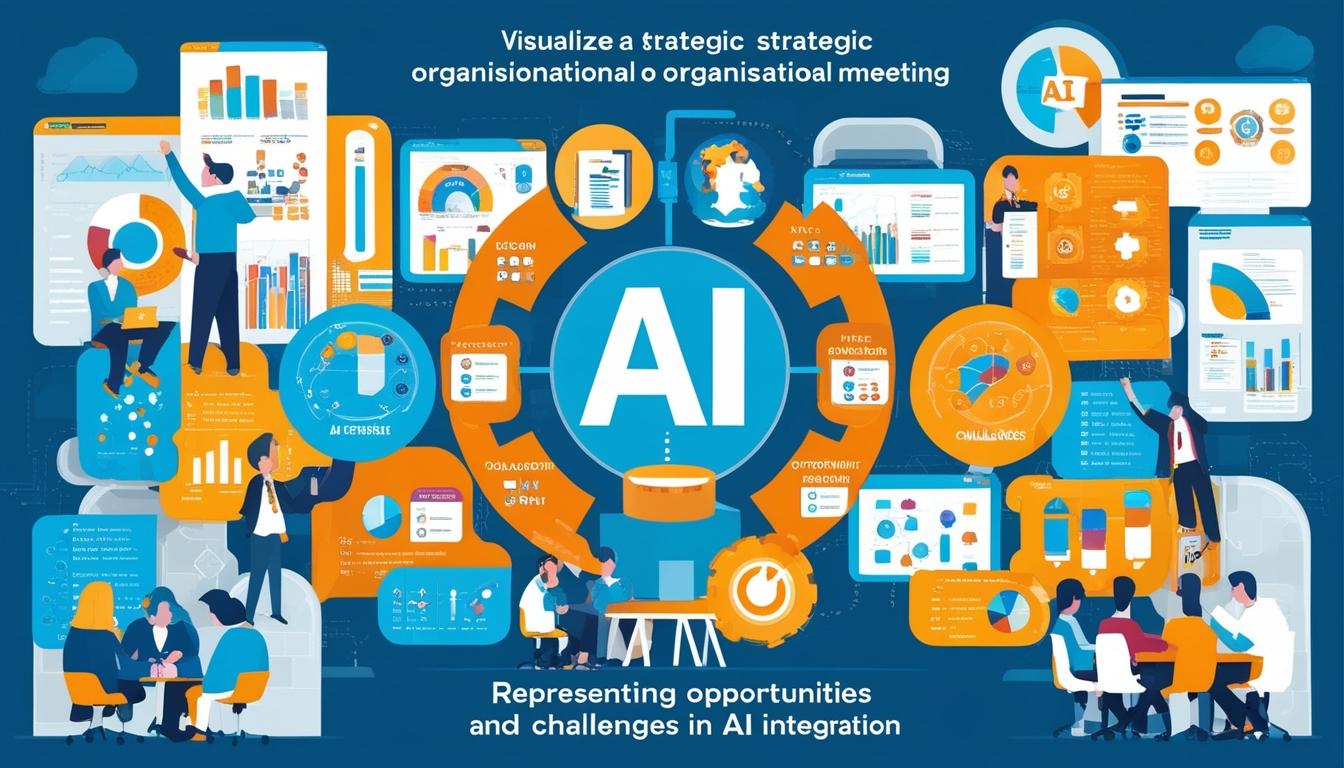

As organisations explore the potential of AI, understanding data quality, security, and strategic implementation becomes crucial for successful integration.
In the ever-evolving landscape of technology, the integration of Artificial Intelligence (AI) within organisational frameworks presents a mixture of opportunities and challenges that businesses need to navigate carefully. Recent insights highlight the importance of strategic planning and data management for organisations aiming to harness AI effectively.
Opportunities and Challenges
AI brings a myriad of possibilities to organisations, including enhanced operational efficiency and a more personalised customer experience. It facilitates in-depth forecasting and advanced modelling capabilities that can significantly benefit businesses. However, the successful implementation of AI systems is heavily dependent on the quality, security, and availability of data inputs. This dependency arises because AI systems require vast amounts of data for optimal operation and training.
Data Quality and Security Concerns

Organisations face significant hurdles in ensuring their data is of high quality and securely maintained. Poor data quality can undermine AI initiatives, potentially rendering even the most ambitious AI strategies ineffective. Similarly, inadequate security and governance practices can pose risks, particularly in sectors like healthcare and financial services, which have stringent regulatory requirements concerning AI usage.
Strategic Implementation of AI
The strategic use of AI requires a clear understanding of organisational objectives and the roles AI can play in achieving these goals. A comprehensive assessment of business processes is necessary to identify potential areas where AI can introduce efficiencies or uncover new opportunities. For instance, automating repetitive tasks through AI can release human resources for more strategic roles, while AI-driven analysis of customer data can provide insights that guide better decision-making.
Addressing Data Challenges
Successfully implementing AI involves addressing several data-related challenges:
-
Data Consolidation: Consolidating and modelling data, such as customer, financial, and operational information, into a unified system is critical for gaining a holistic organisational view. This also helps eliminate data silos, promoting a streamlined flow of information across departments.
-
Platform Selection: Choosing scalable AI and data platforms suitable for the organisation’s specific needs is crucial. Often, existing systems with built-in AI functionalities can be leveraged rather than investing in entirely new technologies.
-
Data Enrichment: Enhancing internal datasets with external data sources, like integrating weather forecasts with shipping data, can refine AI insights and optimise operational processes such as delivery routes.
-
Data Quality Focus: Prioritising the refinement and utilisation of high-quality and unique data is essential—for example, using proprietary customer behaviour data to enhance product recommendations.
Security and Governance Frameworks
The importance of securing both structured and unstructured data cannot be overstated. Organisations must educate their personnel on the secure and effective use of AI tools to mitigate risks. Furthermore, developing a robust governance framework is key to ensuring that AI practices remain aligned with organisational needs and regulatory standards. This involves cross-functional collaboration and regular reviews to keep pace with technological advancements and evolving business objectives.
Readying for AI Initiatives
For organisations poised to integrate AI into their operations, whether by enhancing existing applications or deploying new systems, a well-devised strategic plan is indispensable. Resources such as the AI Readiness Assessment offered by Eide Bailly can help organisations evaluate their digital maturity and prepare effectively for AI adoption.
In conclusion, embracing AI within an organisation’s infrastructure offers transformative potential, but requires meticulous planning and robust data management strategies to overcome inherent challenges, ensuring both effective implementation and long-term success.
Source: Noah Wire Services