









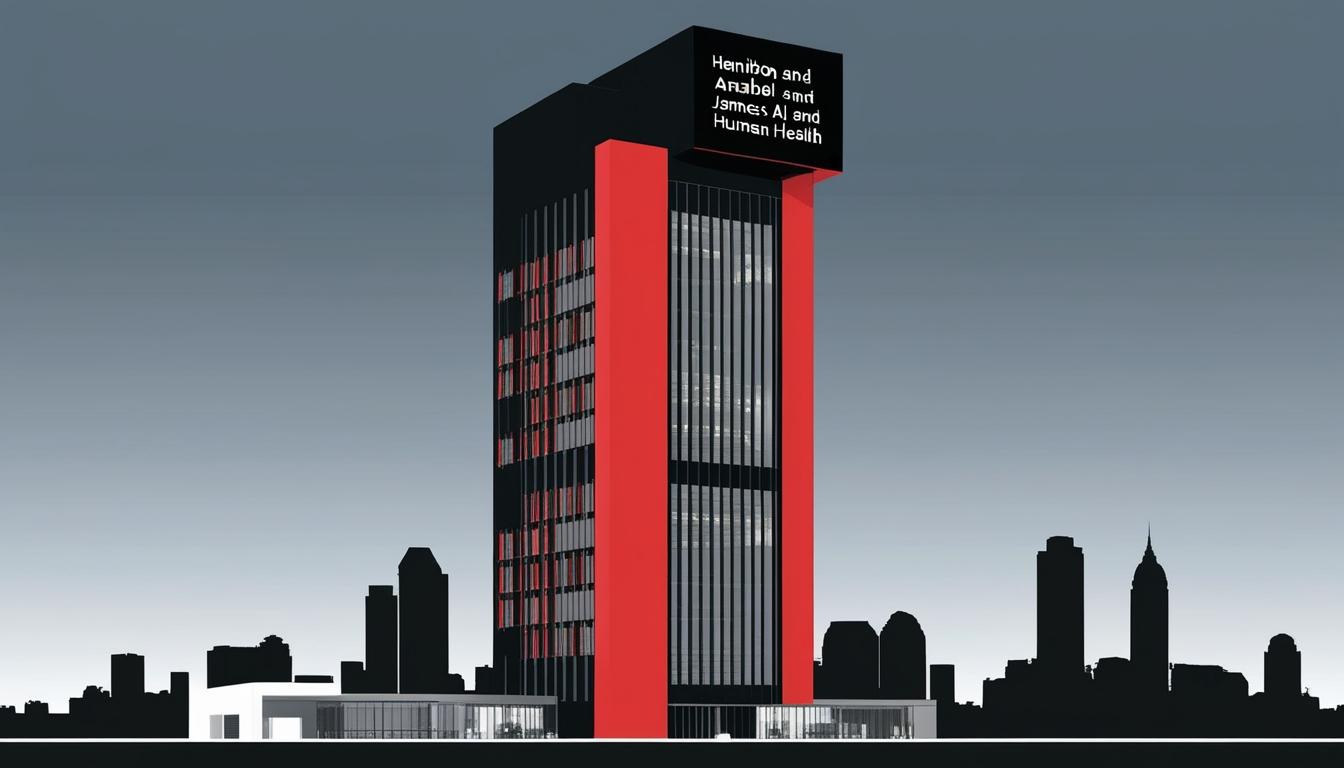
The Hamilton and Amabel James Center for Artificial Intelligence and Human Health aims to revolutionise diagnosis and treatment through advanced research and integration of AI technologies.
The Mount Sinai Health System in New York City has made significant strides in advancing healthcare innovation with the inauguration of the Hamilton and Amabel James Center for Artificial Intelligence and Human Health. Officially opened on November 26, 2024, this 12-story, 65,000-square-foot facility is designed to foster groundbreaking research in the field of artificial intelligence as it pertains to human health.
Situated on the Mount Sinai Hospital campus, the new centre stands out as one of the first in the United States to emphasise AI research within a medical school environment. This initiative has been bolstered by a generous donation from Hamilton “Tony” James, the executive vice chairman of Blackstone, and his wife, Amabel. Their investment reflects a growing recognition of the potential roles that AI and machine learning can have in revolutionising healthcare practices.
At the heart of the centre’s mission is the integration of artificial intelligence with various domains of medical research, including genomics, imaging, and data science, aimed at enhancing the diagnosis and treatment of diseases. The establishment is home to 40 principal investigators who lead diverse research efforts, supported by an additional 250 researchers, scientists, and administrative personnel.
Among the key programmes housed within the facility are the Windreich Department of AI and Human Health, the Hasso Plattner Institute for Digital Health, and the Institute for Genomic Health. These programmes are structured to apply machine learning methods across various medical fields, facilitate advancements in genomic research, and explore digital health solutions, such as wearable technology that could yield valuable insights into patient health.
Dr. Eric Nestler, the director of the Friedman Brain Institute and chief scientific officer at Mount Sinai, articulated the pivotal role that this centre is anticipated to play in transforming disease diagnosis and management. He stated, “This centre allows us to revolutionise how we diagnose and treat diseases, including some of the most debilitating illnesses. This is a critical moment for digital health leadership.”
One of the noteworthy AI-driven initiatives emerging from Mount Sinai is the NutriScan project, which utilises machine learning to enhance the diagnosis of malnutrition. This innovation garnered recognition with the Hearst Health Prize in 2024, underscoring the practical implications and success of AI applications in healthcare.
As hospitals and research institutions increasingly invest in AI technologies, the Mount Sinai centre sets a precedent for integrating advanced technology into clinical practice, addressing a dynamic landscape in the healthcare sector. The implications of such initiatives on business practices in the medical field are yet to unfold, but they promise to chart new paths for future health-related advancements.
Source: Noah Wire Services
- https://www.news-medical.net/news/20241125/Hamilton-and-Amabel-James-Center-for-AI-and-Human-Health-launches-at-Mount-Sinai.aspx – Corroborates the inauguration of the Hamilton and Amabel James Center for Artificial Intelligence and Human Health, its location, and its mission to integrate AI with genomics, imaging, and data science.
- https://www.mountsinai.org/about/newsroom/2024/study-identifies-strategy-for-ai-cost-efficiency-in-health-care-settings – Provides context on Mount Sinai’s broader AI initiatives and the integration of AI in healthcare settings, although it does not specifically mention the Hamilton and Amabel James Center.
- https://icahn.mssm.edu/about/departments-offices/ai-human-health – Details the Windreich Department of Artificial Intelligence and Human Health, one of the key programs housed within the new center.
- https://www.morningstar.com/news/globe-newswire/9289735/mount-sinai-opens-the-hamilton-and-amabel-james-center-for-artificial-intelligence-and-human-health-to-transform-health-care-by-spearheading-the-ai-revolution – Confirms the opening of the Hamilton and Amabel James Center, its size, and its focus on AI research in human health.
- https://icahn.mssm.edu/about/departments-offices/ai-human-health/research – Explains the research focus of the new center, including the creation of an ‘intelligent fabric’ for biomedicine and healthcare.
- https://www.news-medical.net/news/20241125/Hamilton-and-Amabel-James-Center-for-AI-and-Human-Health-launches-at-Mount-Sinai.aspx – Mentions the generous donation from Hamilton ‘Tony’ James and his wife, Amabel, and the center’s role in revolutionizing healthcare practices.
- https://www.mountsinai.org/about/newsroom/2024/study-identifies-strategy-for-ai-cost-efficiency-in-health-care-settings – Discusses the broader context of AI integration in healthcare at Mount Sinai, including cost-efficiency strategies.
- https://icahn.mssm.edu/about/departments-offices/ai-human-health – Details the structure and goals of the Windreich Department of AI and Human Health within the new center.
- https://www.news-medical.net/news/20241125/Hamilton-and-Amabel-James-Center-for-AI-and-Human-Health-launches-at-Mount-Sinai.aspx – Corroborates the presence of 40 principal investigators and 250 additional researchers, scientists, and administrative personnel at the center.
- https://www.mountsinai.org/about/newsroom/2024/study-identifies-strategy-for-ai-cost-efficiency-in-health-care-settings – Provides insights into how AI is being applied across various medical fields at Mount Sinai, aligning with the center’s mission.
- https://icahn.mssm.edu/about/departments-offices/ai-human-health/research – Supports the statement on the center’s role in transforming disease diagnosis and management through AI integration, as articulated by Dr. Eric Nestler.






