









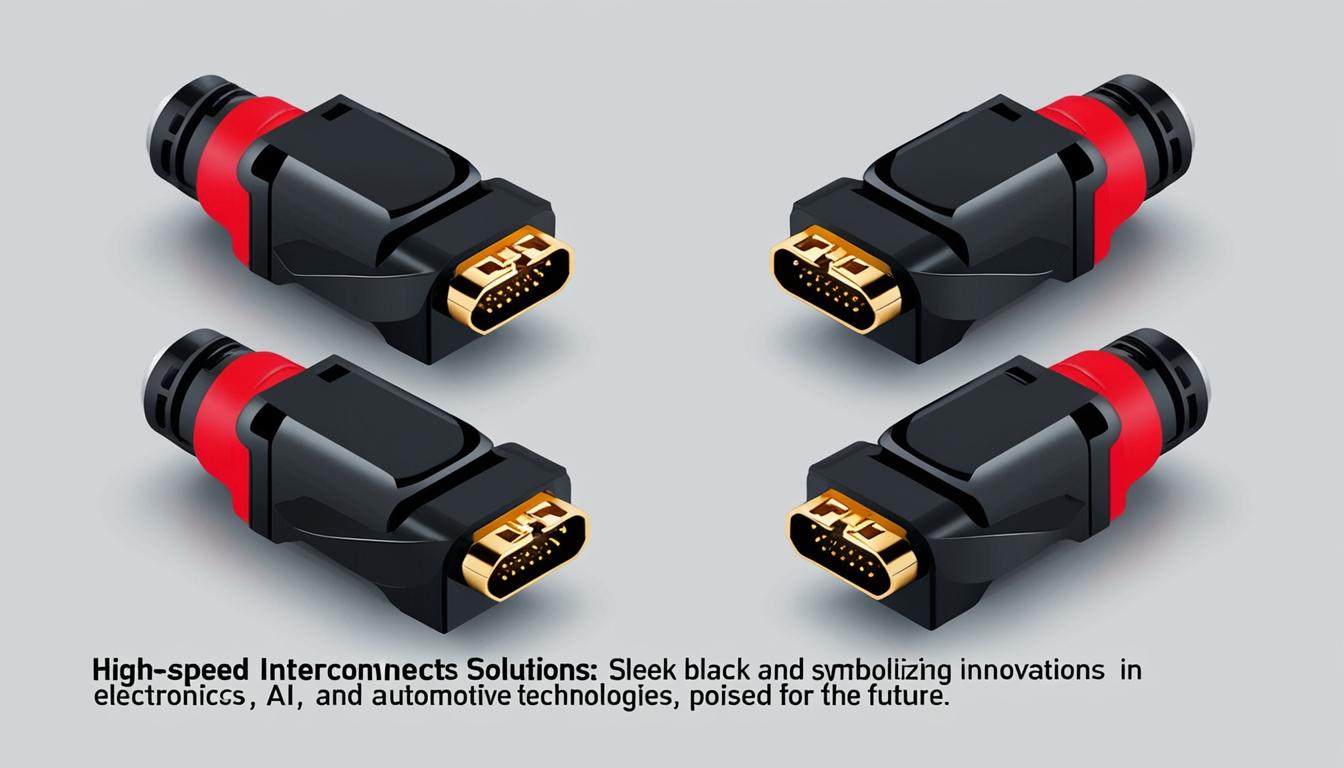
Molex has released insights predicting substantial advancements in high-speed interconnect solutions, driven by the rise of AI and cloud technology, highlighting key trends across various sectors.
Molex, a prominent player in the global electronics and connectivity sector, has recently released insights forecasting substantial advancements in high-speed interconnect solutions within the next 12 to 18 months. The surge in generative artificial intelligence (AI), machine learning (ML), and cloud technology is poised to affect various sectors, including data centres, automotive, consumer electronics, and medical technology. As demand intensifies, there will be a need for increased collaboration among electronics designers, manufacturing engineers, and supply chain specialists to tackle the challenges surrounding innovations in thermal and power management, material science, and battery technology.
Mike Deppe, Vice President of Global Product Development at Molex, expressed optimism regarding the future of connectivity solutions, predicting notable advancements by 2025. “We anticipate a consistent rise in connectivity-related solutions that will drive advancements in hyperscale data centres and software-defined vehicles while reducing obstacles for smaller, yet more powerful consumer and MedTech devices,” he stated. This reflects the growing demand for data and instantaneous access to information, which brings forth both opportunities and challenges for the industry.
Among the predictions outlined for 2025 are several key trends that signify a shift in the technology landscape:
The continued reliance on high-speed optical transceivers in hyperscale data centres is expected as operators pursue enhanced port density, signal integrity, and power efficiency to cater to the augmented processing demands brought about by generative AI.
Moreover, the increasing deployment of 224 Gbps PAM-4 interconnects raises the necessity for improved thermal management solutions. Current air-cooled data centre configurations are reaching their limits, prompting the development of advanced cooling strategies, including direct-to-chip and immersion cooling technologies.
The automotive sector is poised to see significant advancements as 48-Volt systems become more prevalent. This technology facilitates enhanced functionalities such as electric turbocharging and advanced driver assistance systems (ADAS), driving improvements in power efficiency and overall vehicle performance.
However, power systems remain the foremost engineering challenge, with a continuous demand for balancing power capacity, safety, and cost metrics. Innovations in battery technology are critical to address these issues, focusing on reducing signal interference and optimising performance.
Despite these exciting developments, the pace of 5G rollouts is forecasted to remain sluggish. Industry observers note that consumers are eagerly awaiting “killer apps” that will showcase the transformative potential of 5G technology, which, in part, will depend on innovations such as Meta’s Orion augmented reality glasses.
The convergence of ruggedized, miniaturized connectors is also set to propel innovations across industries, especially in sectors like electric vehicles and smart agriculture. These compact connectors not only improve space utilisation but also enhance signal integrity and thermal management in various applications.
In the realm of material science, advancements are anticipated to balance strength, weight, and sustainability, aided by the use of digital twins and AI-driven material databases that focus on the development of miniaturized connectors.
Furthermore, the automotive experience is becoming increasingly tailored to diverse market preferences, with vehicle architecture evolving in response to consumer behaviours in regions like China, Europe, and the United States.
The report also highlights the growing trend of cross-industry collaborations among design engineers, capitalising on shared expertise to tackle power and thermal management challenges across applications in automotive and consumer electronics.
Lastly, amid ongoing supply chain volatility, businesses are encouraged to adopt more sophisticated inventory strategies. Leveraging real-time data analytics will enhance forecasting and risk management, facilitating more adaptive decision-making processes.
Molex’s comprehensive forecast not only underscores the transformative impact of emerging technologies on various industries but also points towards a future in which high-speed connectivity and innovative collaboration will play essential roles in driving business practices forward.
Source: Noah Wire Services
- https://www.giiresearch.com/report/smrc1558270-optical-interconnect-market-forecasts-global.html – Corroborates the increasing demand for high-speed optical interconnects in data centers and the importance of these interconnects for efficient data transfer and network capacity.
- https://www.giiresearch.com/report/smrc1558270-optical-interconnect-market-forecasts-global.html – Supports the prediction of high deployment costs and the need for advanced cooling strategies in data centers.
- https://www.giiresearch.com/report/smrc1558270-optical-interconnect-market-forecasts-global.html – Highlights the role of optical transceivers in expanding bandwidth and improving data transfer rates in data centers and telecommunications.
- https://www.fox44news.com/business/press-releases/cision/20241118CG59092/molex-envisions-the-future-of-robotics-in-new-industry-report-that-considers-the-rising-potential-of-human-machine-collaborations/ – Mentions the need for high-speed connectivity and low-latency communications in robotics systems, which aligns with the forecasted advancements in high-speed interconnect solutions.
- https://www.giiresearch.com/report/smrc1558270-optical-interconnect-market-forecasts-global.html – Discusses the surge in global deployment of data centers and the increasing demand for high-speed, high-bandwidth optical interconnects.
- https://www.giiresearch.com/report/smrc1558270-optical-interconnect-market-forecasts-global.html – Predicts the highest CAGR in the data centers segment during the forecast period, driven by the need for high bandwidth and low latency.
- https://www.giiresearch.com/report/smrc1558270-optical-interconnect-market-forecasts-global.html – Highlights North America’s leading market share in the optical interconnect market due to the growth of data centers, cloud computing, and telecommunications.
- https://www.giiresearch.com/report/smrc1558270-optical-interconnect-market-forecasts-global.html – Mentions the Asia Pacific region’s high CAGR driven by the increasing demand for high-speed connectivity and the deployment of 5G networks.
- https://www.noahwire.com – Provides context on the growing trend of cross-industry collaborations to tackle power and thermal management challenges, as mentioned in the Molex forecast.
- https://www.noahwire.com – Supports the need for sophisticated inventory strategies and real-time data analytics to manage supply chain volatility and enhance forecasting and risk management.
- https://www.noahwire.com – Corroborates the transformative impact of emerging technologies on various industries, including automotive, consumer electronics, and medical technology, as outlined in Molex’s forecast.






