






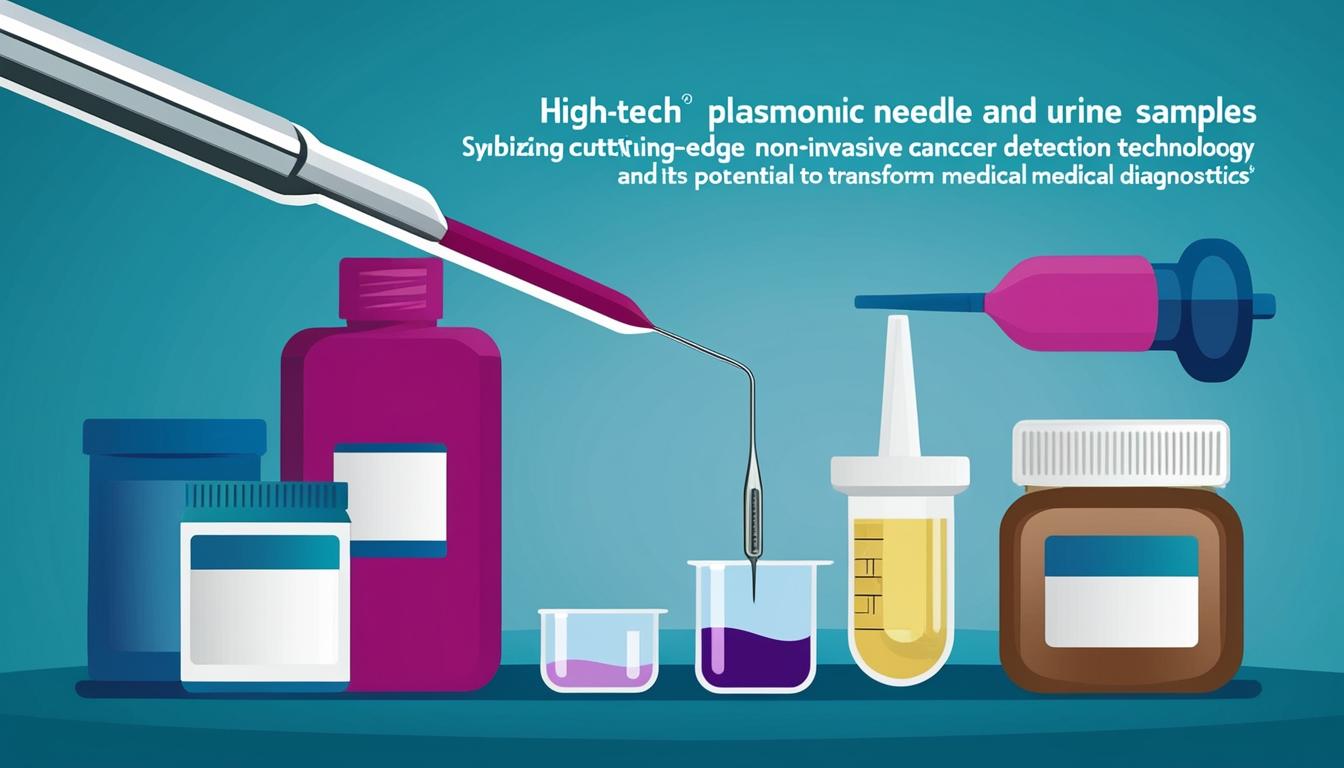

The Korea Institute of Materials Science has developed a groundbreaking non-invasive light-AI technology for early cancer diagnosis using bio-fluids, promising to transform medical diagnostics beyond traditional methods.
The Korea Institute of Materials Science (KIMS) has pioneered a groundbreaking advancement in early cancer detection technology, potentially transforming medical diagnostics. This cutting-edge development centres around the creation of a non-invasive light-AI technology capable of identifying cancer through bio-fluids, such as saliva and urine. Utilising a novel sensor material, the technology enhances optical signals from cancer metabolites found in body fluids, allowing for prompt and accurate cancer diagnosis without the need for traditional methods like blood draws or biopsies.
The project was spearheaded by a team of researchers from KIMS in collaboration with Professor Soo Woong Yoo of Chonnam National University Hospital. Together, they have successfully implemented this technology in diagnosing colorectal cancer. The process involves the use of a plasmonic needle, which significantly amplifies Raman signals of molecules. This needle is inserted through a tiny hole alongside a colonoscopy camera to swab the tumour’s surface without causing any bleeding, thereby enabling the analysis of the tumour’s composition.
Moreover, the research has extended beyond colorectal cancer. In collaboration with Professor Byung-Ho Chung from Samsung Medical Center, the team has explored using saliva to identify and stage lung cancer. Lung cancer patients expel volatile organic compounds (VOCs) through their breath, which dissolve into saliva and act as cancer metabolites. The team then harnessed light-AI technology integrated with paper-based sensors to effectively distinguish between healthy individuals and those with different stages of lung cancer.
This innovative approach was inspired by anecdotes of dogs sensing health anomalies in humans, attributed to their acute sense of smell. The KIMS researchers have mirrored this natural detection ability through their diagnostic sensor, which detects enhanced signals from metabolites in body fluids thanks to the use of plasmonic materials. These materials amplify Raman signals by over 100 million times, eliminating the need for complex and costly equipment traditionally associated with such tests.

Dr Ho Sang Jung, who led the initiative, expressed that the technology holds potential not only for cancer diagnostics but also for diseases with scant diagnostic understanding, such as synaptic diseases. Moreover, the team aims to position these technologies in the global market, leveraging domestic resources and developments.
This new diagnostic technology has already achieved significant recognition, being voted the top research achievement in the ‘Top 10 Outstanding Research Achievements of the Year’ by KIMS last year. Furthermore, KIMS has successfully transferred their earlier urinary-based cancer detection technology to SOLUM Healthcare, which is now working towards commercial application through product licensing.
As of this year, advancements in the technology permit the simultaneous detection of multiple cancers through urine analysis, indicating a broader application of the methodology. This significant leap in diagnostic capability underscores the team’s continued commitment to innovation in the field of medical diagnostics.
Source: Noah Wire Services







