

At the IAUP 2024 Conference in Beijing, President Lamont O. Repollet highlighted the transformative potential of artificial intelligence in fostering equity and enhancing student success in higher education.
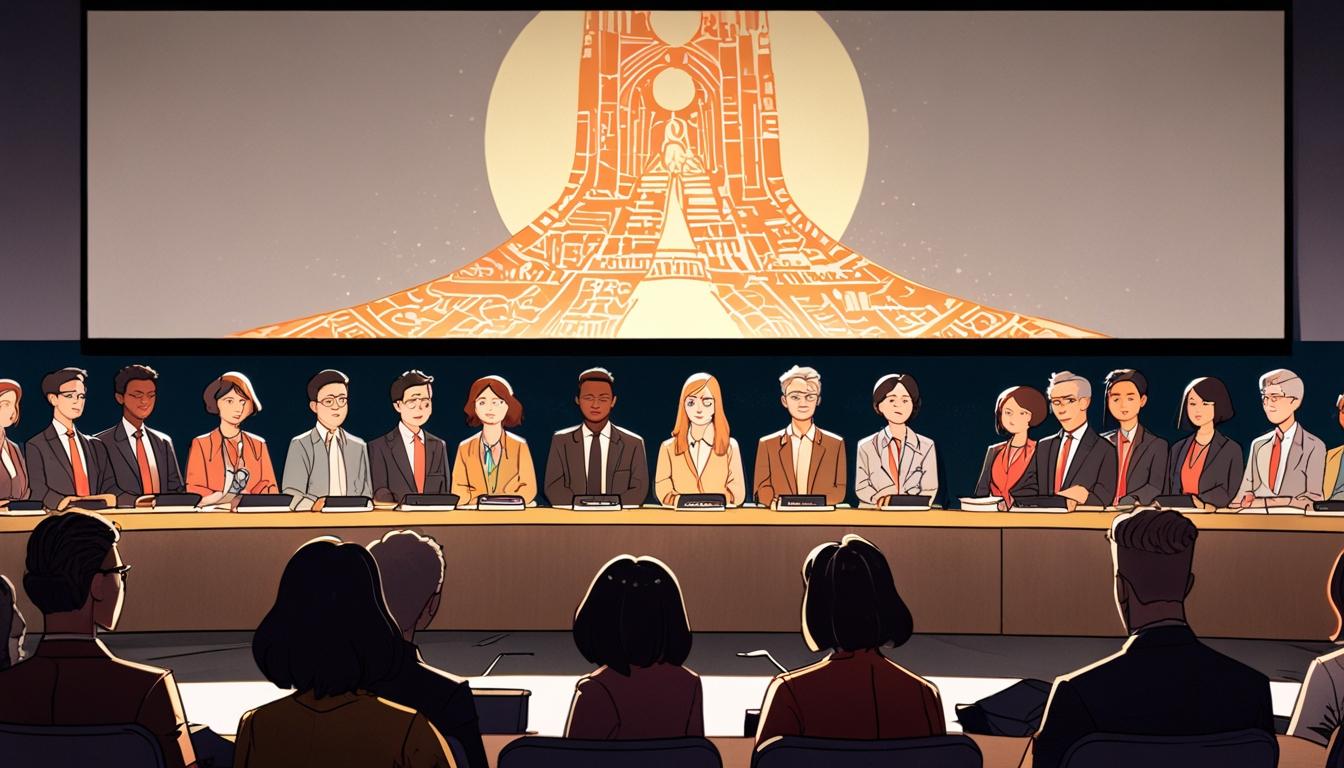
Kean University’s President, Lamont O. Repollet, Ed.D., took centre stage at the International Association of University Presidents (IAUP) 2024 Conference in Beijing to deliver a keynote address on the rapidly evolving role of artificial intelligence (AI) in enhancing equity and student success within the realm of higher education. The conference, which convened on 15 October 2024, served as a melting pot for university leaders and educators worldwide and centred around the theme “AI and the Future of Higher Education.”
Repollet, who oversees both Kean University in New Jersey and Wenzhou-Kean University (WKU) in China, emphasised during his presentation the transformative potential of AI as a tool for creating equitable educational opportunities. He stated, “AI is a revolutionary tool that can foster equity and transform how we engage with students and support their success.” His address underlined the promising future AI holds in shaping the academic landscape, particularly in advancing global educational systems through technology-driven solutions.
The IAUP conference, now in its 20th year, provided a platform for prominent academic figures to deliberate on AI’s influence on teaching, research, and student outcomes. The event featured an array of speakers, including Nobel Laureate Prof. Michael Levitt and Prof. Zongkai Yang, president of Wuhan University of Technology. The keynote session was moderated by Tomás Morales, president of California State University, San Bernardino, bringing together a diverse group of educators and experts to discuss the intersection of AI and academia.
Repollet’s role as president of Wenzhou-Kean University, a collaborative institution serving nearly 5,000 students from Asia and beyond, positions him uniquely to comment on the intersection of global educational practices and technological advancements. He highlighted the institution’s recognition as a landmark project in China-U.S. educational cooperation, underscoring the power of international partnerships in advancing academic opportunities. “We are committed to using AI to create a global education network where learning is not limited by boundaries but defined by possibilities,” Repollet noted.
Kean University is active in leveraging AI across several initiatives to support student success. These efforts include using predictive analytics for advising and course planning and an AI-driven platform aimed at enhancing job readiness through personalized resume feedback and interview preparation. Repollet elaborated on how AI is already playing a crucial role in improving equity by delivering tailored resources to struggling students and eliminating biases in grading and admissions processes. “AI has the power to help close achievement gaps and ensure that every student, no matter their challenges, has access to high-quality educational resources,” he said.
While advocating for AI’s benefits, Repollet also called for cautious integration of this technology. He stressed the importance of ethical use and the necessity to avoid perpetuating biases or widening digital divides. At Kean, ensuring data privacy and digital equity remains a priority as the university integrates these advanced technologies into its learning framework.
Repollet concluded by challenging global educational leaders to view AI as a connector across borders, enabling students worldwide to engage in collaborative learning experiences regardless of language or geographical barriers. He envisioned a future where, powered by AI, education becomes truly global and inclusive, preparing students for a world where learning knows no boundaries. “AI offers us a once-in-a-generation opportunity to build a truly global education community,” he said, highlighting the vision of a cohesive and equitable academic future shaped by technology.
Source: Noah Wire Services